


Imagine living in a home with walls as thin as 2.54 mm, knowing that beyond those walls lies certain danger. Now picture a crack in your living room wall where oxygen is escaping, a situation you cannot easily fix. Terrifying, right?
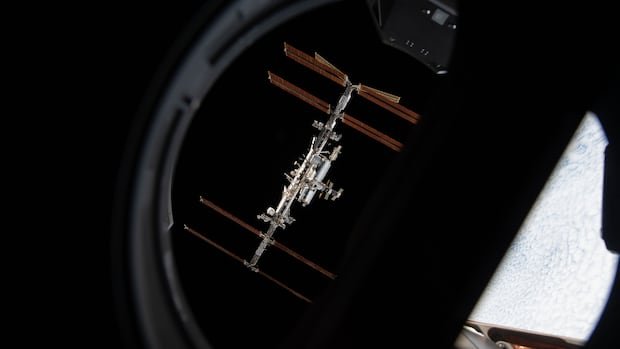
This scenario mirrors the ongoing dilemma aboard the International Space Station (ISS) for years. Most recently, on June 5, five of seven astronauts on the ISS were advised to take refuge in SpaceX’s Crew Dragon capsule due to a persistent air leak that Russian cosmonauts were attempting to repair.
Despite alarming headlines like “NASA orders astronauts on evacuation alert as space station air leak worsens” by NBC News and “NASA orders International Space Station astronauts to shelter, prepare for evacuation due to air leak” by CBC News, NASA’s live feed remained calm, providing clear directives to the crew.
The astronauts were instructed to execute Emergency Procedure 3.4 by establishing a Safe Haven in the Crew Dragon if needed, emphasizing caution rather than panic. The ongoing efforts to repair the leak were highlighted as the reason for the evacuation alert.
The ISS, launched in 1998 with an initial 15-year lifespan, now faces challenges surpassing its expected longevity. NASA’s 2024 report from the Office of the Inspector General identified cracks and air leaks in the Service Module Transfer Tunnel as key safety risks. Collaborative efforts between NASA and Roscosmos have been ongoing since 2019 to address these issues.
Space historian Chris Gainor explained the harsh environmental conditions the ISS endures, contributing to its wear and tear over time. Despite the challenges, the station’s lifespan has been extended to 2030, with plans for a replacement station before decommissioning.
While the ISS has encountered various challenges such as ammonia leaks, close encounters with space debris, and computer failures, it has managed to sustain operations with no immediate need for evacuation. Ongoing monitoring by NASA and Roscosmos ensures astronaut safety.
Looking ahead to 2030, Gainor expressed confidence in the ISS’s resilience, highlighting the station’s overall stability despite its aging infrastructure. This positive outlook bodes well for upcoming missions, including Canadian astronaut Joshua Kutryk’s launch to the ISS in September.