

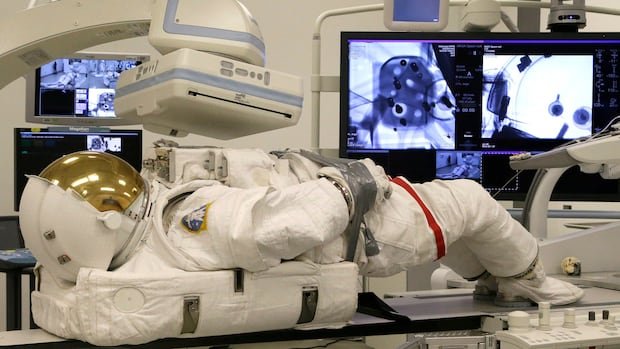

A range of medical tools, such as ear thermometers, portable ultrasounds for iPhones, and virtual doctor consultations, have origins in space technology. Researchers anticipate that future deep space exploration missions will introduce new healthcare innovations to Earth’s health systems. These innovations may include portable medical devices and robotic care, offering significant benefits to remote and under-resourced communities.
Dr. Dave Williams, a former emergency room physician and astronaut from Toronto, highlighted the potential transferability of lessons learned from lunar habitats to remote medical care delivery in places like northern Canada. Dr. Farhan Asrar, an associate dean at Toronto Metropolitan University’s school of medicine, alongside Dr. Williams, are exploring potential healthcare advancements linked to deep space missions heading to the Moon and eventually Mars.
According to Dr. Tarek Sardana, president of the Canadian Society of Aerospace Medicine, as deep-space missions extend further away from Earth, the ability for astronauts to return for immediate medical assistance diminishes. The need for faster communication technologies for virtual care and increased reliance on robot- and AI-supported healthcare becomes crucial for timely healthcare provision in scenarios where a doctor’s message from Earth to Mars could take up to 20 minutes.
Moreover, advancements in wearable technology monitoring vital signs, robotic limbs, and exoskeletons are envisioned to support individuals at risk of falling or with disabilities. The integration of space medical technology into terrestrial healthcare systems is seen as a reciprocal relationship where innovations in one field drive developments in the other.
While space technology benefits Earth, the development and testing of new medical tools and medications typically occur on Earth before being used in space. Organizations like the Canadian Space Agency consider the dual benefits of technologies for both space and Earth applications when allocating funding. The potential for space missions, such as Artemis II, to accelerate innovation in healthcare is recognized, fueling interest in aerospace medicine and attracting more professionals to the field.