

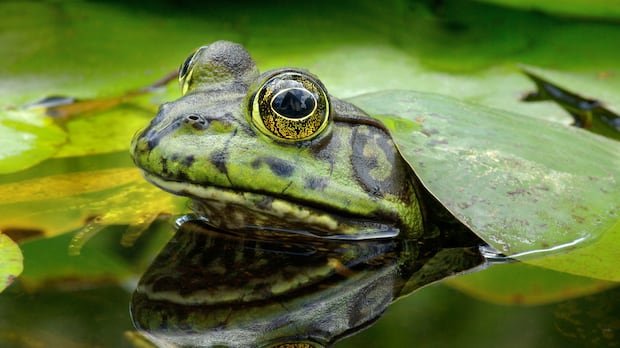

Residents in the Comox Valley on central Vancouver Island are banding together to eradicate invasive American bullfrogs from local lakes and water bodies. The Tsolum River Restoration Society is launching workshops to enable people to deploy tadpole traps, citing the threat these large bullfrogs pose to indigenous species.
American bullfrogs, known to reach twice the size of other frogs in British Columbia, have a diverse diet including frogs, salamanders, insects, and even small mammals and reptiles, as per the Invasive Species Council of B.C. One local resident diligently checks his tadpole traps at Maple Lake every two days to protect the fragile ecosystems.
Bruce Moffat, a society volunteer, initially adopted a “live and let live” approach towards bullfrogs but changed his stance upon discovering a significant population of invasive bullfrog tadpoles in Maple Lake. Moffat emphasizes that the presence of a large number of American bullfrogs can have devastating effects on local wildlife populations.
Gail Wallin, the executive director of ISCBC, stresses the importance of documenting the impact of American bullfrogs and encourages community efforts to control their numbers. While eradicating them completely may be impractical, Wallin advocates for population management strategies, including safe trapping and euthanizing methods.
Katie Gair, project co-ordinator at the Tsolum River Restoration Society, highlights the ongoing workshops designed to educate residents on constructing tadpole traps to combat the American bullfrog invasion. These traps, costing around $25 each to make, aim to empower community members to actively participate in conservation efforts.
Gair underscores the necessity of employing a multi-tiered approach to safeguard local species, with bullfrog removal being a crucial component. The society has developed resources, including a chart to aid residents in identifying American bullfrog tadpoles, as part of their comprehensive conservation strategy.