

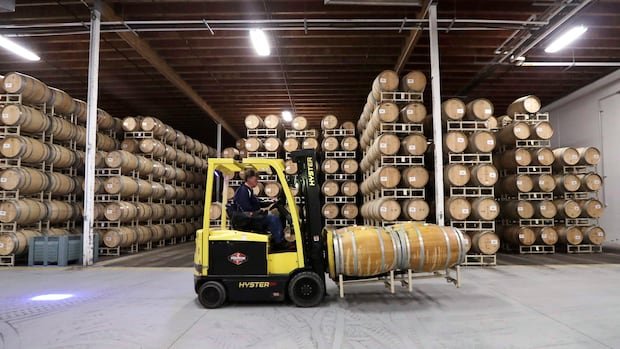

As we approach the Victoria Day long weekend, known for high alcohol sales, Canadians are experiencing the second year of restricted access to American liquor products. The removal of American alcohol from Canadian shelves in early 2025 severely impacted the U.S. wine industry. Trade data from the U.S. Census Bureau reveals a staggering $343 million US decline in wine exports from the U.S. to Canada between 2024 and 2025, marking a significant 77% year-over-year decrease in wine exports to Canada, previously a major U.S. wine buyer.
Since March 2025, American alcoholic beverages have been notably absent from most liquor stores across Canada in response to President Donald Trump’s tariffs. However, sales have partially resumed in Alberta and Saskatchewan due to liquor store privatization in those provinces. A recent report highlighted the U.S. government’s concern over the alcohol ban as a key issue for upcoming trade discussions with Canada, alongside supply management, procurement policies, and the Digital Services Tax.
The U.S. is urging Canada to reintroduce U.S. alcohol products to all provincial and territorial markets. After Canada, China experienced the next significant drop in U.S. wine exports, underscoring the substantial impact of Canada’s actions on the global wine trade. While U.S. winemakers found new international markets in countries like South Africa, Belgium, Japan, and the United Arab Emirates, these gains were insufficient to compensate for the decline in other countries.
Apart from trade disputes, the U.S. wine industry is grappling with a decline in global demand, as consumers increasingly opt for ready-to-drink cocktails and seltzers over traditional wines. This consumer shift, coupled with health concerns related to alcohol consumption, has led to a drop in wine sales. The U.S. trade surplus with Canada has significantly diminished due to the ongoing trade war, impacting American wineries.
In contrast to declining wine exports, American liquor sales to Canada have decreased while Canadian spirits imports, including whiskies and ready-to-drink cocktails, have surged in popularity. The beer industry, experiencing a long-term slowdown predating the trade war, has faced challenges such as decreasing sales and higher production costs due to steel and aluminum tariffs.
Despite the economic repercussions of the trade war, Canada has seen a boost in domestic wine sales, especially Ontario VQA wines. The ban on American alcohol has not only affected California’s wine industry but has also impacted bourbon and whisky exports from states like Tennessee and Kentucky. As the U.S. approaches a crucial midterm election cycle, the future of the Canada-U.S.-Mexico Agreement on trade remains uncertain.
While the alcohol embargo serves as a strategic negotiating tool for Canada, it has also resulted in economic losses for both countries. The LCBO in Ontario reported a significant revenue decline due to reduced American liquor sales, although this has driven an increase in domestic wine sales. As the trade war unfolds, the fate of the CUSMA agreement awaits review, with a looming decision deadline of July 1 for North American countries to either renew or exit the pact.