

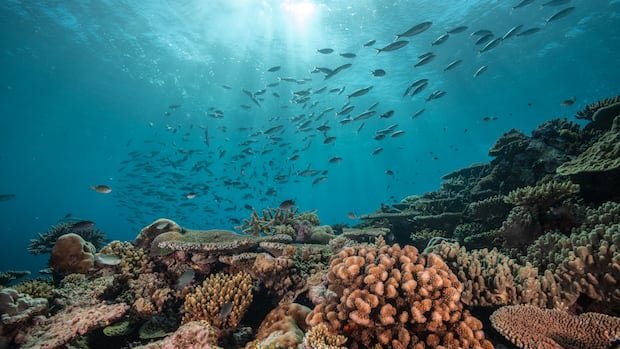

Good news is rare when it comes to coral reefs. After enduring a prolonged period of intense heat causing mass bleaching, recent reports suggest that the situation may improve. However, the threat of the Pacific-warming El Niño phenomenon looms large, potentially undoing any progress made. Despite the challenges posed by climate change, a recent study presented at the Our Ocean Conference in Mombasa, Kenya, highlights the surprising resilience of coral reefs.
According to Emily Darling, co-author of the study and director of coral conservation at the Wildlife Conservation Society, there is hope for these ecosystems. Preliminary findings reveal that approximately 166,000 square kilometers of reefs worldwide exhibit climate resilience due to various factors enabling them to withstand high temperatures.
Collaborating with the tech non-profit SkyTruth, researchers have identified these resilient reefs primarily in coastal waters of five countries: Bahamas, Cuba, Australia, Indonesia, and the Philippines. Building on previous research from 2018, which focused on 50 reefs with the best chances of survival if properly protected, the current analysis aims to pinpoint specific areas for conservation efforts.
Craig Dahlgren, executive director of the Perry Institute for Marine Science, emphasized the significance of this research in providing hope and guiding conservation initiatives for communities reliant on reefs for sustenance and economic stability.
Resilience in coral reefs manifests in different forms, such as avoidance, resistance, or recovery. Factors like location, specific microbial and algal compositions, and environmental conditions contribute to the survival of coral populations during bleaching events. The study underscores the importance of protecting reefs with diverse resilience to mitigate risks and enhance overall ecosystem health.
While climate change remains a primary threat to coral reefs, other factors like diseases and recurring bleaching events, including those triggered by El Niño, pose additional challenges. Scientists stress the urgent need to support conservation efforts and establish marine protected areas to safeguard these vital marine ecosystems for future generations.