

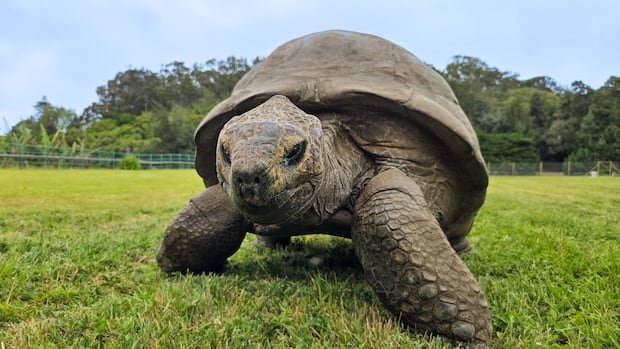

In the latest edition of Quirks & Quarks with Bob McDonald, researchers have uncovered the secrets behind the long lifespan of a 194-year-old tortoise named Jonathan. This Aldabra giant tortoise holds the record as the oldest-known land animal, surpassing the typical lifespan of most giant tortoises by about a century. A study led by Dr. Stephen Clark from the longevity nonprofit Kallel delved into Jonathan’s genome to investigate the factors contributing to his remarkable longevity. The research revealed that certain gene-regulating mechanisms in Jonathan’s genome resembled those of much younger tortoises, shedding light on the biological mechanisms that enable Jonathan to defy aging. The findings were detailed in the journal Science Advances.
Furthermore, the scientific community has witnessed a groundbreaking development in timekeeping technology with the creation of nuclear clocks. Two separate teams of researchers successfully constructed nuclear clocks, offering a level of precision surpassing that of atomic clocks. Unlike atomic clocks, which measure time based on electron transitions, nuclear clocks utilize neutron excitation in the atom’s nucleus to achieve higher accuracy. This advancement, as reported by Thorsten Schumm from the Vienna University of Technology in his publication in Nature, holds immense potential for diverse applications ranging from GPS satellites to the search for dark matter.
Meanwhile, the escalating threat of extreme wildfires has prompted urgent action. A study conducted by Simon Fraser University and published in Environmental Science warns that climate change-induced wildfires in Canada could incur costs exceeding $2 trillion by the century’s end. Pyrogeographer Crystal Kolden, a leading expert in wildfire management, advocates for nature-based solutions to mitigate the impact of wildfires on communities. Kolden’s research, now based at the University of British Columbia-Okanagan, aims to harness the power of natural ecosystems to prevent and manage wildfires effectively.