

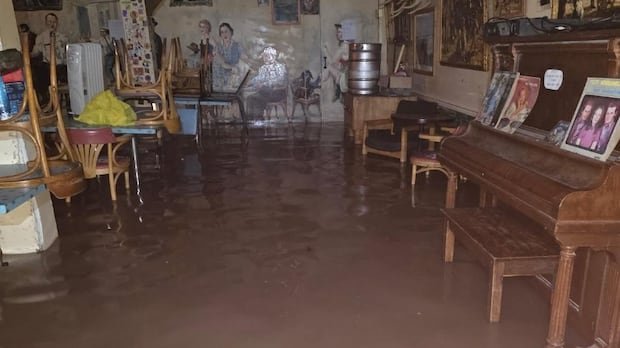

The Westminster Hotel, affectionately known as “the Pit,” stands out as one of Dawson City, Yukon’s most cherished and iconic old taverns. Situated in a town famous for its unique drinking establishments, including one that serves drinks with a desiccated human toe, the future of the Pit is now uncertain following recent water main breaks in downtown Dawson that led to flooding streets and buildings, including the Westminster Hotel.
Josée Montreuil, the Pit’s manager, expressed concern about the current situation, stating that the building’s interior temperature had dropped to -11 degrees Celsius due to the water flow. The water level inside the establishment reached a meter at its peak, causing potential damage to the floor-reaching murals.
The full extent of the damage and the necessary repairs to reopen remain unclear at this point. Montreuil emphasized that, at a minimum, the floors would need replacement. The plan is to assess the damage thoroughly, evaluate the building’s foundation, and address the restoration process accordingly once it is safe to restore power and inspect the underlying damages.
The Westminster Hotel, a century-old pink building in downtown Dawson, serves not only as a tavern but also as a hub for the community, hosting local musicians year-round. Montreuil described it as the heart of the community, offering companionship, music, and a gathering place for various occasions.
Local musician “Harmonica George” McConkey likened the Pit to the renowned Tootsie’s Orchid Lounge in Nashville, known for its unpretentious charm and vibrant characters. He highlighted the Pit’s community-oriented events, such as the annual Christmas dinner, which brings people together during the holiday season.
Despite the catastrophic flooding damage, there is optimism and determination to restore the Pit to its former glory. Montreuil has received overwhelming support from the community, showcasing the town’s resilience and willingness to assist in the restoration efforts. The Pit holds a special place in the hearts of many, symbolizing a sense of community and belonging that will drive the restoration process forward.