

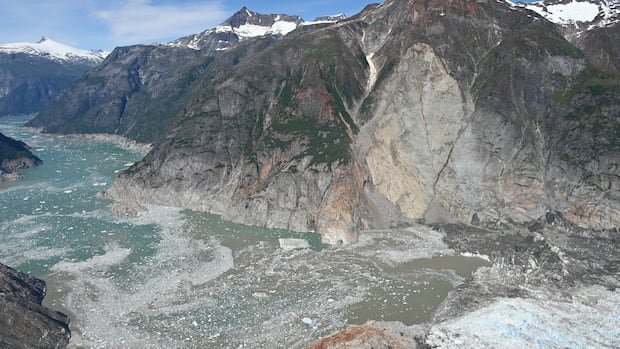

A massive rock collapse in an Alaskan fiord triggered an enormous tsunami last year, resulting in a 481-meter wave taller than the CN Tower’s highest observation deck, a recent study reveals. The study’s lead author, Dan Shugar, emphasizes the significant risk posed by such tsunamis, particularly for areas like British Columbia, urging policymakers to prioritize their awareness and prevention efforts.
The research, detailed in the Science journal, highlights that the devastating tsunami near the Alaska-B.C. border was influenced by a glacier’s rapid retreat that redirected the landslide’s path. The study warns that with ongoing climate change and increased human activities like infrastructure expansion and cruise ship tourism, the threat of fiord tsunamis triggered by landslides is escalating, potentially leading to future disasters.
The event, occurring at 5:26 a.m. on Aug. 10 last year, involved a colossal landslide of over 64 million cubic meters plunging into the Tracy Arm Fjord. The resulting tsunami had the second highest wave run-up ever recorded, reaching approximately 481 meters above sea level.
Despite the frequent presence of cruise ships in the fiord, only one ship was present during the incident and narrowly escaped the tsunami’s impact. Researchers stress that if the cruise ship had been in the tsunami’s path, the consequences would have been catastrophic, given the ship’s large passenger capacity.
The study also notes that the South Sawyer Glacier, located near the landslide site, had significantly retreated in the months leading to the event. This retreat played a crucial role in altering the trajectory of the landslide, highlighting the intricate relationship between glaciers and potential natural disasters.
The researchers stress the need for enhanced monitoring and early warning systems for such hazards, especially with the growing tourism and industrial activities in the region. They point out that analyzing seismic activity preceding such events could provide valuable insights for developing effective warning mechanisms.
While acknowledging ongoing hazard assessments by the Geological Survey of Canada, experts urge policymakers to take a broader, national approach in addressing the risks associated with fiord tsunamis. They emphasize the importance of investing in advanced monitoring technologies to mitigate the potential impact of future natural disasters.