

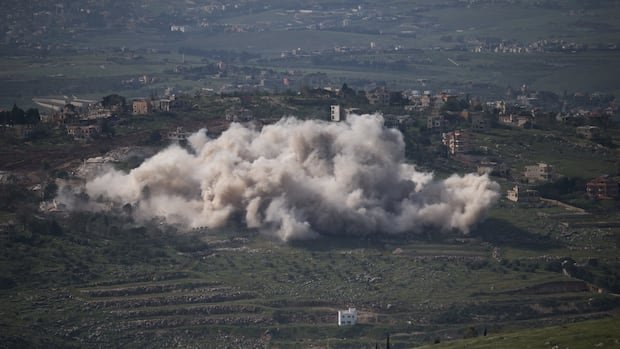

The Israeli military has initiated airstrikes in eastern Lebanon on Monday, expanding its bombing operations during a ceasefire that has not completely stopped hostilities with the Lebanese armed group Hezbollah. These strikes in Lebanon’s eastern Bekaa Valley are the first in the area since a ceasefire brokered by the U.S. on April 16, which has reduced the frequency of attacks but not entirely halted the exchange of fire.
Israel has been conducting strikes in southern Lebanon and its troops are present in a strip of the country’s south, targeting homes claimed to be used by Hezbollah as infrastructure. In response, Hezbollah has continued launching drone and rocket attacks against Israeli troops in Lebanon and northern Israel.
A spokesperson for the Israeli military stated that strikes were targeting Hezbollah infrastructure in the Bekaa region and other areas in southern Lebanon. Security sources confirmed strikes near the town of Nabi Chit close to Lebanon’s eastern border with Syria, with no immediate reports of casualties. Lebanon’s state media reported multiple strikes in the south that resulted in at least three people being wounded.
Hezbollah reported attacking an Israeli tank in southern Lebanon with a drone, while the Israeli military mentioned that a drone launched by Hezbollah exploded near its troops in southern Lebanon but did not cause any casualties. According to Lebanon’s Health Ministry, at least 2,509 people have died in Israeli strikes across Lebanon since March 2, when Hezbollah supported Iran by firing on Israel, leading to an Israeli ground and air campaign causing significant destruction in southern Lebanon.
The conflict in Lebanon has increased divisions among the population, with disagreements over Hezbollah’s weaponry and the possibility of peace talks with Israel. The Lebanese and Israeli ambassadors to the United States have held two meetings to discuss the ceasefire, aimed at facilitating direct negotiations for a peace agreement between the two countries.
Hezbollah strongly opposes direct talks, with its leader Naim Qassem dismissing the negotiations as a “humiliating and unnecessary concession.” Lebanese President Joseph Aoun has justified the government’s decision to engage in face-to-face discussions and indirectly criticized Hezbollah for leading the country into war for external interests. Aoun highlighted the importance of national consensus, questioning Hezbollah’s unilateral decision to engage in regional conflict without obtaining such consensus.