

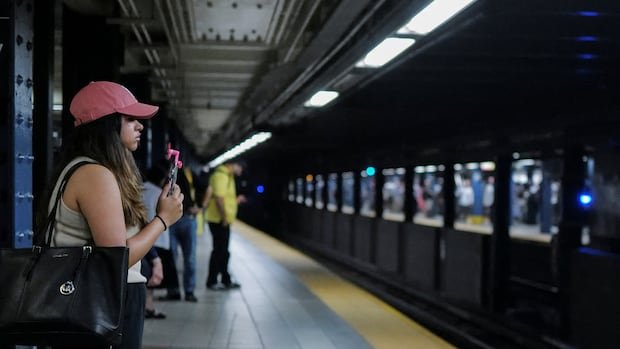

Welcome to our weekly newsletter focusing on environmental trends and solutions driving us towards a more sustainable world. I’m Emily, and I’m intrigued by the innovative concept of using waste heat from subway stations to cool them down. Just like how waste heat is utilized from sources like nuclear power plants, paper mills, and sewers, why not apply this idea to subways as well?
This week, we delve into Canadian technology aiming to cool hot subways in New York City. With underground subway stations becoming increasingly uncomfortable due to rising temperatures, a Canadian company is testing an energy-efficient cooling solution in New York City’s subway system. Toronto-based Cascara Energy, in collaboration with the Metropolitan Transportation Authority, is implementing a radiant cooling system in the ceiling arches of East Broadway station. The system, utilizing loops of chilled water-filled pipes to absorb heat, is expected to enhance passenger comfort without the need for fans, making it more compact and efficient compared to traditional air conditioning systems.
The innovative cooling technology not only aims to keep passengers cool but also has the potential to recover and recycle heat for various other purposes. By capturing and reusing heat generated within the subway system, the project envisions reducing reliance on fossil fuels for heating. This approach, as highlighted in the MTA’s Climate Resilience Roadmap, demonstrates a sustainable and energy-efficient solution that could have broader applications beyond just cooling subway stations.
Subway systems accumulate heat from various sources, including human presence, electronics, and train operations. Cascara Energy’s system seeks to intercept and redistribute this heat, preventing the subway walls from reaching heat saturation levels. By efficiently managing heat flow and extraction, the technology aims to explore additional avenues for utilizing recovered heat, such as heating water and buildings.
Notably, the London Underground has already implemented a system to extract waste heat from its tunnels, showcasing the potential for heat recovery in transit systems. With the New York pilot project spearheaded by Cascara Energy, the focus is on demonstrating the effectiveness of the cooling system and garnering interest from other transit authorities. The project’s success could pave the way for more sustainable and efficient cooling solutions in subway systems globally.
As we navigate the challenges of urban heat and climate change, innovative initiatives like the subway cooling project offer promising solutions to enhance environmental sustainability and energy efficiency in urban infrastructure.
For more engaging content on environmental issues and solutions, stay tuned for our upcoming newsletters. Thank you for reading and feel free to reach out with any questions, feedback, or story suggestions at whatonearth@cbc.ca.
Editor: Emily Chung | Logo design: Sködt McNalty