

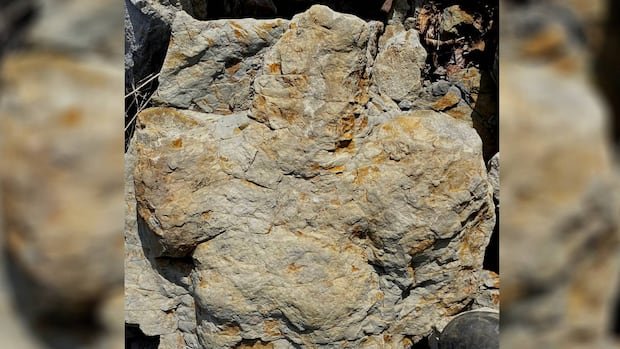

In 1988, Guy Plint, an earth scientist, was conducting sedimentary research in Tumbler Ridge, B.C., studying formations dating back 86 million years. During his study, he unexpectedly discovered tracks left by duck-billed dinosaurs. Fast forward almost 40 years, the region in northeast B.C. has become a UNESCO Global Geopark, renowned for its vast collection of ancient fossils. Collaborating with a local paleontologist, Plint delved into the history of these tracks.
Plint, speaking to CBC’s Daybreak North, mentioned that these tracks are the northernmost of their kind in North America, with the closest similar tracks found in southern Montana. In February, Plint, along with Dr. Charles Helm, a local physician and paleontologist, published new research shedding light on the tracks. They determined that the fossilized footprints date back to the Coniacian age, a period in the Late Cretaceous era around 85 to 89 million years ago.
According to Plint, these tracks mark a transition in dinosaur species following the introduction of flowering plants as a primary food source. Previously, ankylosaurs, armored dinosaurs with spikes, were the dominant herbivores in the region. However, the duck-billed dinosaurs had since replaced them as the most prevalent plant-eating species. The area in Tumbler Ridge was once a prehistoric delta, a marshy region adjacent to an inland sea, where Plint was conducting his survey back in 1988.
Plint emphasized that these dinosaur tracks are the only known Coniacian age tracks in Canada, offering a rare glimpse into the past. Their research involved exploring five sites between 2022 and 2025, resulting in the recovery and curation of five individual tracks now housed at the Tumbler Ridge Museum. Eamon Drysdale, the museum’s resident paleontologist and curator, noted the significance of these tracks in understanding the transition between dinosaur species during the Cretaceous period.
Drysdale highlighted the importance of such findings in piecing together the evolution of dinosaurs during that era, especially due to the limited body fossil record available from that time. These tracks play a crucial role in identifying the various dinosaur groups present during the transition period. The museum has taken measures to preserve the tracks found by Plint and Helm to prevent any damage and ensure their continued study and research.
Moreover, the research conducted by Plint and Helm contributes significantly to the scientific community’s understanding of prehistoric life and the evolutionary changes that occurred during the Late Cretaceous period in Tumbler Ridge, B.C.