

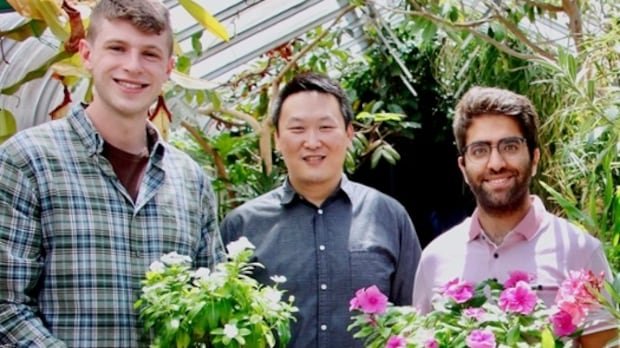

A recent study conducted by a team of chemists from the University of New Brunswick has the potential to transform the manufacturing process of certain medications. Collaborating with researchers from Zhejiang and Westlake universities in China, the UNB team unveiled the mechanism through which certain plants produce cancer-fighting drugs.
This breakthrough discovery, as explained by Yang Qu, an associate professor of chemistry at UNB leading the research team, signifies a significant advancement in drug production efficiency. Qu highlighted that the newfound knowledge could facilitate the rapid laboratory synthesis of the drug, with a remarkable increase in production levels compared to previous estimates.
The findings of the research have been detailed in the latest issue of the scholarly journal Science. The focus of the study was on vinblastine, a medication utilized in the treatment of various cancers such as bladder, brain, and testicular cancer. Despite its therapeutic benefits, vinblastine has presented challenges in manufacturing due to its exclusive production in the Madagascar periwinkle plant.
Qu emphasized the inefficiency of the plant in producing the drug, citing the substantial amount of plant material required to yield a minute quantity of vinblastine. The complexity of the drug further complicates its chemical synthesis, adding to the cost and difficulty of production.
The researchers unraveled the unique approach employed by the Madagascar periwinkle in drug synthesis, utilizing a specialized “scaffold protein” to facilitate the assembly of essential components for drug formation. Qu likened the role of scaffold proteins to the organization of workers on a construction site, enhancing efficiency and speed in the drug production process.
By integrating this scaffold protein into the plant’s microbial system, researchers anticipate a significant enhancement in production efficiency. This breakthrough, although not immediately translating into accelerated drug production, brings the industrial-scale manufacturing of the drug one step closer to realization.
Qu expressed optimism regarding the practical applications of the research, foreseeing tangible outcomes in the near future. The implementation of this groundbreaking discovery holds promise for advancing drug production methodologies and potentially streamlining the availability of vital cancer treatments.