

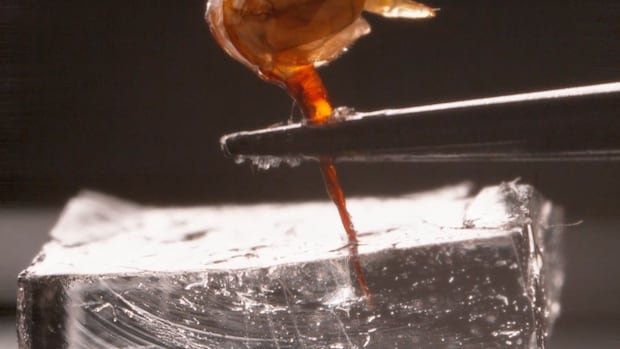

A western honey bee’s stinger is a final defense mechanism that injects venom upon contact, often resulting in the bee’s demise. Recent research in the Proceedings of the National Academy of Sciences delves into the effectiveness of this mechanism. Using modern high-speed cameras, lead researcher Fiorella Ramirez Esquivel and her team captured the stinger in action, shedding new light on its functionality.
The study involved observing live honey bees and analyzing their stingers postmortem. The time-sensitive nature of the stinger’s activity required swift experimentation. The intricate design of the stinger involves two valves working simultaneously to drive the stinger deeper while pumping venom into the target. This “double piston design” is far more complex than a standard engine piston, as described by Ramirez Esquivel.
The study reveals that honey bee stingers continue to twitch and move minutely for up to 15 minutes after deployment. This autotomy mechanism, where part of the body is left behind, serves as a sacrifice for the greater protection of the colony, highlighting the bees’ altruistic nature. The stinger’s barbs aid in remaining embedded in the target, facilitating the release of pheromones to alert other bees of potential threats.
The research not only provides insights into honey bee behavior but also opens avenues for potential medical applications. By understanding the mechanics of the stinger, researchers aim to uncover broader implications beyond the realm of entomology. The findings prompt further exploration into the unique features of honey-producing bees and their evolutionary adaptations.