

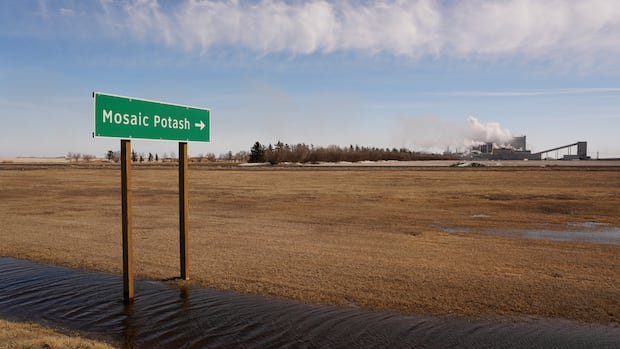

U.S. President Donald Trump announced on Monday that negotiations are underway to secure a deal for purchasing potash from Belarus at a lower cost compared to the current prices paid to Canada. Trump shared on social media that the potential agreement would benefit American farmers and ranchers by offering more competitive pricing.
Potash, a mineral known for enhancing plant disease resistance, crop quality, and increasing yields, plays a crucial role in agriculture. Trump’s statement indicates a strategic shift towards diversifying suppliers and leveraging trade relations amid disputes with Canada, which currently dominates U.S. potash imports. The move could also signify a positive development in Washington’s dealings with Belarus following the removal of sanctions.
The Trade Minister of Canada, Dominic LeBlanc, and Nutrien, a top global potash producer based in Saskatchewan, have refrained from immediate comments on the matter.
Belarusian President Alexander Lukashenko, a key ally of Russia, disclosed that Belarus had resumed potash sales to the U.S. post the sanctions lift, but he emphasized the need for the return of over $40 million US frozen in American banks. Both Belarus and Russia are significant potash suppliers, with logistical challenges and sanctions making Russian shipments to the U.S. costly. While the U.S. continues to receive potash from Russia, Canada remains the primary source of potash imports.
Fertilizer analyst Josh Linville from StoneX expressed skepticism about the potential impact of Belarusian potash on U.S. agriculture, highlighting the surplus availability of potash and the demand for phosphate and nitrogen fertilizers instead. He pointed out that even if the port of Klaipeda in Lithuania opens for Belarusian potash exports, the current market value makes transatlantic shipments less economically viable.
The global fertilizer market has faced disruptions due to the Iran conflict, leading to restrictions on nitrogen and phosphate fertilizer supplies, hindering Gulf shipments of essential components like natural gas and sulfur.
By exploring alternative potash sources, the U.S. aims to bolster its agricultural sector while navigating trade dynamics with key partners like Canada and Belarus.