

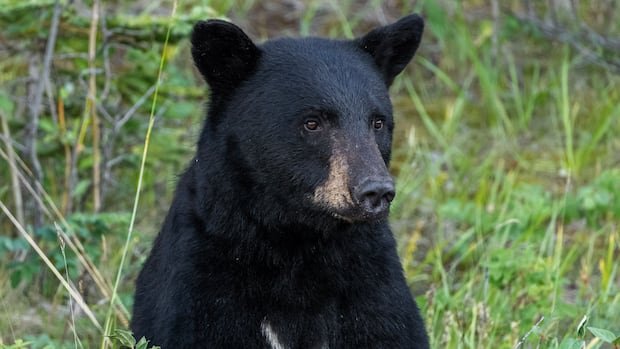

Last week, Alberta Fish and Wildlife Enforcement Services euthanized a black bear in response to its repeated presence in the populated area of Burnstick Lake in west-central Alberta’s Clearwater County, around 80 kilometers southwest of Red Deer. The province classified the bear as “habituated,” indicating its lack of fear or reaction to humans, posing a potential safety risk.
Mountain View BearSmart, an organization monitoring bear sightings in Clearwater and Mountain View counties, noted the bear had been lingering in Burnstick Lake for about a week. The bear’s attraction to the area may have been due to food sources like bird feeders, barbecues, or garbage. The decision to euthanize the bear was made to address public safety concerns, as relocating it could simply shift the problem to another bear’s territory.
Paul Fraser, chair of Mountain View BearSmart and a wildlife biologist, emphasized the need to remove food attractants to prevent bears from entering human settlements. He highlighted that relocating habituated bears is usually ineffective, especially in areas already populated by bears, as territorial conflicts may arise.
Moreover, Alberta Parks has issued warnings and area closures in Kananaskis Country due to increased bear activity. Last summer, a surge in bear encounters prompted a blanket bear warning for Kananaskis Country, underscoring the importance of managing attractants to mitigate human-bear conflicts.
The province follows guidelines outlined in the black bear response guide to determine appropriate actions towards bears based on various factors such as behavior, age, and potential threats posed. Bears often venture into populated areas in search of food, with garbage and fruit trees acting as primary attractants.
As bears emerge from hibernation, they are driven by the quest for high-calorie food, increasing the likelihood of encounters with humans. Black bears are common in 75% of Alberta, while grizzly bears are a threatened species in the province. The distinction between black and grizzly bears in terms of conservation measures underscores the need to address human-bear conflicts effectively.