

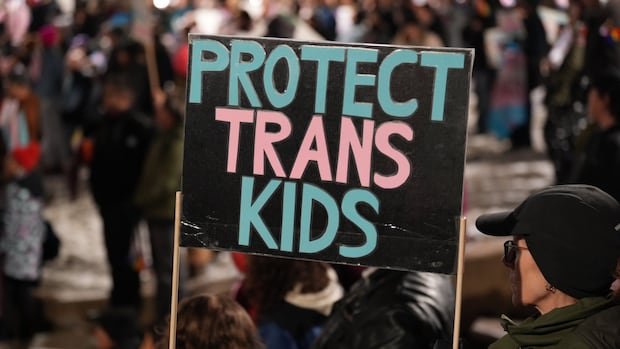

Advocates fighting against Alberta’s restrictions on medical treatment for transgender youth have suffered a legal setback in court. The organizations Egale and Skipping Stone sought permission from a judge to argue that Premier Danielle Smith’s government exceeded its authority with the law. Last year, the government used the notwithstanding clause to protect the restrictions from legal challenges. The 2SLGBTQ+ advocates contended that since doctors who disobeyed the new regulations faced penalties, it became a criminal matter falling under federal jurisdiction, not provincial. Conversely, Smith’s government maintained that the rule changes aimed to safeguard youth health and safety and fell within its jurisdiction.
On Friday, a Court of King’s Bench judge, Justice Allison Kuntz, ruled in favor of the government. Kuntz dismissed Egale and Skipping Stone’s application, stating that as the legislation pertained to health and safety, it fell within the province’s constitutional authority. Egale and Skipping Stone expressed their intention to appeal, emphasizing that transgender and gender-diverse youth in Alberta were being denied access to necessary care due to the legislation.
In response, Justice Minister Mickey Amery’s press secretary reasserted that the government’s legislation aimed to preserve children and youth’s choices, strengthen parental roles, and ensure fairness and safety in amateur competitive sports. The legal battle originated in 2024 when Smith’s government introduced laws affecting transgender individuals, including a ban on certain medical treatments for those under 16. Advocates challenged this law on behalf of families with transgender and gender-diverse youth, arguing that it unfairly targeted these individuals.
In June 2025, the advocates secured a temporary injunction against the health restriction, citing serious Charter issues. However, in December, Smith’s government invoked the notwithstanding clause on the transgender rules, leading to the dismissal of the injunction. The advocacy groups then pursued a criminal law challenge, which was rejected by Kuntz. As a result, the original Charter challenge against the health-care law remains on hold pending the Supreme Court of Canada’s decision on a similar case in Saskatchewan.
The use of the notwithstanding clause has stirred debate and legal challenges in various provinces, including Alberta and Saskatchewan, where similar issues concerning transgender rights and Charter violations have emerged. The Supreme Court will address the fundamental question of whether courts can assess whether a law violates Charter rights, even when protected by the notwithstanding clause. Alberta’s legislation also includes rules on pronouns and transgender athlete participation in amateur competitive sports.