

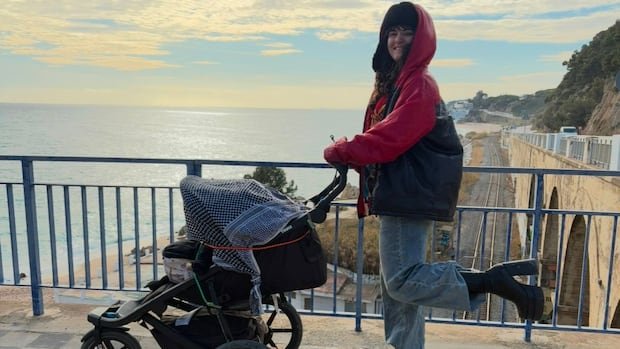

Last year, Dora Alcover embarked on an extraordinary journey from Barcelona, Spain, with the aim of walking 3,000 kilometers across Europe in high heels to raise awareness and funds for Reaching Out Romania, an organization assisting victims of sex trafficking. After navigating through nine countries and wearing five pairs of platform heels over 280 days, the 25-year-old Quebecer reached her destination in Craiova, Romania, earlier this month.
In 2024, the Romanian government identified 600 trafficking victims, with 55% being children, and 449 of them being victims of sex trafficking. The issue of human trafficking is not confined to overseas locations, as Statistics Canada reported 5,070 human trafficking incidents in Canada from 2014 to 2024, predominantly affecting women and girls, with two-thirds of them under 25 years old.
Alcover expressed that her journey was a tribute to her late mother and a way to shed light on the issue of human trafficking. She highlighted the empowerment of women and challenged societal norms by using high heels to symbolize strength and resilience instead of vulnerability. Human trafficking involves exploiting individuals for sexual or labor purposes by recruiting, moving, or controlling them.
In Montreal, organizations aiding survivors of sex trafficking commended Alcover’s initiative, emphasizing the need for more support for victims and enhanced efforts to combat trafficking. Cynthia Beaulieu, the executive director of Coalition québécoise contre la traite de personnes, noted common tactics used by traffickers, such as the “Romeo tactic,” where victims are lured with promises of material goods.
Ian Lafrenière, Quebec’s domestic security minister, acknowledged the province’s efforts in addressing sexual exploitation, emphasizing the importance of prevention and support for victims. Despite progress, he acknowledged the complexity of the issue and the necessity for continued dedication to combat human trafficking.
Beaulieu emphasized that sexual exploitation is influenced by various societal factors like economic inequality and discrimination. Supporting survivors and providing specialized care through shelters and transitional housing are crucial steps in helping victims recover and regain autonomy over their lives.
Alcover plans to return to Quebec and undertake a similar high-heeled trek during the winter, continuing her advocacy against human trafficking. If you or someone you know is a victim of human trafficking, immediate help is available through emergency services or the Canadian Human Trafficking Hotline at 1-833-900-1010.