


Thermal drones, in conjunction with emerging artificial intelligence technology, are proving to be effective in bolstering Alberta’s defenses against the encroachment of destructive wild boar.
Hannah McKenzie, a specialist in wild boar affairs for the Alberta government, highlighted the use of drones as part of a multifaceted approach to address the issue. The collaborative effort between Alberta Agriculture and the University of Calgary aimed to evaluate a novel aerial surveillance system to monitor the growing threat posed by wild boar in the Prairies.
A recent report outlined the successful deployment of automated drones equipped with infrared cameras, offering a modern and non-intrusive method for monitoring wild boar populations. In the spring of 2024, researchers utilized thermal drones with heat radiation sensors to detect the presence of wild boar, particularly effective during nighttime operations when heat signatures are more pronounced against cooler backgrounds.
By training artificial intelligence algorithms to analyze drone footage, researchers could accurately identify and quantify wild boar sightings. This approach proved invaluable given the challenges posed by traditional tracking methods, such as ground surveys and trail cameras, which are often ineffective due to the nocturnal and elusive nature of wild boar.
Ryan Brook, the lead researcher for the Canadian Wild Pig Research Project, emphasized the significance of aerial surveillance in overcoming the evasive behavior of wild boar. The use of thermal drones has demonstrated success in managing wild boar populations in other regions, providing a comprehensive view of these animals’ movements and social structures.
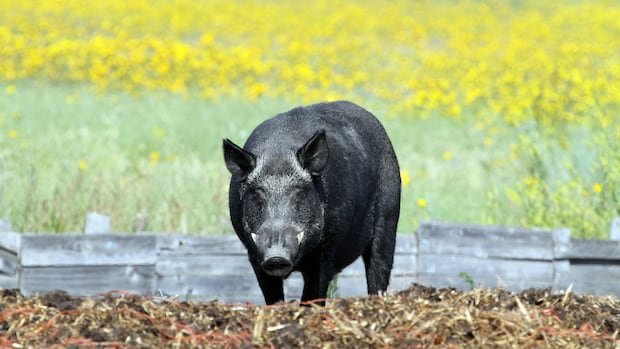
The wild boar population in Alberta consists not only of Eurasian wild boar but also hybrid species resulting from interbreeding with domestic pigs. Classified as pests, these hybrids, commonly referred to as “super pigs,” pose a substantial threat due to their destructive habits, rapid breeding rates, and potential for disease transmission to domestic livestock.
Efforts to mitigate the impact of wild boar in Alberta have transitioned from reactive measures to proactive strategies, including monitoring, trapping, stricter regulations on wild boar farming, and a ban on sport hunting of wild boar. The successful implementation of the drone project signifies a shift towards a more offensive approach in addressing the wild boar issue.
The project’s objectives focused on training AI models to detect wild boar accurately, establishing a centralized database for sightings, and utilizing AI to create a predictive habitat map for identifying potential wild boar habitats in Alberta. Testing conducted on two farms in Alberta showcased the effectiveness of thermal drones in collecting data and analyzing wild boar behavior.
Despite the promising outcomes, challenges remain in accurately identifying small piglets and differentiating wild boar from other wildlife using thermal sensors and AI. Continuous research efforts are necessary to enhance the technology’s capabilities and improve monitoring of wild boar populations.
The development of a habitat suitability map based on public sightings and habitat data will aid in predicting areas most vulnerable to wild boar infestations. This collaborative and data-driven approach aims to inform targeted mitigation strategies and enhance long-term monitoring efforts to curb the spread of wild boar populations in Alberta.
In conclusion, the use of thermal drones and AI technology represents a significant advancement in the ongoing battle against wild boar infestations in Alberta. While eradication remains a long-term goal, the proactive measures and innovative approaches being implemented signal a promising shift towards effectively managing and controlling wild boar populations in the province.