

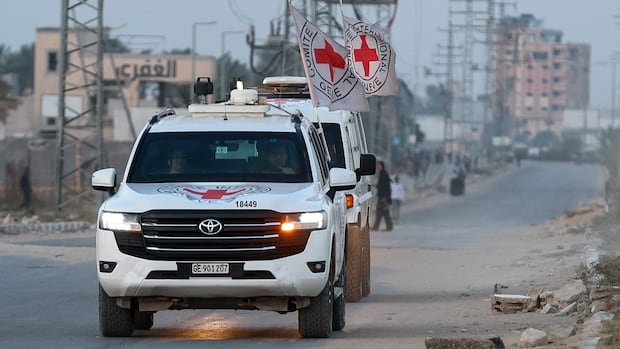

Hamas delivered two bodies believed to be Israeli hostages who had died, following a series of Israeli airstrikes that led to multiple Palestinian casualties, including women and children, in Gaza. The Israeli Prime Minister’s office confirmed the reception of the bodies through the Red Cross in Gaza for identification in Israel.
As part of the ceasefire agreement, Hamas released the remaining 20 living hostages in exchange for the release of around 250 Palestinians held by Israel for security-related offenses, along with 1,700 adults and 22 minors detained without charges during the conflict. Additionally, Hamas committed to transferring all 28 deceased hostages’ remains in return for 360 militants killed by Israeli forces during the war, with 15 bodies handed over before Thursday.
Israel expressed concerns about the delay in receiving the remaining bodies, citing Hamas’ need for time to locate and retrieve them. Families of the hostages are eager to provide a proper burial, fearing their loved ones’ remains may be lost amidst the rubble of Gaza, where thousands of missing Palestinians are presumed dead.
The retrieval and transfer of bodies have posed challenges to U.S. President Donald Trump’s efforts to resolve the Gaza conflict permanently. Complications include the governance of Gaza post-conflict and demands for Hamas to disarm, while both sides have accused each other of violating the ceasefire.
Israeli witnesses reported ten airstrikes in southern Gaza and tank shelling in northern Gaza, with no reported casualties. The Israeli military defended the strikes as targeting terrorist threats near their deployed forces in Gaza. Israel had retaliated against an attack on its troops, resulting in one soldier’s death.
The Gaza Health Ministry reported 104 fatalities, including 46 children and 20 women, in the airstrikes, while Israel claimed to have targeted numerous militants. Gaza residents expressed fear of renewed hostilities, highlighting their displacement and uncertainty about the future.
The conflict has displaced most of Gaza’s population, with many living in temporary encampments, unsure of returning home due to the persistent threat of displacement.