


Progress in reducing carbon emissions has decelerated in Canada, as reported annually to the UN by the federal government. Emissions from the oil and gas sector have increased post-pandemic. The most recent National Inventory Report for 2024, presenting a detailed overview of emissions, showed minimal changes across various economic sectors compared to the previous year.
Dave Sawyer, a principal economist at the Canadian Climate Institute, expressed doubts about meeting the 2030 emission reduction target. He emphasized the fragility of the progress and the risk of emissions moving in an unfavorable direction.
Released on April 15 without a public announcement, this year’s report unveiled 685 million tonnes of CO2 equivalent emissions for 2024, slightly lower than the 687 MtCO2 in 2023. This translates to a 10% reduction from 2005 levels. Canada’s 2030 target, established by Prime Minister Justin Trudeau in 2021, aims to lower emissions by 40 to 45% below 2005 levels, in line with the Paris Agreement.
Despite projections indicating the unattainability of the 2030 goal, there have been significant reductions in emissions from electricity generation, particularly due to the phasing out of coal plants. However, concerns loom as gas-powered electricity generation is increasing in Alberta and Ontario, while renewable energy growth remains inadequate.
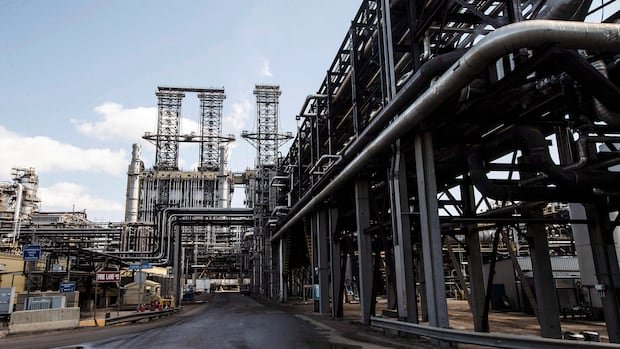
Conversely, emissions from the oil and gas industry, the largest emission source in Canada, have been on the rise since 2024. Production increases in Alberta and British Columbia, fueled by projects like the Trans Mountain Pipeline expansion and the new LNG terminal in Kitimat, B.C., have contributed to this trend. Emissions from oilsands production have notably surged from 33 MtCO2eq in 2005 to 92 MtCO2eq in 2024.
Sawyer highlighted the concerning trend of expanding oilsands production offsetting gains made in other emission reduction efforts. Without addressing these emissions, Canada’s overall emissions are likely to remain stagnant, with little prospect for immediate change.