


Thailand’s Princess Bajrakitiyabha Mahidol, the eldest child of King Maha Vajiralongkorn and a lawyer, passed away at the age of 47, as confirmed by the Bureau of the Royal Household. The princess had been receiving medical care at a Bangkok hospital for the past three years after falling unconscious due to an illness, and she died on Thursday evening, with the official announcement made the following day.
Prime Minister Anutin Charnvirakul expressed deep sorrow over the princess’s passing, describing her as a source of pride for Thailand. He highlighted her dedication to promoting kindness, justice, and equality, underscoring her lasting impact on the nation.
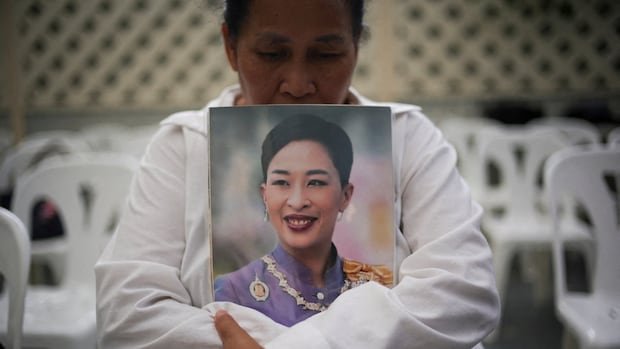
A small group of mourners gathered at King Chulalongkorn Memorial Hospital, where the princess was being treated, to pay their respects. Many attendees held framed photos of the princess, reflecting on her life and contributions.
Known for her advocacy in justice reform, Princess Bajrakitiyabha was actively involved in initiatives such as the “Inspire” project, aimed at assisting incarcerated women in Thailand with their rehabilitation before their release. Her sudden hospitalization in December 2022, following a mycoplasma infection contracted while training dogs for an exhibition, had raised concerns about her health.
Born on December 7, 1978, to King Vajiralongkorn and Princess Soamsawali, Princess Bajrakitiyabha, also known as Bajrakitiyabha Narendira Debyavati in formal contexts, was a prominent figure in Thailand’s public service arena. Despite being the eldest daughter, her public service work had sparked speculation about her potential role in the royal succession, possibly as a regent.
Having pursued law studies at Thammasat University and obtaining advanced degrees from Cornell University in the United States, Princess Bajrakitiyabha focused on legal rights protection, particularly for the accused. Her diplomatic roles, including serving as Thailand’s ambassador to Austria, and her advocacy work on criminal justice matters, earned her recognition and respect both domestically and internationally.
In addition to her efforts in supporting female prisoners and combatting violence against women, Princess Bajrakitiyabha’s commitment to justice and stability was widely acknowledged. Her work led to significant contributions in shaping policies related to female prisoner care and conditions, as exemplified by the adoption of the “Bangkok Rules” by the UN General Assembly.
Princess Bajrakitiyabha’s untimely death marks a significant loss for Thailand, leaving behind her grieving family and a legacy of compassion, justice, and advocacy for societal well-being.