

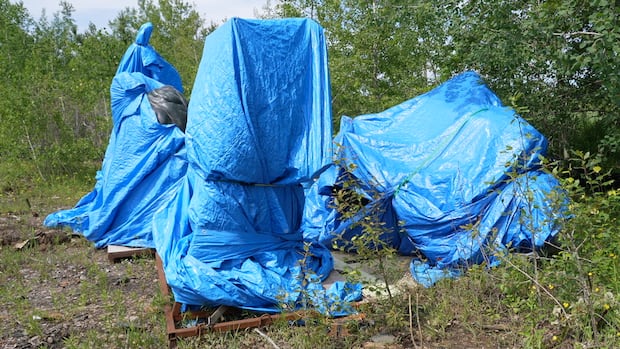

An impressive statue commemorating Samuel de Champlain, which had been located on the banks of Lake Couchiching in Orillia, Ontario, for a century, has now been taken apart and removed from public view.
The founder of Quebec City is currently face down and covered with a blue tarp. Some voices in Quebec are advocating for the nearly five-meter-tall statue to be relocated to their province.
“At this time, we are keeping it in a secure location,” stated Orillia Mayor Don McIsaac, who also allowed Radio-Canada access to view it. He expressed his frustration regarding the situation.
“It’s a stunning statue, and I don’t understand why people wish to prevent others from seeing it,” he remarked as he parked his vehicle behind a mound of dirt in an unused municipal lot.
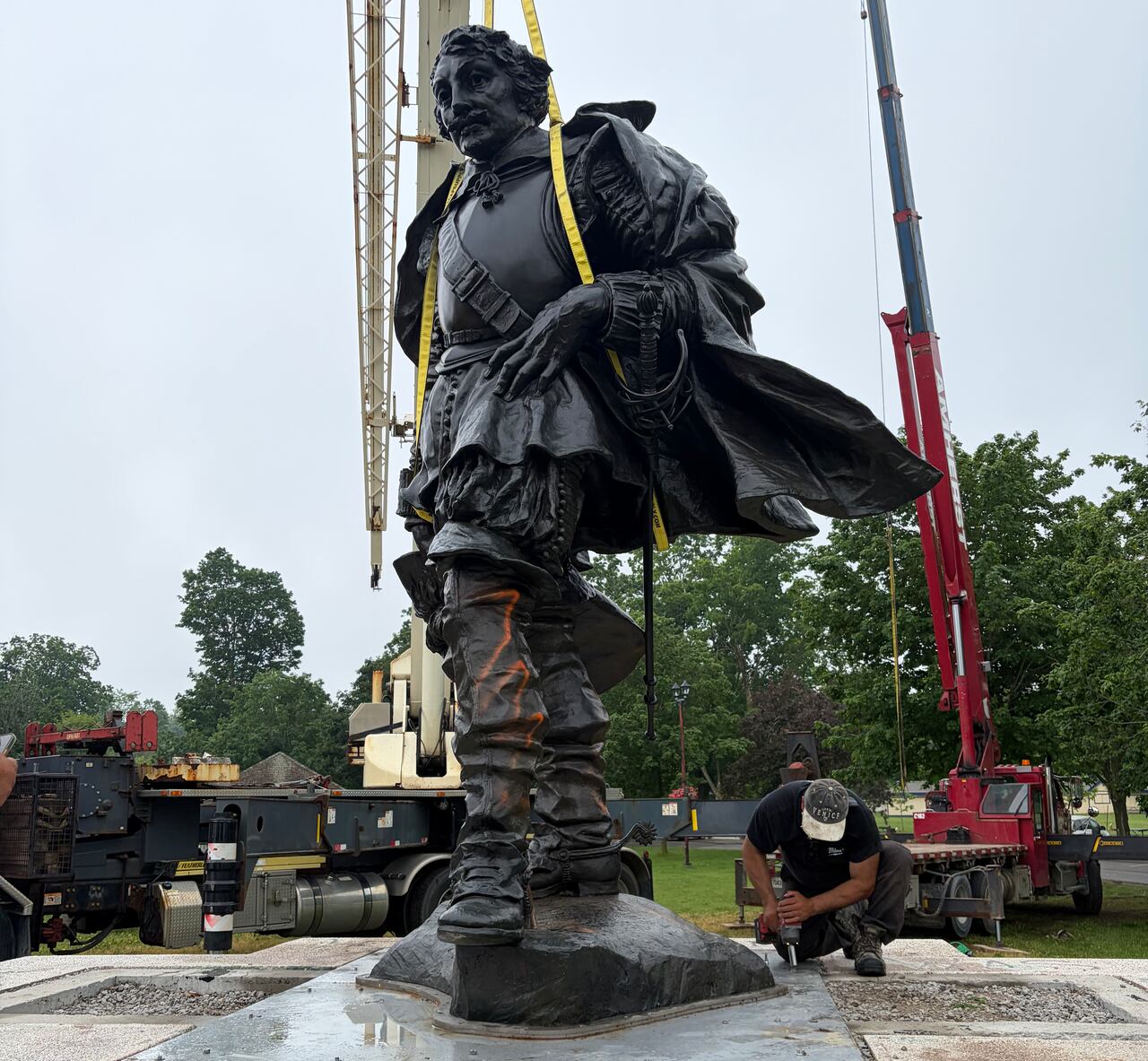
The statue of Champlain had been vandalized before it was removed. (City of Orillia)
The bronze statue has been disassembled into five parts. The first is the complete figure of Champlain, while two additional sections representing Indigenous peoples are positioned side by side. A fur trader and a missionary are separately wrapped.
The mayor pointed to graffiti on Champlain’s boot as a sign of the statue’s contentious nature.
Prior to its removal from the pedestal, the statue faced protests, leading to one individual being charged with mischief.
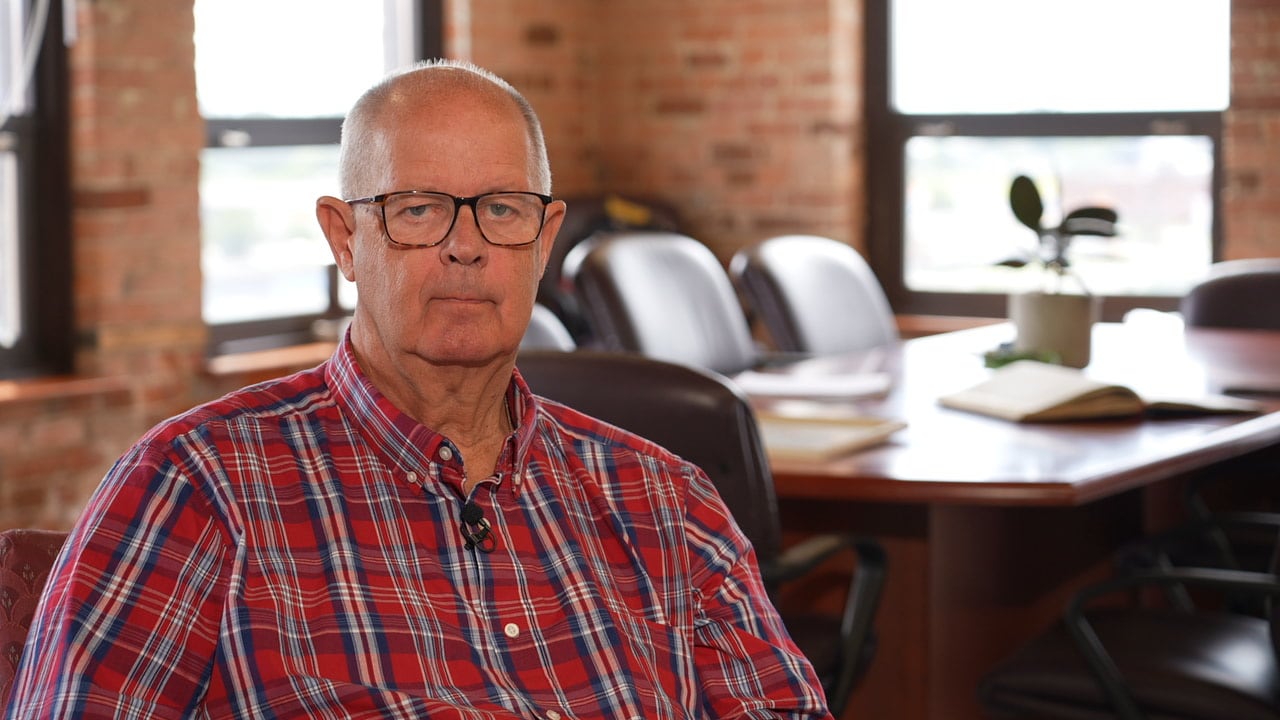
Orillia Mayor Don McIsaac says he’d like people to be able to see the statue. (Stéphane Richer/Radio-Canada)
Krystal Brooks was taken into custody at the base of the statue after inscribing “Rama said no” on its pedestal, referencing the Chippewas of Rama First Nation in the area.
For Brooks, an advocate for First Nations rights, Champlain represents a colonialist figure, and she believes that if he is to be commemorated, the Indigenous viewpoint must be clearly articulated.
Shortly afterward, a different inscription appeared at the foot of the statue: “Canada says yes,” claimed by activists identifying as Loyalists.
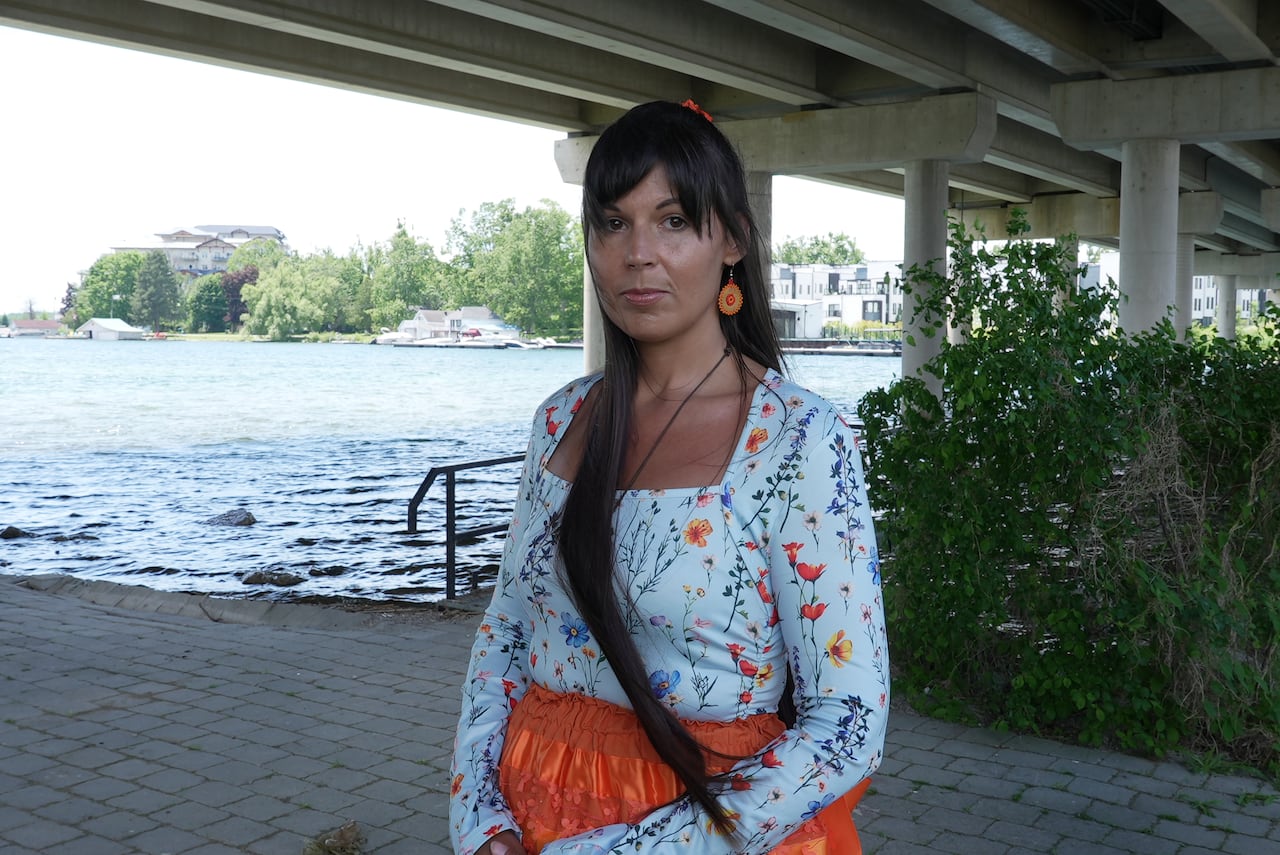
Chippewas of Rama First Nation member Krystal Brooks says that the statue is a symbol of colonialism, and that First Nations’ perspectives should be reflected if it is returned to its former site. (Stéphane Richer/Radio-Canada)
Brooks, a member of the Chippewas of Rama First Nation, reported receiving death threats.
“As with any Indigenous issue, it has attracted the attention of far-right extremists,” she told Radio-Canada. “Yes, that hatred exists, but it is currently going unchecked. And I believe that, in the spirit of truth and reconciliation, we must confront wherever hate exists.”
Champlain has been part of Orillia’s narrative for over 400 years. The French explorer spent the winter of 1616 in the area. The statue, which was installed in 1925, depicted Champlain with First Nations members at his feet, along with a Récollet friar and a fur trader.
Concerns regarding the future of the monument arose in 2017 when Parks Canada removed it from its pedestal for restoration. Some viewed it as a symbol of colonialism that was incompatible with reconciliation efforts.
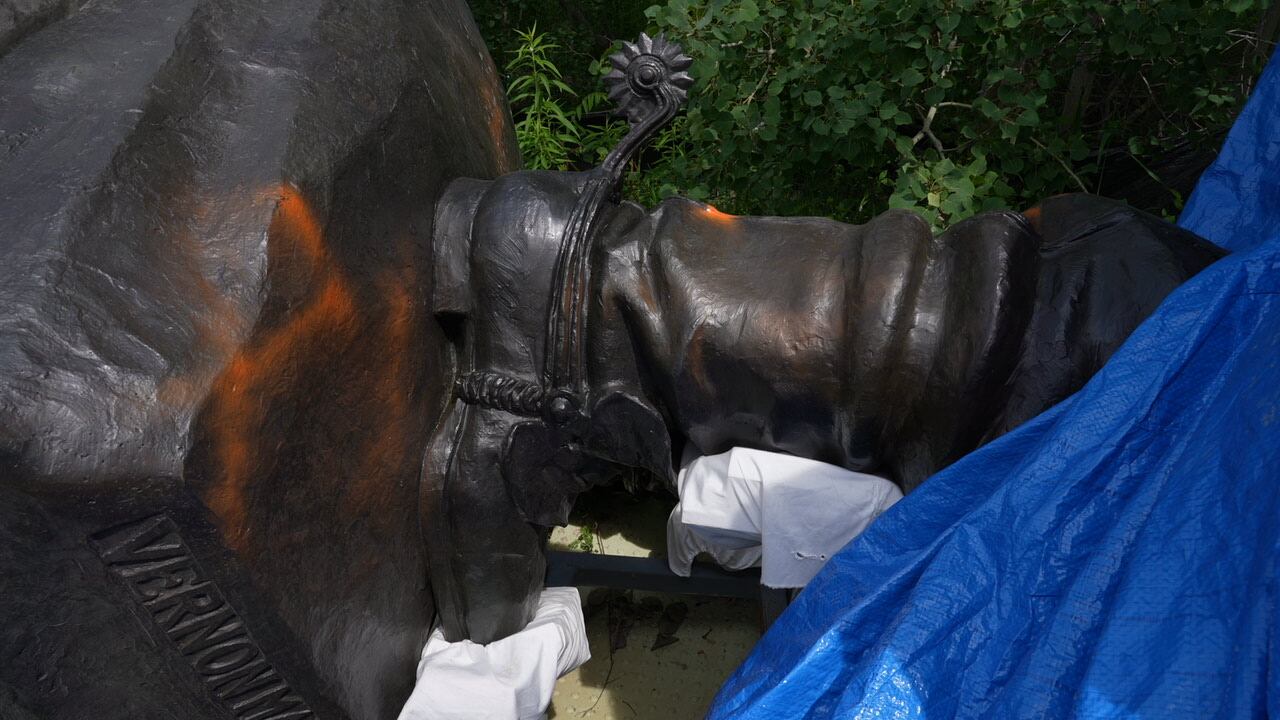
Some of the graffiti is still visible on the statue while it’s in storage. (Stéphane Richer/Radio-Canada)
A consultation committee was established by the municipality and Parks Canada. It recommended that only Champlain’s figure be reinstated while discussions regarding the figures of Indigenous peoples, the fur trader, and the missionary take place with First Nations.
Last March, the municipality presented a more detailed proposal.
“We revised the plaque using more contemporary language and reimagined the statue so that everything is on the same level,” McIsaac explained.
He noted that the missionary was removed “as a recognition of the harm” recorded by the Truth and Reconciliation Commission regarding Canada’s residential school system.
Report expected Monday
Champlain’s figure was briefly placed back on its pedestal while the plan was in development. To prevent controversy, the statue was covered. Nonetheless, tensions escalated quickly, leading the city council to vote for its removal again just days later.
Janet-Lynne Durnford is a city councillor who advocated for the statue’s removal. She believes the community requires more time and information to reconcile with the monument.
“In the proposed redesign, I felt we were moving too hastily, leaving out that crucial historical context that represented Indigenous perspectives,” she commented.
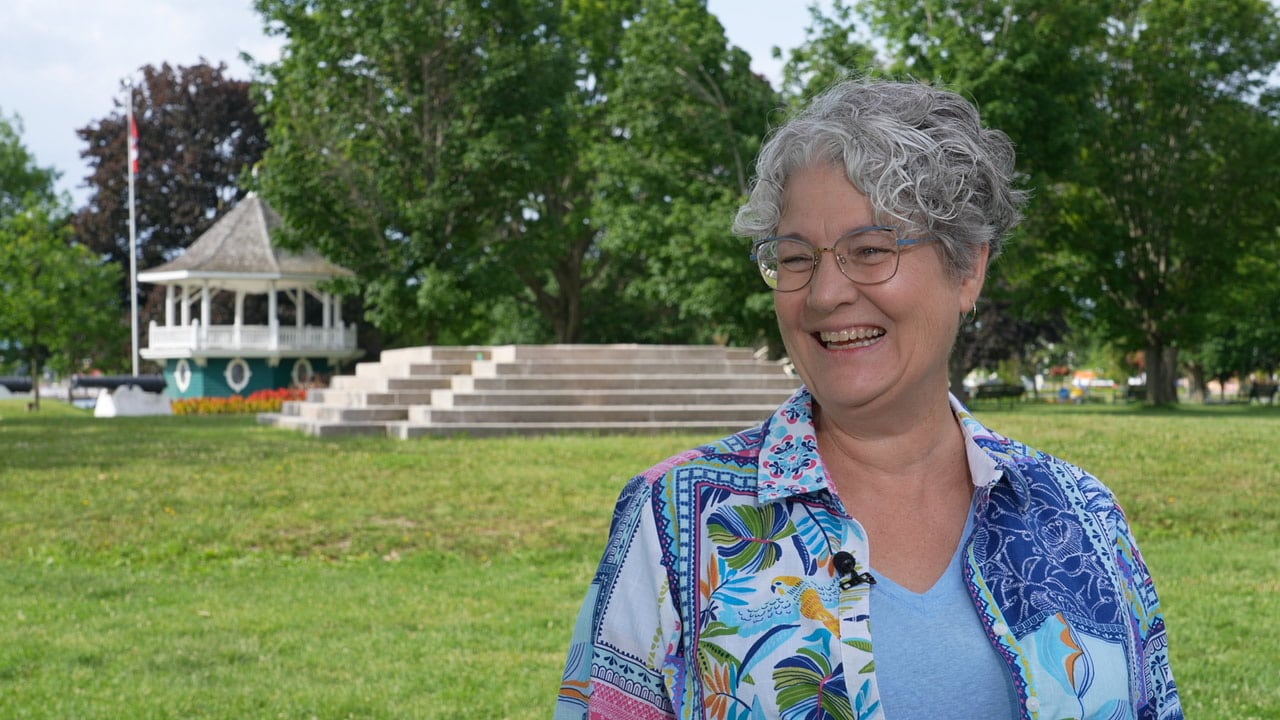
Coun. Janet-Lynne Durnford supported the statue’s removal, and said the city is working to put it in proper context. (Stéphane Richer/Radio-Canada)
“I remain optimistic that we can achieve that.… There is no intention to erase history.”
The municipality has received offers from various organizations willing to take the statue. McIsaac indicated that the city has received at least 20 proposals for either purchasing or relocating the monument.
These proposals will be presented to the city council, which will need to make a decision regarding the statue’s future. A report is set to be submitted on Monday.
The council is weighing four possibilities: keeping the statue in storage, reinstating it to its original pedestal, redesigning the monument, or disposing of it by melting it down or transferring it elsewhere.
Interest in Quebec
Certain officials in Quebec are advocating for the statue’s relocation to their province. Champlain established Quebec City in 1608.
Bloc Québécois MP Alexis Deschênes expressed disbelief at the thought of the statue potentially disappearing forever.
-
Statues at Queen’s Park to be wrapped to protect against vandalism, Speaker says
-
Sir John A. Macdonald was erased from some public spaces. Now there’s a movement to bring him back
“It’s truly difficult to accept that the statue of Quebec City’s founder, Samuel de Champlain, is being unbolted and that there are even discussions about melting it down,” he stated.
“Clearly, Samuel de Champlain was not flawless,” he acknowledged. However, he believes the statue can be contextualized with respect to openness towards First Nations and the significance of building alliances.
Quebec’s Minister of Culture Mathieu Lacombe mentioned that no formal conversations have yet occurred with Orillia’s mayor regarding the statue.
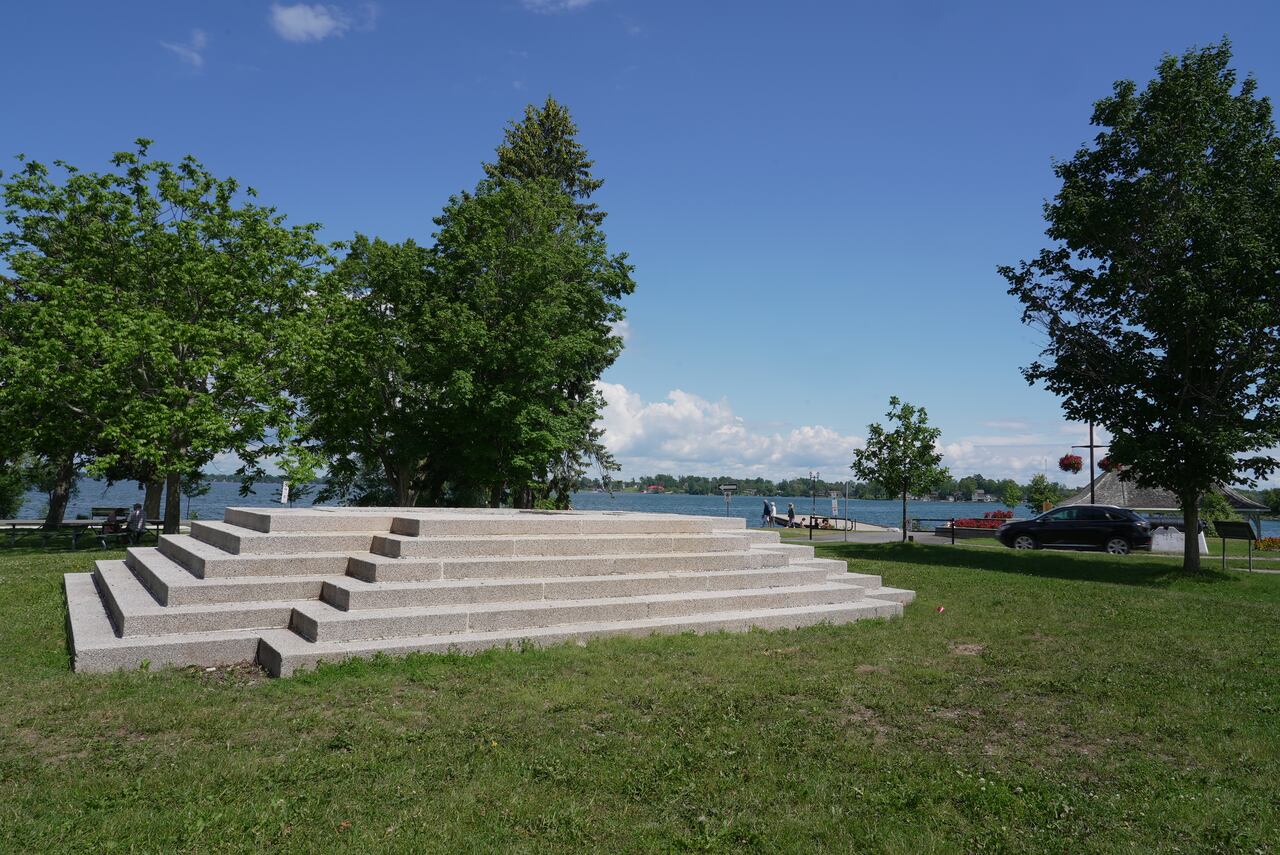
The pedestal on the shore of Lake Couchiching now sits empty. (Stéphane Richer/Radio-Canada)
However, Konrad Sioui, the former grand chief of the Huron-Wendat Nation, believes the Quebec government should reconsider before accepting the statue.
<p"Personally, I don't think repatriating Champlain would be welcomed," Sioui remarked.
“We hold no animosity towards the individual, but we cannot overlook the fact that our nations were utterly devastated during Champlain’s time. It was a complete genocide—not directly caused by Champlain, but by the presence of the Black Robes [missionaries] and the ambition to encroach into the Great Lakes and other areas where we could be infiltrated.”
He noted that Quebec City itself removed a mosaic honoring its founder last year. The artwork, which also placed Champlain above Indigenous figures, had been displayed in the reception area of city hall.
Sioui expressed hope that the Orillia statue will meet a similar fate.