

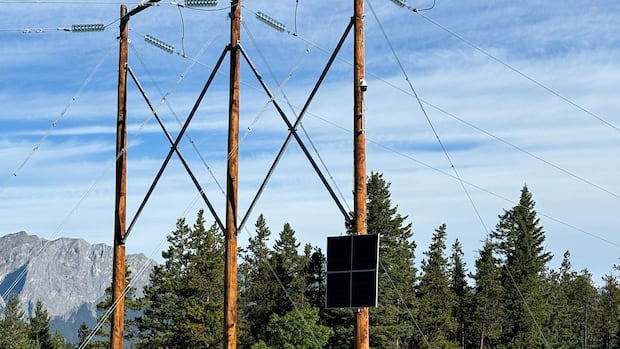

Several utility companies in Alberta are experimenting with AI-enabled cameras, aiming to utilize the technology for early detection of fires near power facilities before they escalate.
In the Bow Valley, AltaLink has been trialing AI-driven wildfire detection cameras since last June, with one positioned north of Kananaskis Village and another located just west of Canmore, Alberta.
According to AltaLink, these sites were selected due to their classification as high-risk wildfire zones within the utility’s existing camera network in the area.
The utility operates 17 cameras throughout its power infrastructure in the province, which were previously monitored manually for wildfire threats. The newly implemented AI system automatically analyzes camera feeds for potential wildfires and alerts staff for further assessment.
As Alberta’s wildfire seasons grow increasingly severe, utilities are actively seeking methods to mitigate the wildfire threat surrounding power infrastructure. AltaLink reports that approximately 10 percent of wildfires in Alberta are associated with utility infrastructure.
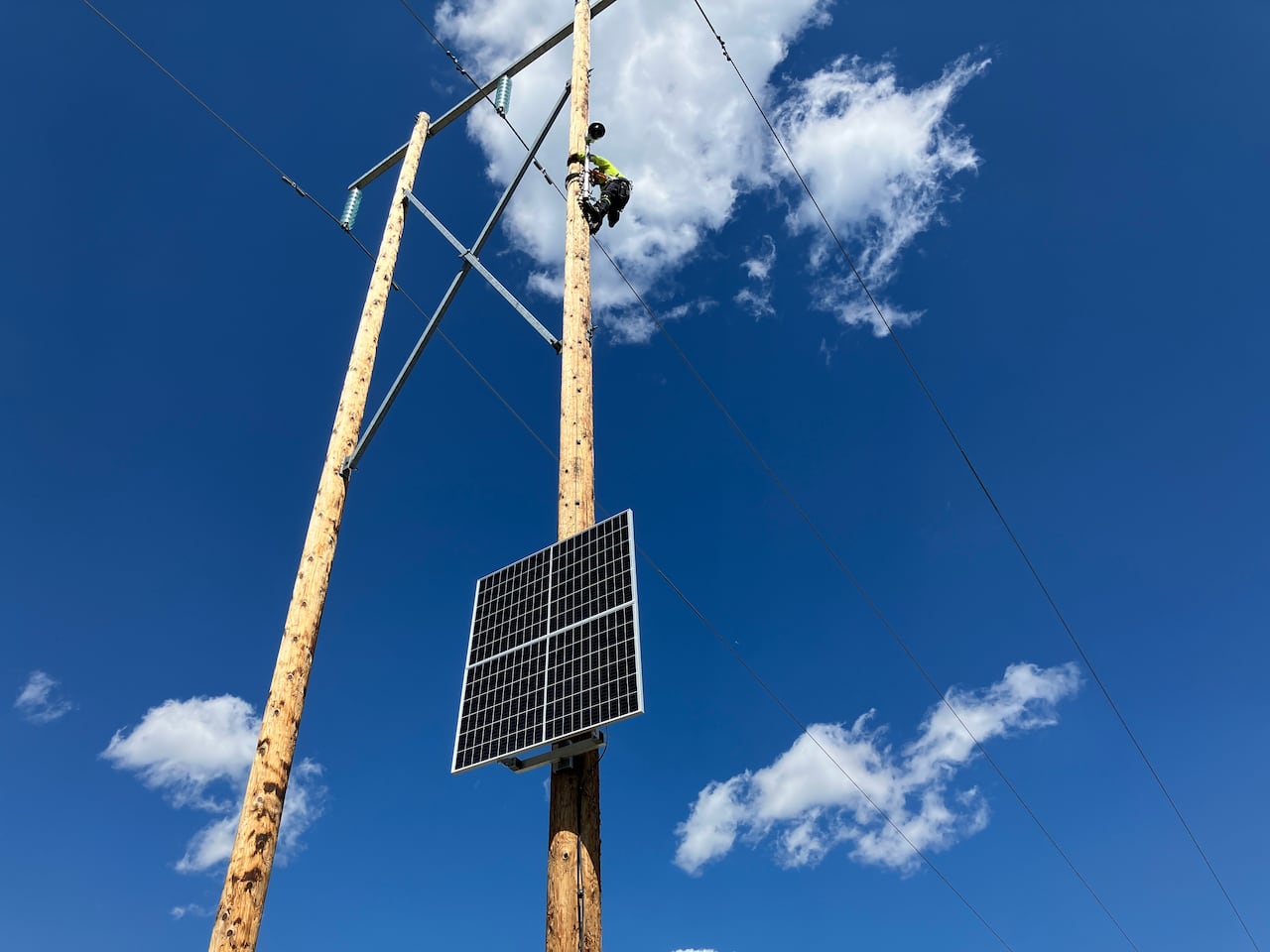
A worker retrofits an AltaLink camera in the Bow Valley with AI detection software. (Photo submitted by AltaLink)
ATCO Electric reported that it conducted an AI camera pilot initiative from July 2024 to February 2026, in areas near Whitecourt, Swan Hills, and Slave Lake, Alberta.
The company noted that one of its cameras detected the onset of a wildfire last June. Responding crews reached the site within 30 minutes of the fire’s ignition, and ATCO stated that the fire was extinguished within an hour.
A subsequent analysis indicated that the fire would have spread over several kilometers and become uncontrollable if it had continued to burn for another hour.
The cameras remain operational and are now integrated into the company’s comprehensive wildfire management strategy, according to ATCO.
‘Real-time feedback’
Scott Schifando, vice president of operations at California-based ALERTWest — the provider of AI technology for AltaLink and ATCO — stated that utilities are increasingly intrigued by these systems, as many power lines traverse remote locations where people may not be present to quickly identify and report a wildfire.
“Installing these cameras in remote areas where wildfires could ignite and potentially smolder unnoticed for extended periods before a 911 call is made is a logical approach,” he remarked.
Schifando mentioned that fire agencies in various regions of the United States have come to depend significantly on these cameras.
“Consider what a tool like this offers them; it provides not only early detection but also visibility into a fire throughout its entire duration,” he explained.
“By delivering immediate live feedback to firefighters about the fire’s behavior and trajectory, we have heard how greatly it enhances decision-making capabilities.”
Ongoing landscape monitoring
The cameras are capable of rotating 360 degrees every minute or two, consistently monitoring the surrounding landscape.
The images captured are processed by an AI model that has been trained with visuals of known wildfires. If the system detects a potential ignition, ALERTWest personnel assess the finding prior to issuing alerts to utilities and fire departments.
Schifando stated that ALERTWest camera systems have identified approximately 5,600 fires in the western United States over the past two years.
He also mentioned that the system can quickly recognize the onset of a fire.
According to Schifando, the system can detect some fires within a minute of their ignition, although this varies based on the proximity of the smoke to the camera; further distances may delay detection.
Currently, the company operates eight cameras in Alberta.
Opportunities and obstacles
Mathieu Bourbonnais, an assistant professor at the University of British Columbia Okanagan, who has collaborated with the B.C. Wildfire Service on AI wildfire detection systems, acknowledged the technology’s promise but highlighted ongoing challenges.
“There are many false positives; clouds can mimic smoke, or a large truck’s exhaust can resemble a fire,” he explained.
Bourbonnais noted that refining algorithms to more effectively differentiate fires from other visual anomalies remains a critical focus of his research.
He stated that Alberta is somewhat distinctive in wildfire detection, possessing one of the most comprehensive networks of staffed wildfire lookout towers in North America.
Alberta Wildfire employs 104 lookout observers throughout the province during wildfire season.
The agency indicated that in 2022, it conducted tests comparing AI cameras with human lookout observers, finding that human observers were more effective at identifying wildfires.
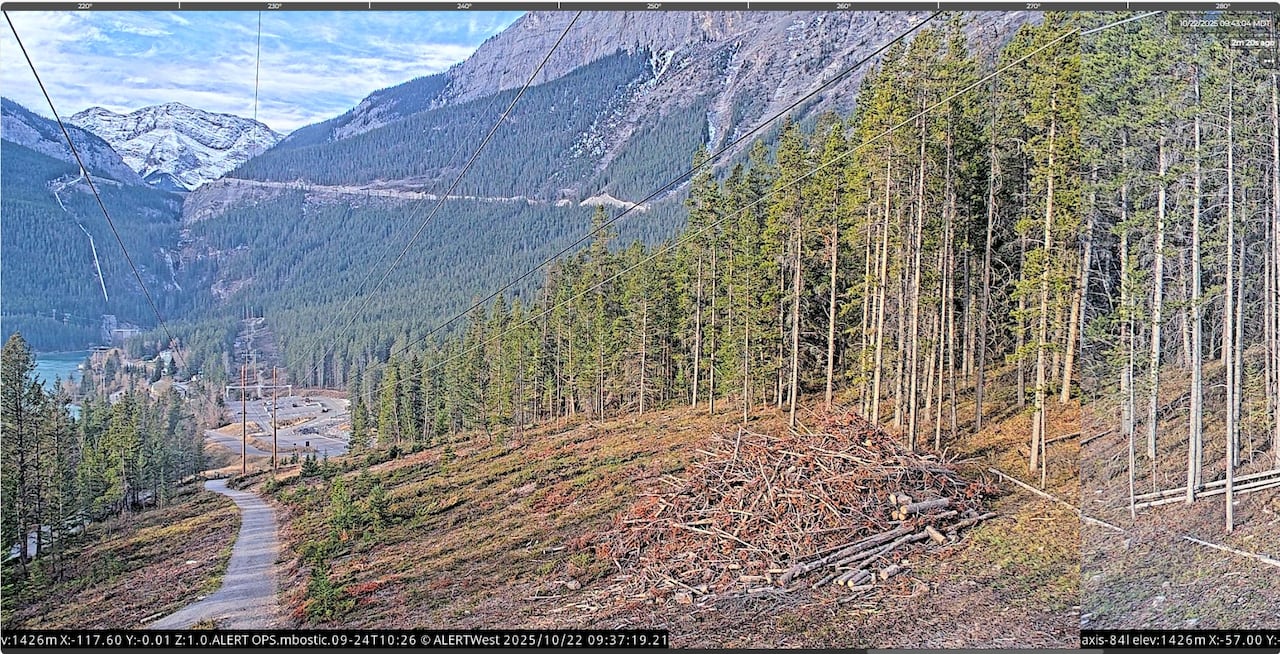
A view captured from one of the AltaLink AI detection cameras in the Bow Valley. (Photo submitted by AltaLink)
Nonetheless, utilities assert that the cameras are designed to complement, rather than replace, existing wildfire detection systems.
AltaLink mentioned that one staffed wildfire lookout in the Bow Valley has a limited view of its transmission lines, but the AI cameras aim to provide continuous monitoring and automated alerts focused specifically on its infrastructure.
Shawn Reimer, AltaLink’s wildfire program manager, noted that the company is still in the initial phases of assessing the technology.
“There was a situation involving a controlled burn in the vicinity, and the camera detected it immediately and notified us,” he shared.
Reimer expressed hope that alerts generated by the cameras could eventually be communicated directly to local fire responders.
“As the largest electricity transmission provider in Alberta, our focus is on safeguarding the communities we serve while ensuring the delivery of safe and reliable power,” he concluded.