


Families of Canadian soldiers interred in Gaza are urging the government to take stronger measures to safeguard their loved ones’ graves. Some relatives are advocating for the repatriation of their kin—the last Canadian soldiers laid to rest abroad—from a cemetery that has suffered repeated damage due to the actions of the Israel Defense Forces (IDF).
At the Gaza War Cemetery, located in the Tuffah area of Gaza City, 22 Canadians are buried, all of whom died during the UN’s inaugural significant peacekeeping mission that commenced after Israel invaded Egypt in 1956.
Aerial photographs analyzed by CBC’s visual investigations team reveal that the IDF has systematically dismantled headstones, constructed earth berms with heavy machinery, stationed tanks and other armored vehicles around the cemetery, and caused blasts that have hurled portions of the Canadian peacekeeper section into the air.
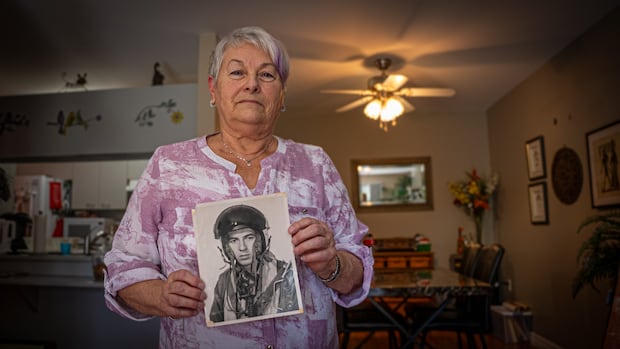
The sisters of two soldiers interred there, Paul Picard from Quebec and Adriaan Bons from Ontario, expressed their worries regarding the condition of their brothers’ graves in a conversation with CBC News.
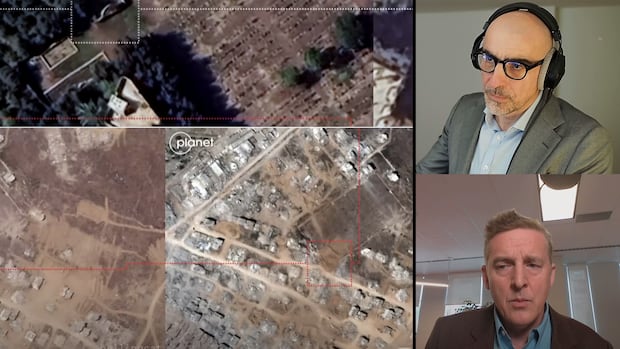
A CBC News visual investigation has confirmed that the Gaza War Cemetery where 22 Canadian soldiers are buried has largely been destroyed by the IDF. For The National, CBC’s Evan Dyer examines the evidence and speaks to families who say they’re heartbroken.
“It seems like there are no headstones left. It’s just dirt, gravel, and sand,” remarked Lia Bons upon viewing the before-and-after aerial images of the cemetery.
“There’s nothing left even of the nearby homes.”
Bons expressed relief that her parents did not witness the “complete destruction” of their son’s final resting place.
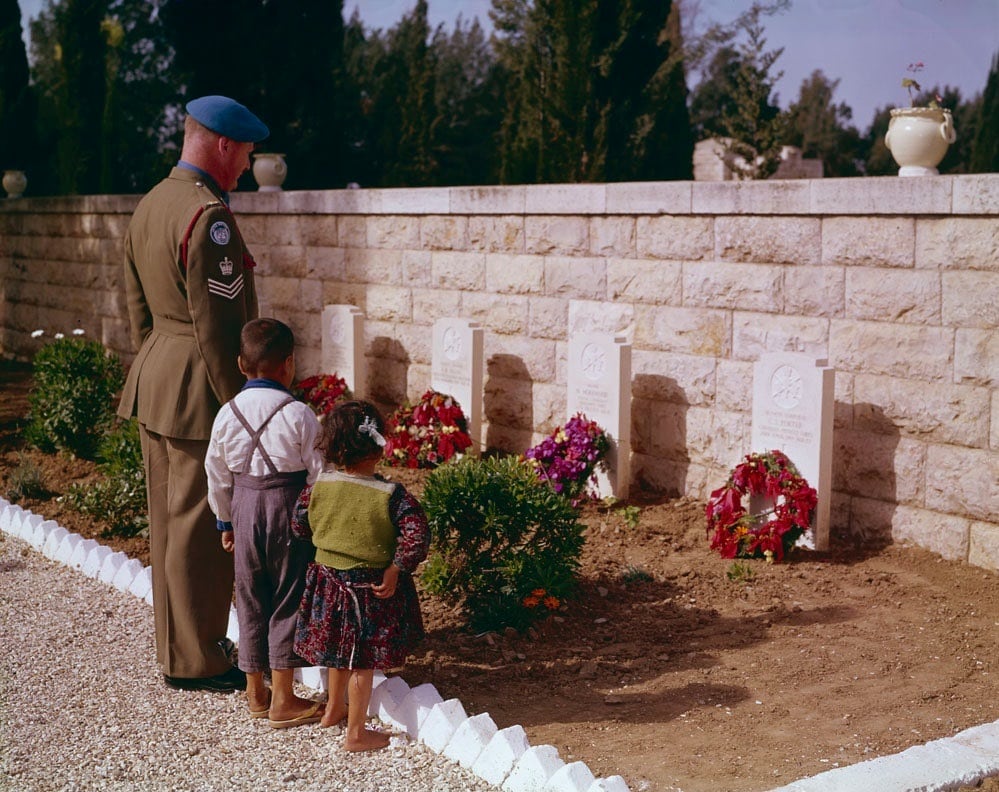
A Canadian soldier serving with the United Nations visits the Canadian peacekeeper plot in the 1960s. The young boy and girl with him are members of the Jaradeh family, who have tended the cemetery for four generations. (Library and Archives Canada)
Marguerite Picard expressed her desire to have her brother reinterred next to their parents.
“I am quite certain my parents would want my brother brought back home,” she stated. “I would lay him beside mom and dad and have his name inscribed on the headstone, so that visitors know he is there.”
CBC News contacted the IDF regarding the cemetery and spoke with an officer from the 401st Brigade Combat Team, who stated that his unit had excavated to a depth of 20 to 30 meters in the cemetery to demolish a tunnel that ran beneath it. He mentioned that this work was conducted under combat conditions, and no measures were taken to safeguard the remains of soldiers interred in the plot, which is overseen by the Commonwealth War Graves Commission (CWGC).
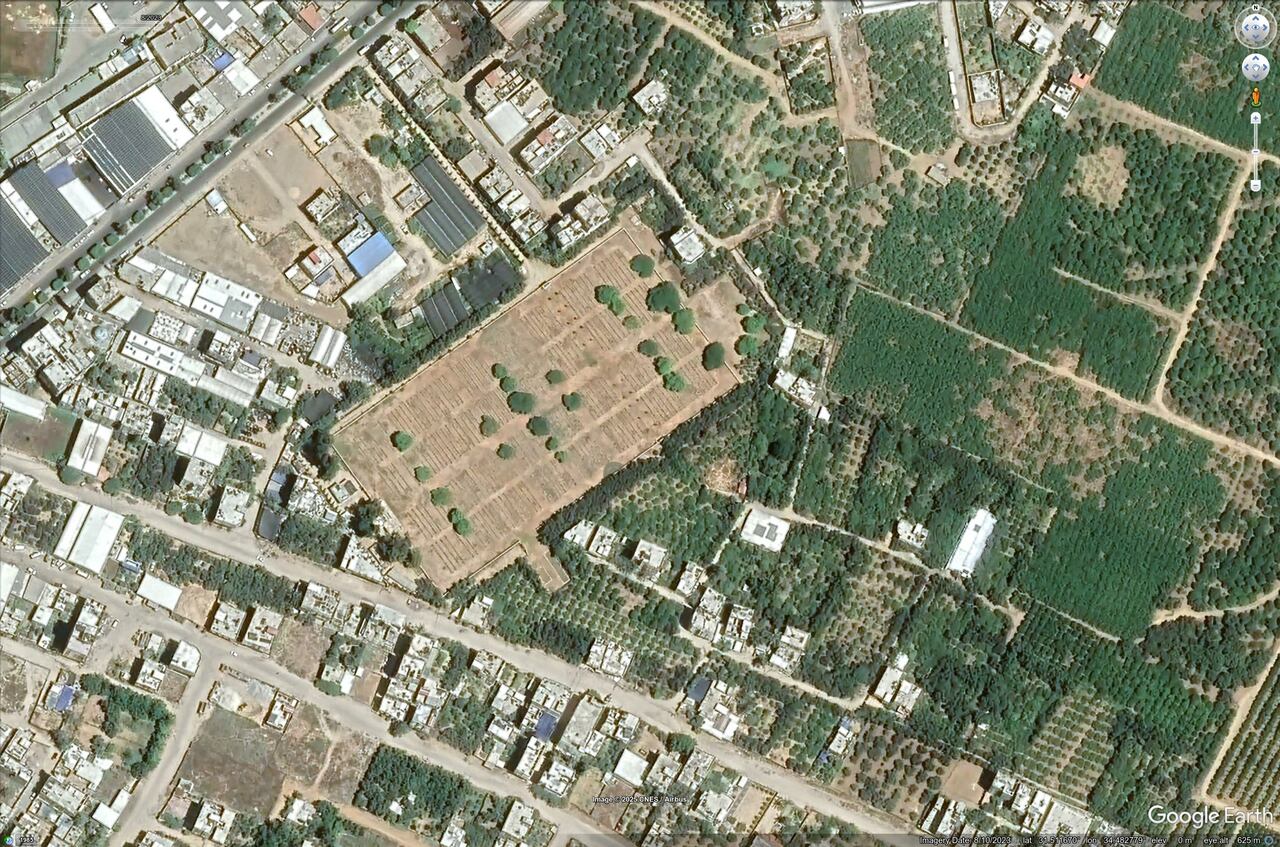
A satellite image shows the cemetery as it appeared in August 2023. (Google Earth)
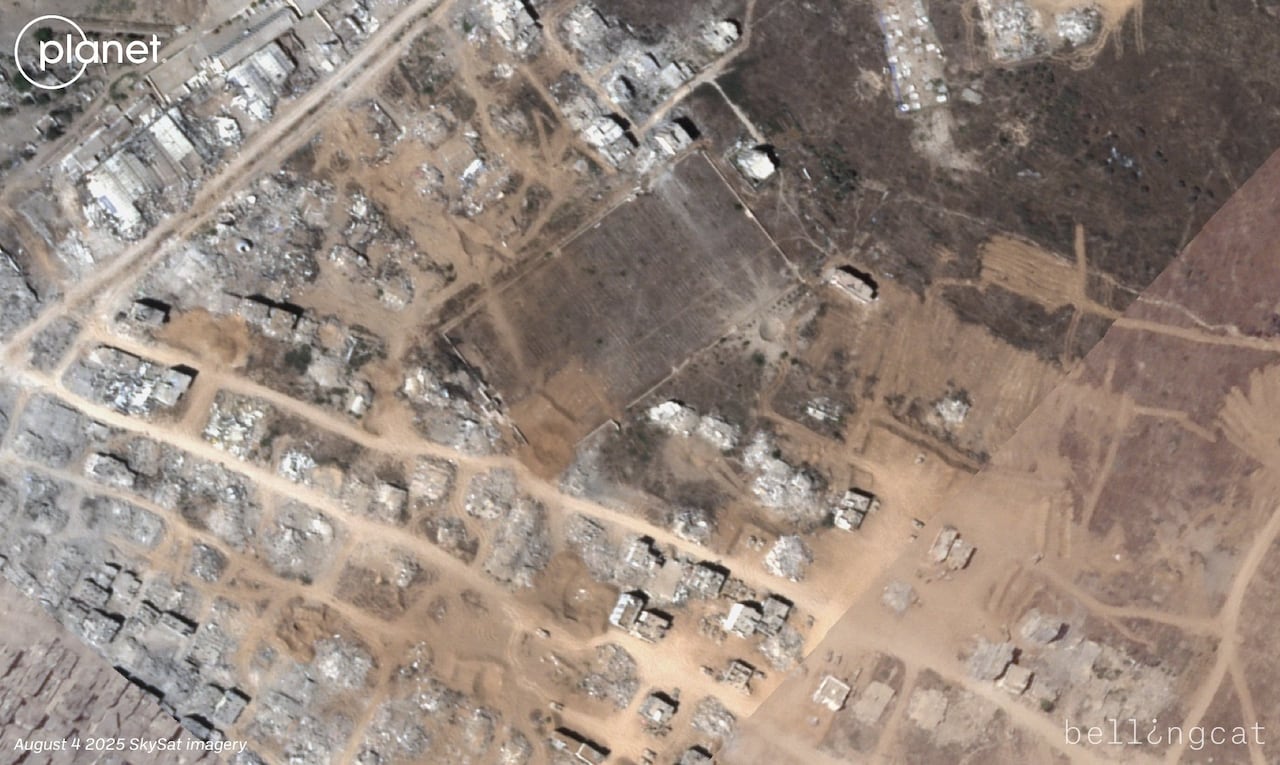
The same cemetery as it appeared on Aug. 4, 2025, the day after the IDF detonated explosives under the Canadian peacekeepers’ plot. A large crater can be seen at the bottom (southeast) corner of the cemetery. (Bellingcat)
In a social media post in Hebrew from 2025, the IDF mentioned an operation aimed at collapsing what they described as a Hamas tunnel near “a cemetery” in Gaza City.
CBC’s visual investigations team was able to geolocate that footage and confirm it depicted the Gaza War Cemetery. The video shows a series of underground explosions, with three substantial plumes of debris shooting upwards. One of these explosions occurs at the southeast corner of the cemetery, where the 22 Canadian peacekeepers are buried.
Dust is seen lifting from the ground along paths connecting those explosions, indicating that the blasts traversed underground tunnels.
Reduced to rubble, then blown up
Due to IDF restrictions preventing journalists from accessing the area, CBC News has relied on satellite imagery to evaluate the site.
This imagery indicates significant destruction had occurred at the cemetery even before August 2025, with above-ground structures left in ruins.
However, the CBC News analysis of explosive detonations that seemingly took place between August 3 and August 4, 2025, clearly implies damage deep below the surface.
The IDF shared its video of the demolition operation on the morning of August 7.
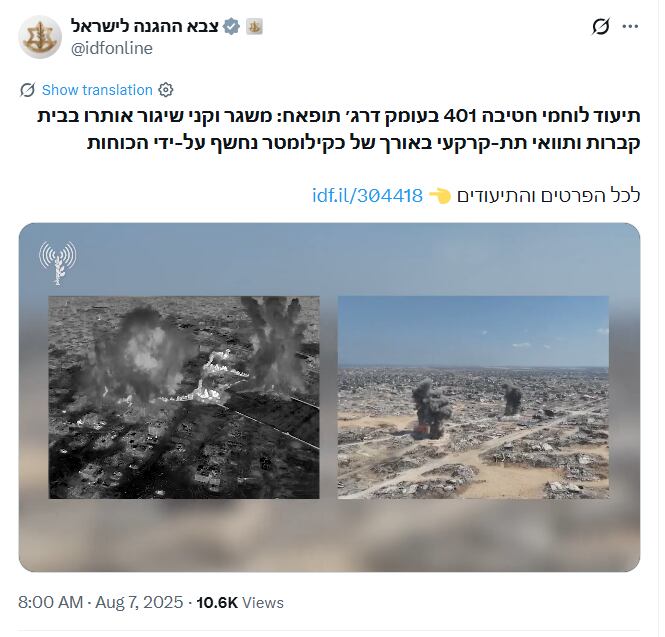
CBC’s visual investigations team confirmed that the video on the left of this IDF post from August 2025 shows an explosion at the corner of the Gaza War Cemetery where the Canadian peacekeepers’ plot is located. (IDFOnline/X)
No Canadian government representative has visited the site, nor has anyone from the Commonwealth War Graves Commission. The local Jaradeh family, who have cared for the cemetery for four generations, had to flee the area as the IDF advanced and are currently in Egypt.
Historically, it was customary to bury Canadian soldiers who died abroad in the conflict zone, but this policy shifted in 1970.
The 22 men who perished during the UN peacekeeping mission in Gaza and Sinai were the last to be interred overseas.
A fiery crash in the desert
Among them was Paul Picard, the only son in a family of daughters from Beauharnois, Quebec. He became a pilot officer in the Royal Canadian Air Force in 1964 and soon found himself in the Middle East on the peacekeeping mission that would earn a Nobel Peace Prize for its chief advocate, Canadian foreign minister Lester Pearson.
He piloted Dakotas and De Havilland Otters, delivering supplies to the forces that separated the Israeli and Egyptian fighters in the desert. The young officer became engaged to a British woman residing in Beirut.
Picard signed up for a second tour, and as his time in the Middle East was coming to an end, he was offered a position with Air Canada flying DC-8s.
He was already in the process of training his replacement when mechanical issues arose with his plane, leading to a crash shortly after takeoff.
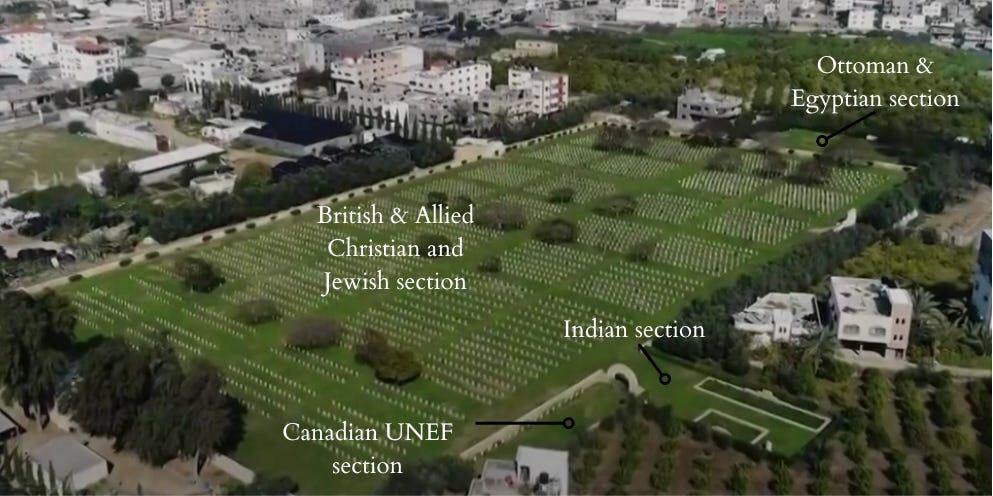
The Gaza War Cemetery as it appeared before the latest Gaza war, with the Canadian peacekeepers’ section shown at bottom. (Commonwealth War Graves Commission)
“One person died on the plane,” reported Marguerite Picard. “My brother and another individual managed to escape, burned, and rolled in the sand to put out the flames.”
He sustained third-degree burns over much of his body.
The Canadian government only financed the travel of Paul’s father to Egypt. However, local Egyptians gathered funds to cover his mother’s flight too, allowing both to arrive five days after the crash, just hours before their son passed away.
“Paul was astonished to hear my mother’s voice,” his sister recalled. “He spoke with them, and then he died, almost as if he were waiting to hear from them before passing.”
Paul Picard was given a grand funeral with military honors at the Gaza cemetery. Unfortunately, neither his parents nor his sisters were ever able to revisit his gravesite.
‘Bad enough that he’s buried in a faraway land’
Lia Bons recounted that her brother Adriaan was raised in a financially struggling Dutch immigrant family but “had big dreams for his future. He longed to explore and see the world. I believe that’s why he enlisted in the army.”
Bons was eager to participate in the peacekeeping mission and shared photos of himself riding a camel with family back home.
“I think he genuinely enjoyed it there,” she noted.
Adriaan lost his life while trying to locate another soldier who had gone missing in the no-man’s-land between Israeli and Egyptian forces.
“Due to the shifting sands, as he was turning back, the jeep’s wheel struck a landmine,” she explained.
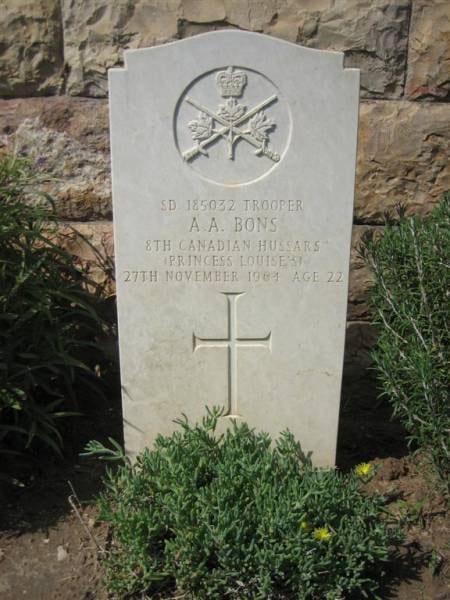
The tombstone of Adriaan Bons in the Gaza War Cemetery before it was destroyed. (Stephanie Jenzer/CBC)
Lia Bons and her sister were returning from school when they noticed an unfamiliar car in their driveway.
“I remember my father outside on the grass, kneeling and weeping. He was their first-born son, their baby,” she recalled.
Adriaan Bons’s father was the only family member who ever visited the cemetery, making the trip in 1986 during a relatively peaceful period in the Israeli-Palestinian conflict.
Lia expressed that the family frequently felt the absence of a place to honor Adriaan. The devastation of the Gaza cemetery now intensifies that feeling.
“It’s already painful enough that he’s buried in a distant land,” she lamented. “But to have such a disruption, with the cemetery being destroyed, is just heartbreaking. It’s devastating. How could anyone do such a thing?”
Damage continues in 2026
Recent satellite pictures of the Tuffah area reveal that the IDF has continued to inflict damage on the site.
Between April 5 and April 16, the archway leading to the Canadian plot, which had at least partially survived the destruction of August 2025, seems to have been demolished.
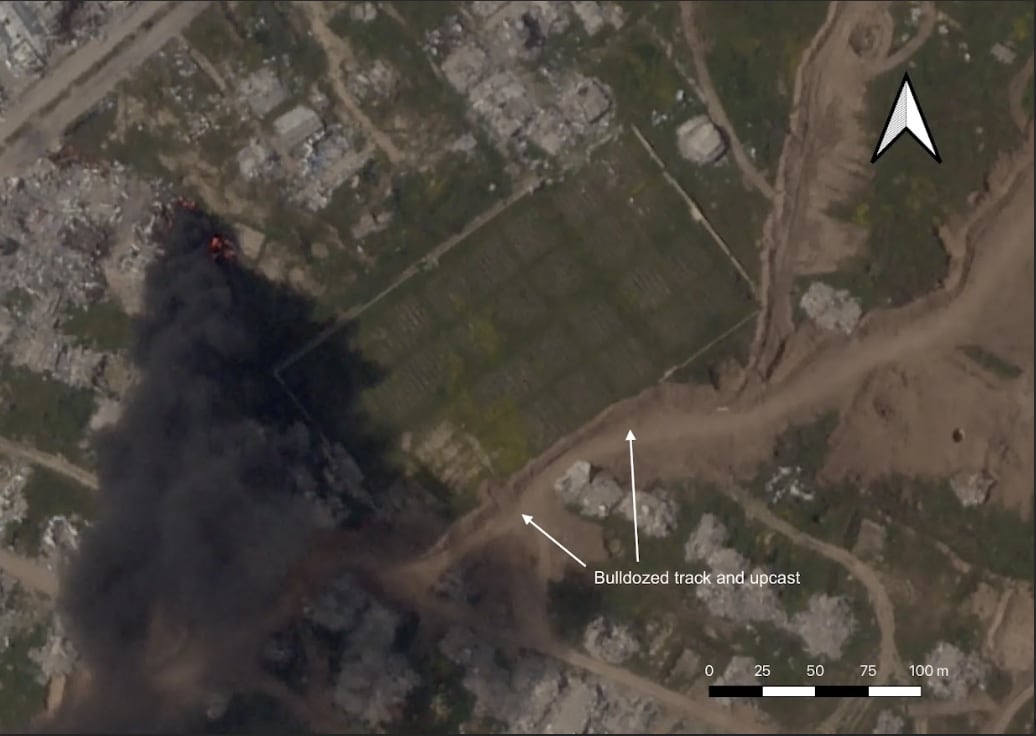
The arched entrance to the Canadian plot appears to have been destroyed during April 2026, and was no longer visible in this Planet Labs satellite image from April 16. (Planet Labs)
Jake Godin, affiliated with the digital research organization Bellingcat in Washington, D.C., informed CBC News that the IDF inflicted extensive damage on both the main cemetery and the adjacent Canadian and Indian sections during the first half of April.
“We observed the construction of a large berm along the IDF’s designated control line. Essentially, the Canadian section has been entirely devastated,” he stated.
“The wall is gone, the archway is no longer there. There’s a significant dirt berm and a dirt roadway.”
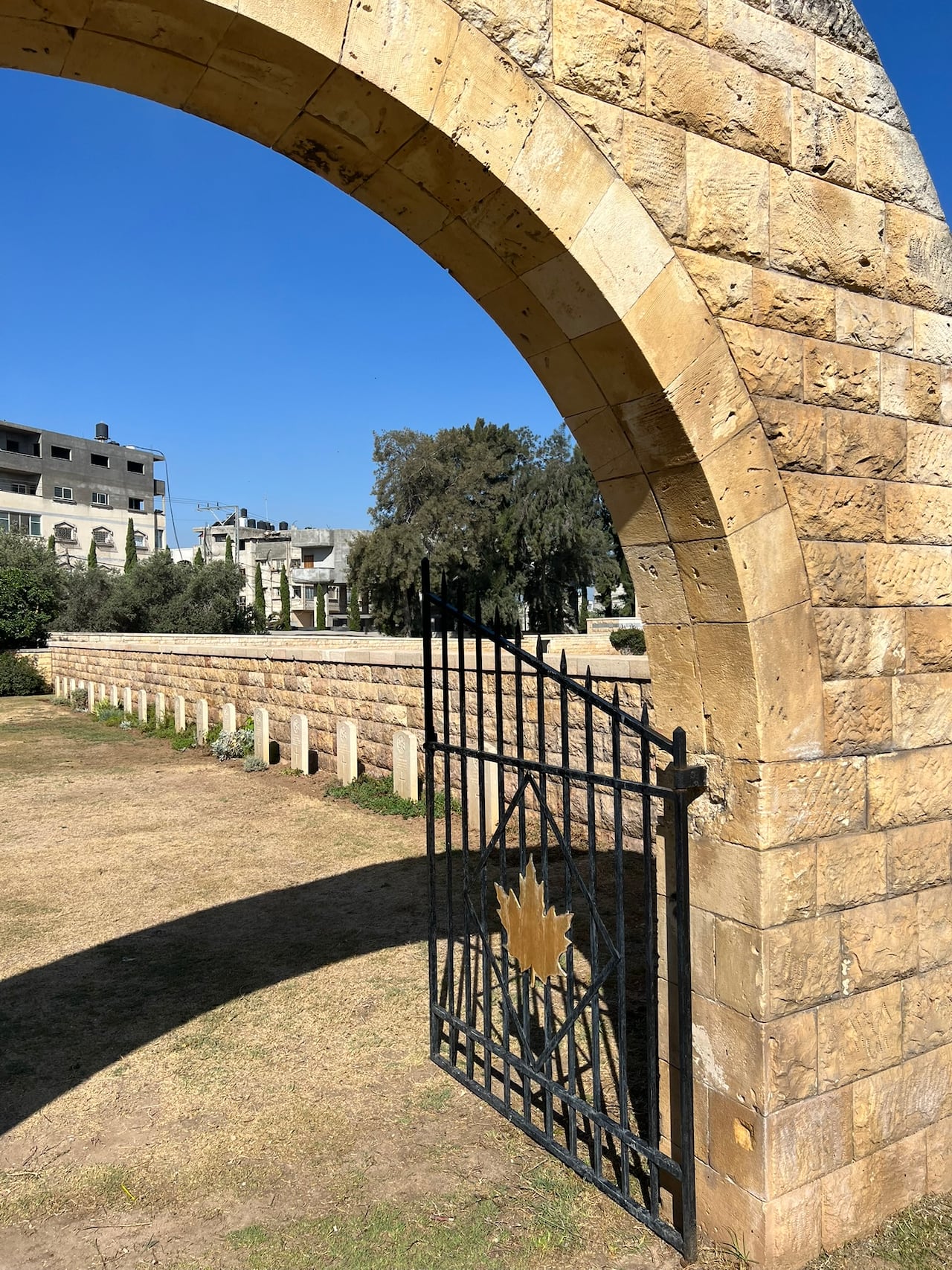
The arched entrance to the Canadian plot and a row of Canadian headstones, as they appeared before 2023. The arch appeared to survive the August 2025 demolition operations, but has since been destroyed. (Stephanie Jenzer/CBC)
“The ongoing restriction of access to the Gaza War Cemetery is still hindering damage verification, forensic evaluation, and timelines,” stated Josh Bueckert from Veterans Affairs to CBC News. “Consequently, the CWGC cannot dispatch their personnel for a comprehensive assessment of the situation.”
Canadian officials declined to disclose what actions they have taken with the Israeli government.
“Canada is profoundly concerned by reports of damage to the Gaza War Cemetery,” Brittany Fletcher from Global Affairs Canada stated. “Canada emphasizes the necessity of preserving historical and memorial sites dedicated to those who served with the utmost respect.”
She noted that Global Affairs would not “discuss confidential communications between states,” but mentioned that the department “has been in contact with local authorities,” without specifying who those authorities are.