

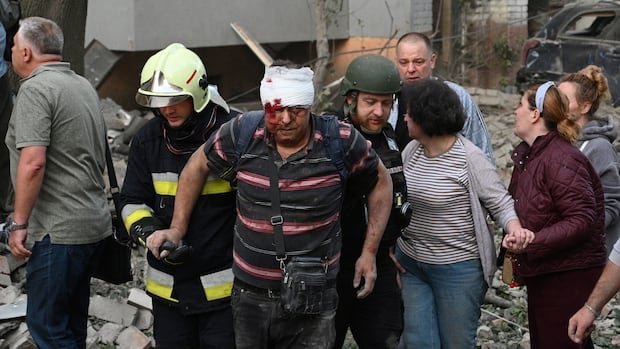

A barrage of Russian ballistic missiles and drones struck various regions in Ukraine overnight, resulting in the deaths of at least 10 civilians, including children, and injuring over 50 individuals, officials confirmed on Thursday. NATO was prompted to dispatch its warplanes after one missile breached Ukraine’s western border, reaching Poland.
The relentless attacks marked an escalation of Russia’s ongoing bombardment of Ukrainian cities, particularly Kyiv, where a significant number of residents sought refuge in subway stations. Moscow seemed to exploit Kyiv’s vulnerable position due to the critical shortage of Western-supplied anti-ballistic missile defenses.
NATO reported that a Russian missile encroached into Polish airspace during the onslaught, landing in a rural area without causing casualties or damage. However, this incident heightened concerns among European nations about the conflict potentially spilling over into their territories.
NATO Secretary-General Mark Rutte condemned the missile breach as “yet another reckless act by Russia and a dangerous consequence of its war against Ukraine.” Polish Prime Minister Donald Tusk echoed these sentiments, emphasizing that there was no evidence suggesting Poland was the intended target.
The Russian onslaught targeted areas in Ukraine suspected of housing weapon stockpiles and manufacturing facilities. In retaliation, Ukrainian long-range drones and missiles inflicted damage on Russia’s oil sector, triggering a fuel crisis.
The attacks occurred shortly after Ukrainian President Volodymyr Zelenskyy held discussions with U.S. President Donald Trump and representatives from American defense companies. Zelenskyy appealed for expedited deliveries of Patriot air defense systems to counter Russia’s ballistic assaults.
Acknowledging the scarcity of air defense missiles from allies, Zelenskyy praised the professionalism of Ukrainian forces, underscoring the critical importance of protection against Russian missile threats in safeguarding lives.
In the deadliest attack in the Dnipropetrovsk region, six individuals lost their lives, including children, while several homes, businesses, and infrastructure facilities suffered destruction or damage. Russian forces launched over 70 missiles, a substantial portion being ballistic, alongside more than 280 attack drones, with Ukrainian forces intercepting the majority.
According to the Russian Defense Ministry, targets included Ukrainian airbases, arms factories, military telecommunications and logistics facilities, drone factories, storage depots, as well as plants for missiles, aircraft repairs, electronics, and chemicals.
In response to a Russian Kh-101 cruise missile breaching into Poland, NATO swiftly mobilized fighter jets, an attack helicopter, and other aircraft, activating ground defenses. The missile vanished from radar, with subsequent investigations revealing fragments consistent with a Kh-101 missile.
Amid escalating tensions, global condemnation ensued, with Canada’s Foreign Affairs Minister Anita Anand denouncing Russian aggression and violation of Polish airspace. Meanwhile, Russia claimed to have downed 258 Ukrainian drones, while Ukrainian forces targeted Russian online retailer Wildberries’ warehouses in retaliatory strikes.
With Ukraine accusing Wildberries of aiding the Russian military, the conflict intensified, with Ukrainian drone units reportedly destroying additional vessels linked to Russia’s illicit tanker fleet. The series of attacks underscored the escalating hostilities between the two nations.