

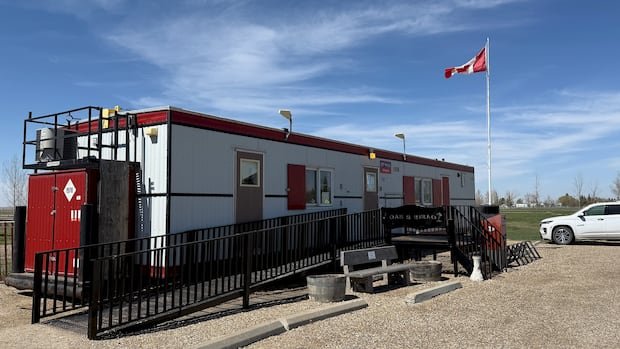

Rolling Hills, Alta., is a community with a thriving agricultural sector, a consistent population, and a makeshift post office in an office trailer. The residents of this hamlet, located southeast of Calgary, have taken proactive steps to preserve their way of life. In anticipation of the retirement of the long-time postmaster and amid Canada Post’s nationwide review of facilities and services to reduce expenses, the locals decided to purchase the post office building. This acquisition, made possible through a community-wide fundraising effort that raised $30,000, is seen as crucial for ensuring a smooth transition.
For Rolling Hills, the post office is more than just a place to collect mail—it serves as a vital hub where residents interact and connect with one another. The hamlet, home to 250 people, lacks home delivery services, relying instead on the trailer with 190 post office boxes. Additionally, a part-time clerk facilitates parcel pickups since traditional couriers and online delivery services do not cater to the hamlet.
Rolling Hills is just one of nearly 300 rural locations in Alberta where Canada Post maintains a physical presence beyond community mailboxes. However, with a recent lift on the moratorium for closing rural post offices and the announcement of a substantial financial loss by Canada Post, the sustainability of such facilities is under scrutiny. While Canada Post has remained tight-lipped about the future of services in places like Rolling Hills, it is evident that operational changes are on the horizon.
As part of a “retail modernization” initiative, Canada Post plans to assess operational data nationwide before making decisions on individual locations. The focus will be on optimizing services in urban and suburban areas and maintaining essential services in rural communities. Amidst these changes, experts like Ian Lee from Carleton University emphasize the need for cost-cutting measures and strategic decisions to ensure the sustainability of Canada Post’s operations.
In rural Alberta, communities like Rolling Hills and Carseland have demonstrated a strong commitment to preserving their post offices by leasing back buildings or providing free space to Canada Post. Such grassroots efforts underscore the importance of these facilities in maintaining community cohesion and access to essential services.
In Rolling Hills, the purchase of the post office building symbolizes a collective dedication to safeguarding the hamlet’s identity and way of life. Community members, spanning different generations, have come together to support this initiative, recognizing the pivotal role the post office plays in their daily lives. As rural areas navigate the evolving landscape of postal services, the resilience and unity displayed by communities like Rolling Hills serve as a testament to the enduring value of local post offices.