

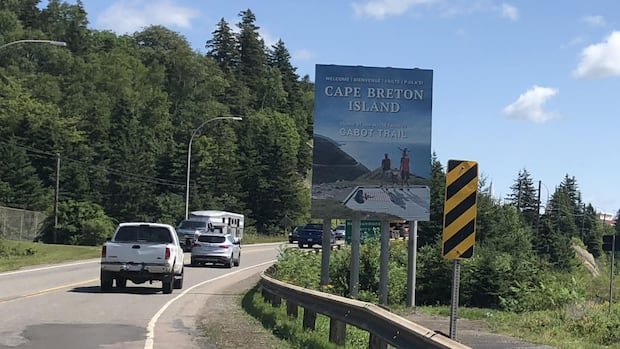

Canadians who completed the long-form census this year may have been surprised to find a new option for ethnic identity: Cape Bretoner. This addition came about as Statistics Canada observed in past years that many individuals self-identified as Cape Bretoners.
Geoff Bowlby, the assistant chief statistician at Statistics Canada, explained that the inclusion of Cape Bretoner as an option in the census was based on previous responses. In 2021, 13,065 people indicated their ethnic or cultural origin as “Cape Bretoner,” either solely or in combination with other origins. The list also includes options such as Nova Scotian, Newfoundlander, Prince Edward Islander, and New Brunswicker.
Bowlby highlighted that in the last census, 6,480 individuals identified as African Nova Scotian. He mentioned that individuals with longstanding ties to Canada often lean towards identifying with their region rather than their ancestors’ distant origins. Respondents also have the flexibility to include multiple ethnicities in their answers.
According to Bowlby, the longer individuals reside in Canada, the more likely they are to identify themselves as Canadian, Quebecois, Ontarian, Albertan, Nova Scotian, or Cape Bretoner.
In response to the inclusion of “Cape Bretoner” on the census, Cape Bretoners shared their thoughts during interviews at Mayflower Mall. Residents expressed that the recognition of Cape Breton as a distinct identity from mainland Nova Scotia was appreciated. The sentiment was echoed by individuals like Joe Kanary and Gary Micholsky, who emphasized the uniqueness and cultural richness of Cape Breton.
During a recent tour in Ontario, Micholsky noted that many Cape Bretoners who had relocated made efforts to reconnect with their Cape Breton roots, showcasing a strong attachment to their culture and music.
Sheila Reid, who identifies her ethnicity as Cape Bretoner, welcomed the inclusion of this option on the census, emphasizing the deep emotional connection individuals have with the island. She stressed that anyone who loves Cape Breton is considered a Cape Bretoner, highlighting the inclusive nature of the identity.
Bowlby also mentioned that individuals have identified themselves as United Empire Loyalists and Gaspésiens, showcasing the evolving local cultures and ethnicities in Canada as captured in the census data.
In conclusion, the addition of “Cape Bretoner” as an ethnicity option on the census reflects the diverse and evolving cultural landscape of Canada, allowing individuals to express their unique regional identities.