

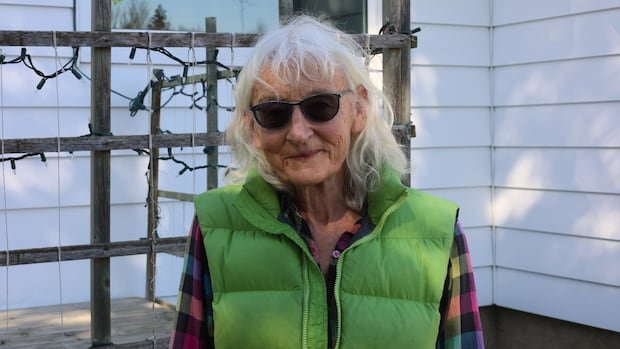

Marnie Desjardins put down roots in Olds, Alberta, a few years after relocating to the town in 1986 and eventually buying a house on the east side. The town’s lush trees, unique architecture, and welcoming community are among her favorite aspects of residing in the agricultural center, home to approximately 10,000 people. However, since January, her tranquil life has been disrupted by Synapse Data Center Inc.’s proposal for a large data center project and a natural gas plant near her residence.
Expressing her concerns, Desjardins stated that her envisioned retirement in the town might be at risk if the proposed project proceeds as planned. She emphasized the emotional toll this uncertainty has taken on her, indicating a potential need to leave, a thought that deeply saddens her.
Along with other residents of Olds, Desjardins is apprehensive about the potential health consequences of residing near ten 100-megawatt data centers and a power plant capable of illuminating Edmonton. To address these concerns, a local group named the Olds Transparency Project has emerged to raise awareness about the project and advocate for its prevention. The group organized a town hall on April 28 to discuss the possible health implications of the data center and power plant proposal.
Janae Johnson, another Olds resident and member of the group, expressed her worries about the project’s impact on her children’s future, particularly citing concerns about health risks such as noise pollution and emissions. Despite being new to advocacy efforts, Johnson emphasized the importance of speaking out and engaging with political leaders and the media to address these pressing concerns.
The town, province, and residents have conducted multiple town halls and meetings to educate the public about the project and its processes. This initiative aims to inform residents unfamiliar with such projects about the science and operations of data centers and navigate the intricate world of provincial and federal policies lagging behind evolving technologies.
Desjardins and other concerned residents are actively engaging with the approval process, questioning the rapid timelines and voicing their worries about inadequate public consultation. While the project faced initial rejection by the Alberta Utilities Commission, Synapse is currently awaiting approval for its resubmission, with an upcoming information session and resident participation opportunity scheduled later this year.
In response to public consultation deficiencies, Synapse launched a website to address questions about the project. Minister of Technology and Innovation Nate Glubish highlighted the importance of meeting requirements related to water, emissions, noise, and land use in data center projects, emphasizing the opportunity for Albertans to participate in regulatory consultations.
Bradley Lafortune, the executive director of Public Interest Alberta, underscored the public’s uncertainty about data center projects and the lack of a comprehensive legal framework for AI and data centers in Alberta and federally. Residents’ concerns about the lack of environmental impact assessments for several data center proposals in Alberta have sparked debates on regulatory gaps and public engagement processes.
Residents in various Canadian regions, including Alberta, Saskatchewan, and New Brunswick, have mobilized against proposed data center projects near their communities, highlighting the need for informed public discourse and effective engagement with citizens by provincial governments.
The struggle faced by Olds residents mirrors the experience of Wayne Shuttleworth, a farmer from Rocky View County, who successfully opposed an AI data center project near his property. Shuttleworth advised Olds residents to gather information and build a strong case against the proposed development, drawing from his own battle against a data center plan that was ultimately rejected by the council.
Navigating the complexities of data center projects and their potential impacts on local communities remains a pressing issue for residents across Canada, underscoring the importance of informed public dialogue and robust community engagement to address these challenges.