

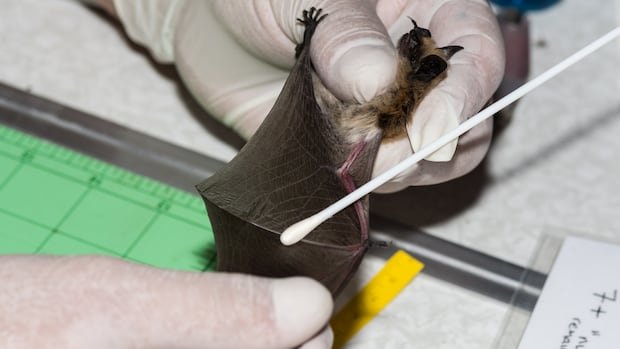

Scientists are combating a lethal infection that has caused significant bat fatalities in North America, highlighting the bats’ disregard for borders by moving between British Columbia and Washington state. However, recent geopolitical developments have jeopardized efforts to combat white-nose syndrome, with the U.S. administration under President Donald Trump halting funding for researchers in B.C. engaged in the fight against the fungal infection.
Biologist Cori Lausen, overseeing bat conservation at Wildlife Conservation Society Canada, played a pivotal role in creating a probiotic solution to shield bats from the infection, which was successfully applied in bat roosts in Washington state in 2023, showing promising outcomes. Approximately a quarter of the project’s funding came from the U.S. federal government and Washington state entities.
Following the funding interruption, Lausen lamented the absence of U.S. federal support for cross-border initiatives, emphasizing the significance of collaboration in combating the syndrome. Although efforts to reach U.S. Fish and Wildlife Service and Washington state’s Department of Fish and Wildlife for comments were unsuccessful, the urgency of the cross-border battle was underscored by the detection of the fungus causing white-nose syndrome in bat excrement in Metro Vancouver.
While no cases of white-nose syndrome have been confirmed in B.C., the fungus was previously identified in guano near the border in the Grand Forks area, creating concerns about its potential spread. The disease, caused by the fungus Pseudogymnoascus destructans, disrupts bat hibernation patterns, leading to energy depletion and eventual starvation.
Despite the absence of confirmed cases in B.C., the proximity to affected regions like Washington state and Alberta, where the fungus is prevalent, raises alarm. The lack of provincial funding for testing, compounded by logistical challenges in tracking bats in B.C., poses significant obstacles in monitoring and combating the syndrome.
Lausen stressed the critical role of bats in maintaining ecological balance through insect control, urging increased provincial support to safeguard the bat population in B.C. The probiotic testing in Washington yielded positive results, indicating a strong correlation between probiotic bacteria presence and reduced fungal infection.
As the research faces funding uncertainties, the risk of delayed action potentially leading to a crisis akin to Alberta’s situation is imminent. The collaborative efforts of scientists across borders are crucial in addressing white-nose syndrome, emphasizing the importance of transcending political boundaries for wildlife conservation.