

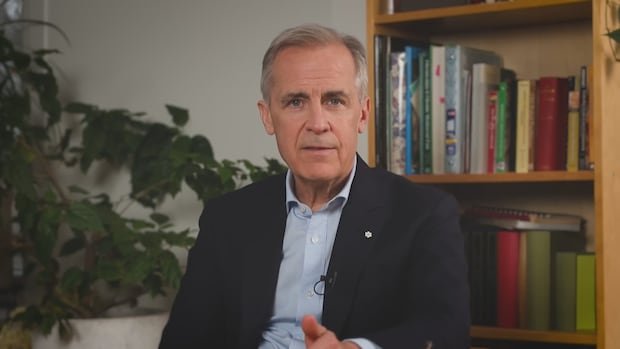

Prime Minister Mark Carney has pledged to keep the public informed about Canada’s progress in navigating a trade conflict with the U.S. and enhancing ties with other trade partners. Carney’s chosen platform for these updates seems to be YouTube, as he expressed in a video released on April 19 titled “Forward Guidance.” In the video, Carney assured transparency by discussing the government’s plans, successes, challenges, and future steps directly with the public.
The ten-minute video quickly garnered over 500,000 views, surpassing Carney’s previous content in both length and audience engagement. However, critics from the Conservative party have criticized the video, dismissing it as mere words without tangible actions.
Experts in political advertising and digital strategy, like Dave Sommer and Melanie Paradis, shared insights on Carney’s strategic use of YouTube. Sommer noted that Carney’s strength lies in longer-form communication, as seen in his previous speeches. Paradis highlighted the platform’s data analytics capabilities, enabling Carney’s team to gauge audience engagement and tailor future content based on viewer behavior.
Paradis suggested that Carney could further leverage YouTube by creating shorter clips of impactful moments from his videos for sharing on other social media platforms. This approach aims to maximize reach and engagement across various channels.
Reflecting on past prime ministers’ forays into content creation, such as Justin Trudeau’s explainer-style videos and Stephen Harper’s “24 Seven” series, the evolution of YouTube as a prominent online platform has solidified its relevance for Carney’s communication strategy, according to Dennis Matthews, a former adviser to Harper.
Comparing Carney’s video updates to historical communication methods during crises, such as Franklin D. Roosevelt’s fireside chats and R.B. Bennett’s radio broadcasts during economic turmoil, Sommer emphasized the value of leaders directly addressing the public during challenging times.
Meanwhile, Conservative Leader Pierre Poilievre criticized Carney’s video approach, accusing him of prioritizing showmanship over substantive action. Nonetheless, Paradis acknowledged Poilievre’s adeptness in content creation and suggested that Carney’s entry into the content arena could pose a new challenge for him.
Matthews viewed Poilievre’s criticism as a potential strategy to spark discussions and engagement around Carney’s video content. By invoking historical figures like Sir Isaac Brock, Carney’s approach may prompt public discourse and scrutiny, driving further attention to his messaging.
In conclusion, Carney’s utilization of YouTube for direct communication reflects a contemporary approach to engaging with the public, leveraging digital platforms to convey government updates and policies effectively.