

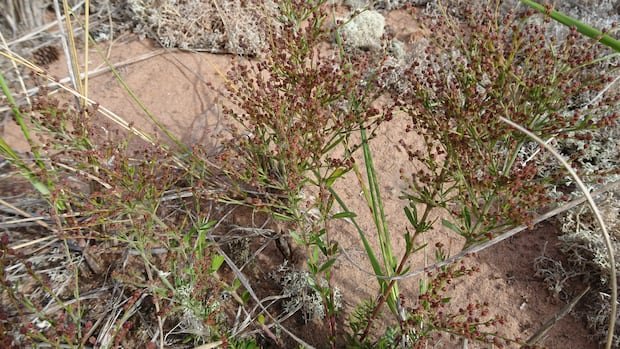

Parks Canada is implementing measures to safeguard a rare coastal plant found at Kouchibouguac National Park in New Brunswick and Prince Edward Island National Park. In a bid to protect the Gulf of St. Lawrence beach pinweed at these locations, online sales of official Parks Canada merchandise, including shirts and tote bags, will contribute to the conservation efforts this year.
David Mazerolle, the ecosystem scientist at Kouchibouguac in eastern New Brunswick, highlighted that the global population of the plant has significantly decreased due to the impacts of climate change and severe winter storms. He noted the shift in winter conditions, with milder temperatures leading to the loss of protective coastal ice, thereby intensifying the effects of winter storms on these ecosystems.
Parks Canada has been actively involved in seed collection of the plant and collaborating with research partners at Acadia University to explore methods for germination, growth, and transplantation of the species into new habitats for its proliferation. The particular species of beach pinweed targeted for protection is exclusive to eastern Canada, with a unique variety endemic to the southern Gulf of St. Lawrence, making it a rare find globally.
Describing the Gulf of St. Lawrence beach pinweed as a small, slender shrub standing about 20 to 30 centimeters tall, Mazerolle mentioned its habitat specificity to large, stable dune systems away from ocean waves. The majority of the plant’s population is situated on land managed jointly by Parks Canada and Mi’kmaw First Nations, positioning Parks Canada as a key player in its conservation efforts.
Sean Blaney, the executive director of the Atlantic Canada Conservation Data Centre, emphasized the importance of preserving the plant species in the face of habitat threats posed by climate change. He stressed the critical role of protecting coastal ecosystems, highlighting the Gulf of St. Lawrence beach pinweed as a crucial indicator of climate change impacts on these landscapes.
Efforts to transplant the species have shown promising outcomes, with initial successful transplants completed and ongoing work on germination showing positive results at Acadia University. The continuation of these conservation initiatives is crucial to ensuring the survival and expansion of the Gulf of St. Lawrence beach pinweed populations within the national parks.