

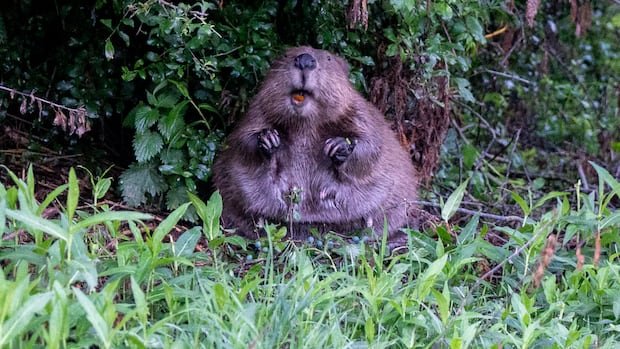

In London, a mother beaver named Willow made a grand entrance at a “beaver safari,” causing a hush to fall over the excited crowd. These beavers, now a local attraction, have also provided a solution to a long-standing issue in the area by preventing flooding through their dam-building activities.
According to Şeniz Mustafa from the Ealing Beaver Project, the beavers’ natural instinct to hold water back for their own safety has significantly reduced the risk of flooding downstream, benefiting the surrounding streets and Greenford tube station.
The beavers were introduced to London from Scotland in 2023 as part of a rewilding initiative to reintroduce them to urban areas. These beavers mark the return of the species to London after a 400-year absence due to historical hunting for their fur, meat, and musk.
The beavers, led by matriarch Willow, have been a success story in London, with their engineering skills effectively reducing flooding risks. The project’s positive impact has been evident, with Greenford station remaining flood-free for over two years since the beavers’ arrival.
The Ealing beaver project, located in a public park, has not only improved biodiversity but also attracted visitors and created a safer environment. The project’s success has led to discussions about releasing more beavers in other parts of London, such as Croydon.
London Mayor Sadiq Khan’s rewilding fund has supported various projects, including the Ealing Beaver Project, which has transformed the local environment and prevented flooding. Observing the beavers in action has become a popular activity, with guided beaver safaris attracting enthusiastic participants eager to learn about these fascinating animals.
The project’s success story has inspired hope for more urban wildlife conservation efforts, showcasing the harmonious coexistence of humans and beavers in an urban setting. The aim is to demonstrate that wildlife and people can thrive together in city landscapes, paving the way for future conservation projects.