

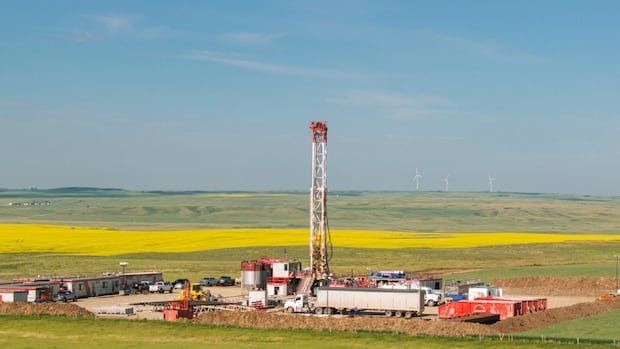

A company in Saskatchewan is currently engaged in drilling for hydrogen, aiming to demonstrate its feasibility for commercial extraction from underground sources rather than relying on fossil fuels for production. Recently, Max Power Mining, based in Regina, initiated drilling at the Lawson Complex in southern Saskatchewan, marking its third well at the site. The company envisions establishing the world’s first large-scale commercial natural hydrogen system, a potential breakthrough in primary energy sourcing.
Chad Levesque, the company’s president, emphasized the significance of hydrogen as a key component in various industrial processes such as ammonia production, petroleum refining, and transitioning towards cleaner energy alternatives. He highlighted the need for more eco-friendly sourcing methods, underscoring the role of naturally occurring hydrogen in this context.
Hydrogen, a versatile gas that can serve as a fuel or be utilized in fuel cells for power generation, is considered environmentally friendly as it only produces water as a byproduct when reacting with oxygen. Its potential applications span across sectors like transportation and steelmaking, offering a pathway to reduce emissions. However, the predominant source of hydrogen currently is grey hydrogen, derived from fossil fuels without emission reduction measures, leading to substantial carbon dioxide emissions.
In contrast, green hydrogen, produced through electrolysis of water using renewable energy, offers a cleaner alternative but is economically less competitive than grey hydrogen. Natural hydrogen, also known as white hydrogen, presents a promising avenue as it can be extracted from underground deposits with comparatively lower greenhouse gas emissions, utilizing existing extraction techniques employed in natural gas and helium operations.
The origin of natural hydrogen lies in underground processes such as the reaction of oxygen with iron-rich rocks and radioactive decay of uranium and thorium, leading to the production of hydrogen. Despite the potential benefits, challenges remain in extracting hydrogen from these deposits, including the need for specialized drilling techniques and considerations.
Various discoveries of natural hydrogen deposits worldwide, including in Canada’s Saskatchewan, Ontario, Quebec, and Nova Scotia, have sparked interest in this emerging energy source. However, the scalability and commercial viability of white hydrogen extraction remain uncertain, pending further exploration and evaluation of production feasibility.
Efforts to advance natural hydrogen projects are ongoing globally, with ongoing research and exploration aimed at unlocking the full potential of this alternative energy source.