


In the midst of U.S. President Donald Trump’s threats of tariffs due to the spread of wildfire smoke from Canada, experts in Canadian fire management acknowledge the inevitability of large forest fires. Trump’s recent criticisms of Canada’s fire control methods and accusations of polluting U.S. air have sparked tensions. However, Canadian fire experts assert that not all fires, and the resulting smoke, can be easily contained or extinguished.
According to Martin Girardin, a forest ecology researcher at Natural Resources Canada’s Canadian Forest Service, tackling massive fires is akin to trying to halt a hurricane – a nearly impossible task. As of the latest update, Canada is grappling with over 900 active fires, consuming more than 3.7 million hectares in 2026. The blazes have wreaked havoc in Namaygoosisagagun and Whitewater Lake First Nations in northwestern Ontario, prompting evacuations across several communities.
The worsening fire seasons in Canada are being exacerbated by climate change, characterized by rising temperatures, arid conditions, and a surplus of flammable material in forests. Matthew Conte, the fire chief of Jasper, Alberta, notes that fires are intensifying and spreading faster as rural areas expand into forested regions. To mitigate these risks, various stakeholders are advocating for FireSmart initiatives to safeguard homes, establish fireguards for towns, and utilize cultural burning to rejuvenate the land.
Ryan Moreside, the coordinator of the FireSmart BC wildfire mitigation program, stresses the importance of preemptive action in community preparedness rather than reactive firefighting measures. FireSmart, founded in 1993, offers resilience programs across Canada, promoting practices like safe firewood storage and the use of fire-resistant construction materials.
In 2024, Jasper experienced significant wildfire devastation, prompting a focus on enhancing home and neighborhood resilience. Conte emphasizes the need for synchronized FireSmart efforts within communities to effectively mitigate fire risks. Additionally, the implementation of fireguards, or fuel breaks, around settlements has proven beneficial in impeding fire spread and ensuring firefighter safety.
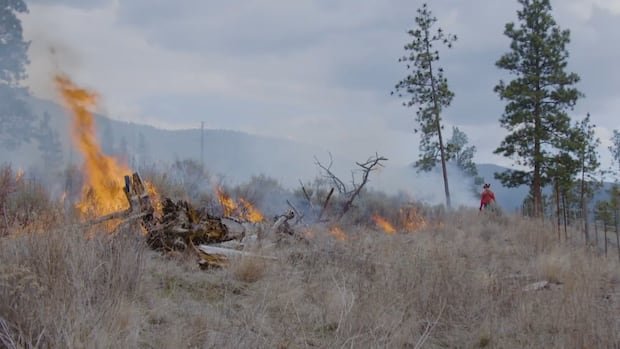
Indigenous fire stewardship, encompassing cultural burning practices, plays a pivotal role in managing fire risks sustainably. Amy Cardinal Christianson, director of fire stewardship at the Indigenous Leadership Initiative, underscores the importance of Indigenous involvement in fire management for community and ecosystem resilience. Despite the recent surge in interest in cultural burns following severe fire seasons in British Columbia, sustained funding for stewardship programs remains a challenge.
While these initiatives help mitigate fire risks, experts acknowledge that eliminating the threat entirely is unattainable, especially with the intensification of fire seasons due to climate change. Girardin emphasizes the critical role of reducing CO2 emissions to combat climate change effectively.