

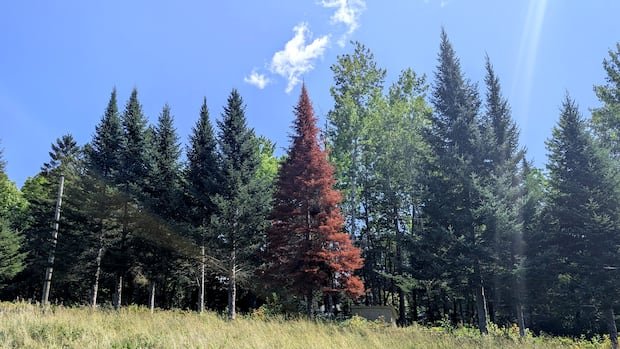

Balsam fir trees in New Brunswick are displaying a concerning red color and dying due to the severe drought experienced last summer, sparking worries about the fate of this iconic provincial tree. Prof. Anthony Taylor, a forestry researcher at the University of New Brunswick, has been witnessing the detrimental effects firsthand as these beloved evergreen trees, often chosen for Christmas decorations, gradually transition to a red, dry, and lifeless state.
According to Taylor, the current scenario aligns with his observations from previous hot and dry summers, emphasizing the negative impact of warm and dry conditions on the growth capacity of balsam firs. His extensive research on climate change’s influence on New Brunswick’s forests has revealed similar incidents of balsam fir die-offs following exceptionally hot and dry summers in 1986 and 2018.
Taylor explained that during drought conditions, the trees cease the photosynthesis process prematurely, hindering their growth and energy production essential for basic metabolic functions and defense mechanisms. This weakened state makes the tree vulnerable to additional stressors like insects or pathogens, increasing the likelihood of die-offs, especially when the trees lack the necessary reserves to sustain themselves.
Moreover, balsam firs possess shallow roots, making it challenging for them to access water during dry periods. Peter McKeil, a woodlot owner in Burtt’s Corner, noticed the initial damage to his balsam firs in June, observing the gradual reddening from the lower branches upward and the continuous emergence of new red spots, indicating an ongoing die-off process. McKeil estimates that around 100 trees have succumbed so far.
Despite salvaging some of the deceased trees for lumber, McKeil has adjusted his harvesting practices to maximize the remaining fir’s value before further losses. He expressed concerns about the future of the species in southern New Brunswick, believing that with escalating climate change impacts, the survival of balsam firs is uncertain, potentially pushing them northward.
Taylor emphasized the significance of the visible effects on the balsam firs as a stark reminder of climate change’s repercussions. He likened the situation to a warning signal, urging immediate climate action to mitigate the adverse outcomes. Stressing the urgency to reduce fossil fuel consumption and forest exploitation, Taylor highlighted the need for swift and effective measures to combat climate change and prevent similar ecological crises in the future.