


In a recent court hearing, a defense lawyer argued that a man facing manslaughter charges in connection with the deaths of two Edmonton police officers is being unfairly targeted as a convenient scapegoat. The Crown is seeking to broaden criminal accountability for gun-related incidents.
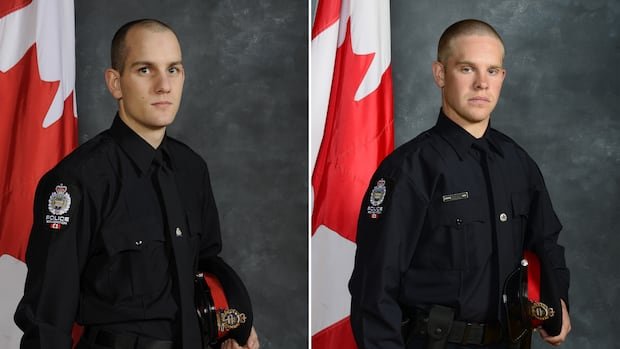
The accused, 21-year-old Dennis Okeymow, is facing multiple charges stemming from the shooting that led to the tragic deaths of Const. Travis Jordan and Const. Brett Ryan. The incident occurred while the officers were responding to a domestic violence call in March 2023.
The court learned that a teenager, Roman Shewchuk, had attacked his mother, prompting her to seek help from the police. Tragically, the teen fatally shot Const. Jordan and Const. Ryan before turning the gun on himself. Despite pleading not guilty to manslaughter charges related to the officers’ deaths, Okeymow admitted to weapon and drug trafficking charges.
During the trial’s closing arguments, Okeymow’s lawyer, Jamil Sawani, criticized the Crown’s attempt to hold Okeymow accountable for the tragic events, highlighting that the actual perpetrator was absent from the proceedings. The Crown argued that Okeymow’s actions, including selling a firearm to the teenager, warranted criminal responsibility, especially given the teen’s history of mental health issues.
The prosecution emphasized that Okeymow should have recognized the potential risks associated with selling a firearm to a minor, even if he was unaware of the full extent of the teen’s mental health struggles. Evidence presented in court revealed extensive communication between Okeymow and Shewchuk, primarily focused on drug-related activities.
Okeymow sold a semi-automatic rifle and ammunition to Shewchuk, who later used the weapon in the fatal shooting of the officers. The prosecution stressed that Okeymow disregarded the potential harm that could result from his actions, underscoring the need for accountability in such cases.
As the trial awaits the judge’s verdict, the defense argued against the Crown’s attempt to establish a new form of criminal liability through this case. They emphasized the importance of legislative changes rather than relying on individual court decisions, particularly involving a young Indigenous man like Okeymow.
The defense further contended that Okeymow was not aware of the severity of Shewchuk’s mental health issues and that the tragic events were solely a result of the teen’s own actions. The defense highlighted that the sale of the firearm did not directly trigger the subsequent violent behavior by Shewchuk.
In conclusion, the case serves as a pivotal moment in discussions around criminal responsibility in gun-related incidents, with implications reaching beyond this specific trial. The judge will ultimately determine Okeymow’s fate in the coming days.