


With the U.S. midterm elections approaching, Ohio, Maine, and Texas are becoming crucial states to monitor in what is expected to be a tightly contested race.
Maine’s electoral battle holds significance that extends beyond its own borders. Sharing a border with Canada, Maine maintains strong economic and cultural connections with New Brunswick and Quebec. The region has been shaped by decades of cross-border commerce, familial ties, and a shared language, making U.S. tariffs on Canadian imports a particularly divisive topic for businesses in Maine.
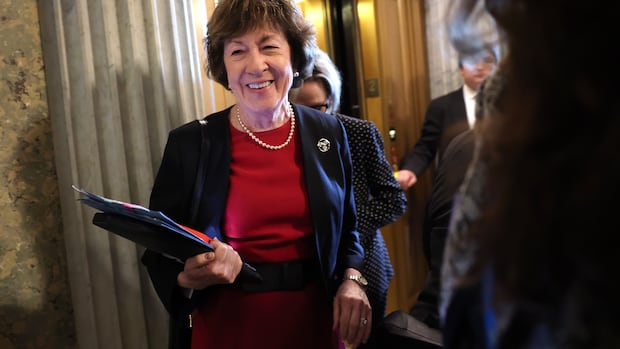
Republican Senator Susan Collins has served Maine in the Senate since 1997, establishing herself as one of the state’s most enduring political figures. As she campaigns for a sixth term, Collins is challenged by Democrat Troy Jackson.
Washington reporters Katie Simpson, Willy Lowry, and Paul Hunter analyze what this contest may indicate for the nation as a whole, how Collins is managing her relationship with U.S. President Donald Trump, and the stakes in Ohio and Texas as well.
Below are some highlights, edited for brevity and clarity. Listen to the complete podcast discussion here.
Katie Simpson: Let’s begin with Maine, the state closest to Canada. Willy, what can you tell us about the historical relationship between Canada and this northern neighbor? How is this affecting the midterm elections?
Willy Lowry: This relationship has a considerable influence. Economically and socially, Maine is intertwined with Canada, particularly with its neighboring provinces of New Brunswick and Quebec. Many voters rely on trade with Canada for their livelihoods, and many have familial roots in those provinces. Beyond the statistics, the cultural bond is significant and should be acknowledged in a state like Maine.
Looking at the candidates, we have Susan Collins, who has been a U.S. senator for five terms. She epitomizes consistency, boasting a perfect attendance record with over 10,000 Senate votes — the second-highest in U.S. history.
Katie Simpson: It’s worth mentioning that when she first ran for office, she supported term limits — two terms and then stepping away.
Willy Lowry: Her challenger, Troy Jackson, is a logger from a long line of loggers, and to put it diplomatically, he isn’t the most eloquent candidate.
He also entered the race later than expected. Graham Platner, the initial candidate, withdrew due to sexual assault allegations, which he denied. This has left Jackson with limited time to challenge a long-serving and relatively popular senator, and current polls show the race is quite close.
Katie Simpson: The incumbent, Susan Collins, has been distancing herself from Trump. Can you explain why she is doing this?
Willy Lowry: She has no choice. Two main issues are particularly impactful in Maine right now.
These issues resonate nationwide, but in Maine, tariffs are extremely unpopular, significantly affecting key industries such as lumber and fisheries.
Tourism is another concern — fewer Canadians are visiting, despite Maine being a historically favored destination for Eastern Canadians.
Additionally, the cost of oil and heating oil is a pressing issue. In Maine, approximately 50% of residents rely on oil for winter heating, and prices have surged by 80% in the past year. This is a staggering increase.
These topics were prominent during one of the debates leading up to the elections, with multiple debates allowing voters to hear directly from the candidates. Collins must distance herself from Trump, given that tariffs are a reflection of his policies, and the conflict in Iran has led to rising oil and gas prices, which are very unpopular in a state like Maine.
Paul Hunter: This situation also reflects a broader atmosphere in the country. When the Democrats had to switch candidates, many thought, ‘That’s it for Maine from a Democratic perspective.’ Yet, they are not only competing but are also currently leading, which is quite remarkable. Observing from a distance, it raises questions about the dynamics in the country, with Maine serving as another illustration.
Willy Lowry: However, I would caution against jumping to conclusions — in 2020, Collins was behind in the polls for most of the campaign but ultimately won by about nine percentage points.
Katie Simpson: One notable moment from the debates was when Susan Collins was advocating against certain tariffs imposed by the Trump administration.
Willy Lowry: Indeed, she was successful in that effort.
Katie Simpson: She managed to have road salt removed from the tariff list, but Troy Jackson responded, saying, ‘That’s wonderful for road salt, but we can’t eat road salt. What about the prices of everything else?’
This exchange resonated and has sparked hope among Democrats, although, Willy, you rightly point out that Collins has faced challenges in the past yet continues to prevail.