

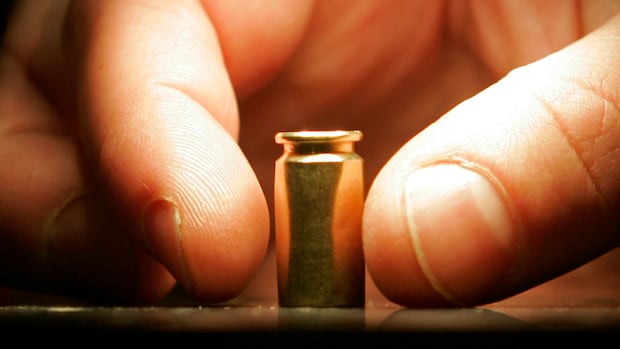

Forensic analysis is often viewed as highly reliable, a belief reinforced by numerous crime television series showcasing how ballistics and blood-spatter specialists uncover vital clues to apprehend criminals.
However, this belief has permeated the legal system, where the precision of forensic analysis is seldom questioned, as indicated by recent studies.
Both ballistic and blood spatter analyses, which scrutinize evidence from crime scenes, are founded on scientific principles. Nevertheless, practitioners frequently draw conclusions in court that exceed the support of their empirical data, according to researcher Sara Gordon, who notes that lawyers and judges do not adequately challenge these assertions.
“They are admitted primarily because they have always been allowed, and people generally assume that they are trustworthy,” states Gordon, an associate professor at the Peter A. Allard School of Law at the University of British Columbia.
Expert testimony regarding forensic evidence, when qualified and admissible, can offer “substantial assistance” in clarifying specific case details, according to a fact sheet from the Department of Justice. Canadian courts have permitted its inclusion in legal proceedings for many years.
In her examination of Canadian cases, Gordon investigated these forensic and investigative methodologies that inform evidence routinely accepted in court.
Her review of firearms evidence reveals “notable methodological shortcomings” in the studies that validate ballistics as a scientific field, which may “understate error rates.” She concludes that specialists often fail to provide the complete picture to the courts and create “a misleading impression” of the reliability of their field.
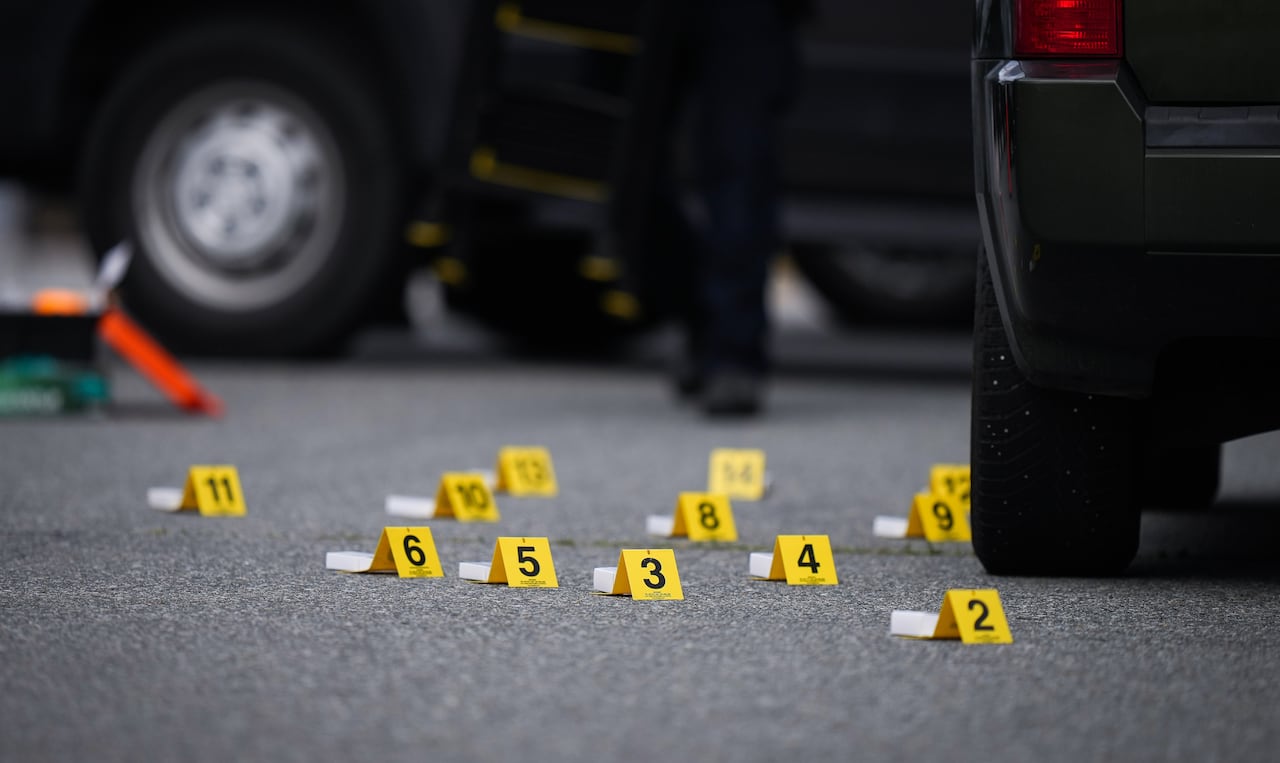
Evidence markers are placed next to shell casings on the street outside a cafe that was shot at in Surrey, B.C., in August 2025. (Darryl Dyck/The Canadian Press)
Bullet proof?
To link a bullet or casing discovered at a crime scene with a specific gun caliber, ballistic examiners compare other bullets or casings fired from test firearms and analyze them under a microscope for similarities.
Eventually, a forensic scientist may find themselves in court asserting that the evidence collected at a crime scene either matches or does not match, referencing research from their discipline to substantiate their claims.
Gordon notes that examiners frequently assert that the error rate within ballistics is between one and two percent. However, the studies she reviewed for her research indicated an error rate as high as 50 percent.
She also mentions that there are no established standards for the minimum number of similarities required to declare bullets as matching.
“It’s largely a subjective evaluation,” she remarked.

Her study, which follows similar evaluations of forensic evidence in the United States, references a case in Ontario from 2021, where a firearms examiner admitted during cross-examination that her conclusion—that shell casings from a crime scene corresponded with a handgun discovered in the defendant’s residence—was subjective.
The examiner later stated that there was “no specific number of agreements required between two items for her to determine that there was a match,” and she formed her opinion because she felt a match was “within the limits of practical certainty.”
This issue was highlighted in a Chicago courtroom in 2023, where a judge, disturbed by a lack of “objective forensic based reasons,” prohibited the use of ballistics matching in a criminal trial.
The judge subsequently reviewed a dozen other convictions that stemmed from flawed ballistics matching, labeling it a “wake-up call to courts that have been operating as rubber stamps in hastily accepting this kind of evidence.”

Bullet fragments are shown on a screen in a Utah courtroom on July 9, during a preliminary hearing for Tyler Robinson, who is accused in the fatal shooting of Charlie Kirk. (Spenser Heaps/Pool/The Associated Press)
Based on such rulings, Gordon asserts that certain ballistic experts should refrain from testifying in cases where the science does not allow them to reach definitive conclusions.
One senior forensic scientist who frequently provides testimony in court emphasizes the importance of being transparent about the limitations inherent in a discipline.
Darryl Barr, who analyzes weapons and tools connected to crimes for Bulletproof Forensic Consulting, insists there is “a scientific foundation for firearms examinations” and substantial empirical evidence that supports the conclusions of experts—but he acknowledges that they could improve in communicating this more effectively in court.
Barr expresses reassurance that nearly every nation globally incorporates forensic analysis into its judicial processes and welcomes any examination of his field.
“Science progresses through scrutiny, and forensic science is no exception,” he stated.

Investigators collect ballistic evidence at two different crime scenes. On the left, New York police photograph bullets lying on the sidewalk where Brian Thompson, CEO of UnitedHealthcare, was shot dead on Dec. 4, 2024. On the right, the copper jacket of a bullet found near a shooting scene close to the White House on May 24 this year. (AP Photo/Stefan Jeremiah / AP Photo/Alex Brandon)
The CSI effect
A crucial aspect of a prosecution or defense lawyer’s role involves scrutinizing the opposing side’s evidence. However, delving into the accuracy of forensic evidence science is not a frequent practice, according to Gordon.
She believes part of the issue stems from a societal perception that ballistics and blood spatter analysis are as conclusive as DNA evidence and can provide critical insights during investigations—largely due to crime shows such as Law and Order and various CSI spin-offs.
For instance, despite what a stylish, fictional detective might claim, the science behind blood spatter cannot determine whether an individual acted with intent or not.
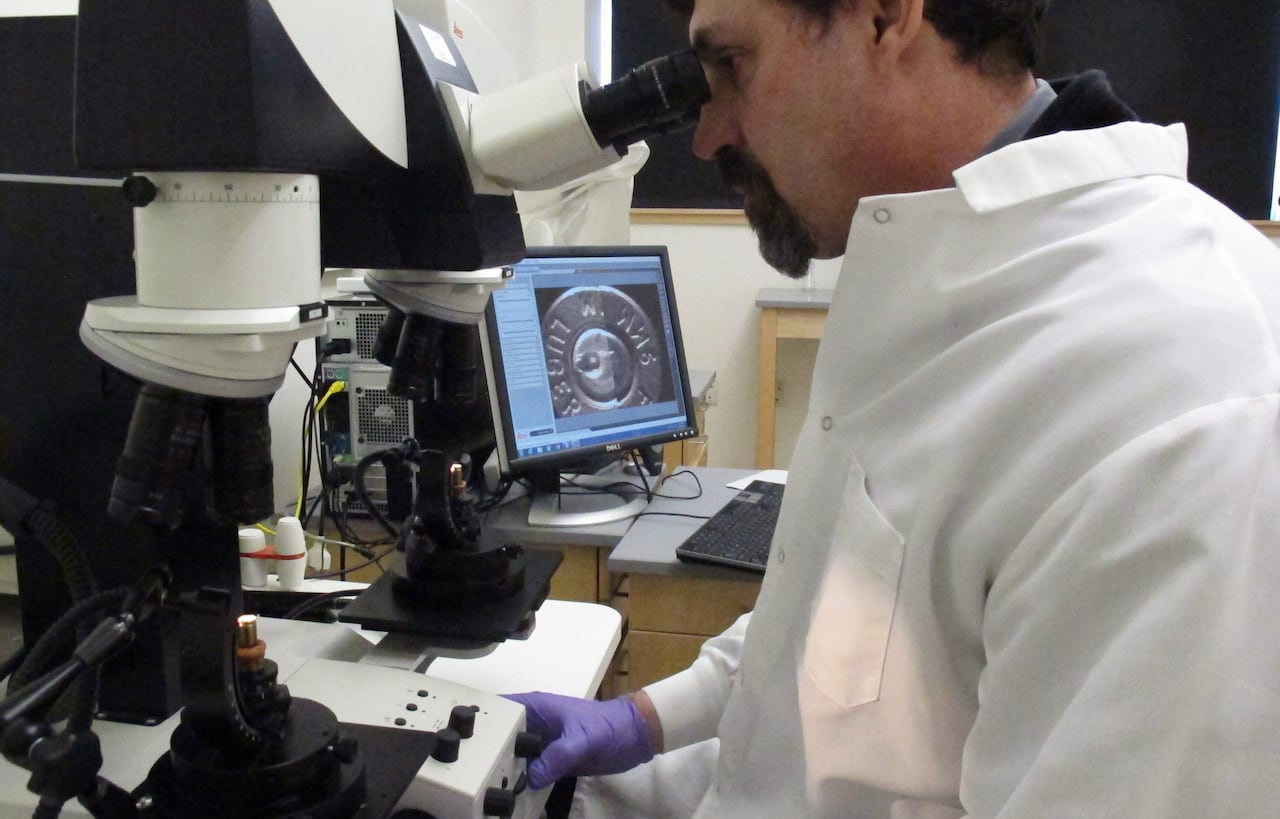
A physical comparison supervisor at the Vermont Forensic Laboratory inspects a shell casing in March 2015. (Wilson Ring/The Associated Press)
Gordon’s independent research on blood spatter analysis revealed that some experts testify with a level of specificity that can suggest what an accused person’s mental state might have been.
She cites a case from British Columbia in 2009 where the prosecution utilized blood pattern analysis from a crime scene to reconstruct the accused’s actions, claiming he exhibited guilty intent based on the manner in which blood was “projected” during the incident.
“There are no studies evaluating or establishing an error rate for conclusions regarding an individual’s mental state based on bloodstain patterns,” she asserts in her research.
“The science does not support making those types of determinations,” she told CBC News.
‘Frailties of the evidence’
The concern over lawyers failing to contest expert witness testimonies in court is acknowledged in case law, notes Rebecca McConchie, president of the Trial Lawyers Association of British Columbia.
Additionally, there is a risk that judges and juries may overlook the “frailties of the evidence when evaluating it,” she stated in a response to CBC News.
“It is crucial for individuals to maintain an open mind when discussing criminal justice matters or evidence presented as irrefutable proof of someone’s guilt,” McConchie emphasized.

The statue of Themis, goddess of justice, at the B.C. Supreme Court in Vancouver, photographed on October 6. (Nav Rahi/CBC)
Ultimately, Gordon points out that Canada has received significantly less focus in legal literature, and she aims for her research to enhance how the country’s courts carry out their responsibility of determining guilt or innocence.
Her mission is to provide insights about the evidentiary basis behind the evidence, equipping lawyers and judges to pose more inquiries—to “present it in a manner that encourages them to critically evaluate the evidence.”
A representative from the RCMP, which offers forensic services nationwide, stated they are aware of the research and remain committed to employing established scientific methods, quality assurance protocols, and professional standards in their operations.