

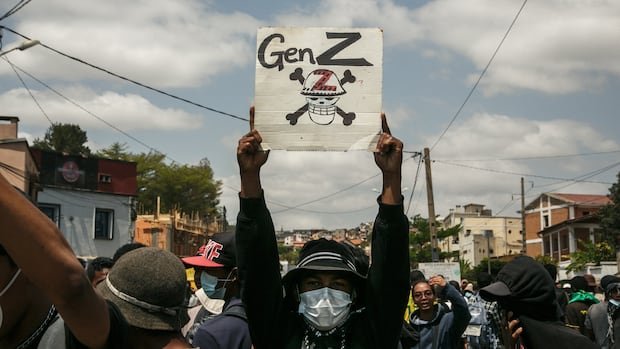


Following the recent change in leadership in Madagascar, activists are voicing concerns about the new regime, claiming it is more oppressive than its predecessor, which was ousted following a youth-led protest.
Colonel Michael Randrianirina, who came to power on March 25 with the backing of protesters, initially garnered support by pledging to restore public confidence and combat corruption. He took steps such as appointing an anti-corruption official and subjecting cabinet members to polygraph tests.
However, the arrest of activists has raised alarm bells. Arimamy Todisoa, an activist associated with Gen Z 261, a youth movement in Madagascar, criticized the crackdown on freedom of expression, stating that it contradicts the principles of the previous revolution.
Todisoa emphasized that despite the change in leadership, the underlying issues persist, referring to it as “the same mafia, the same oligarchs.” Several members of Gen Z 261 have been detained on charges related to undermining state security and conspiracy.
According to Todisoa, significant structural changes are imperative for the country’s progress. He highlighted the need to overhaul key institutions, including the National Assembly and the Independent Electoral Commission, to break free from the ongoing crisis cycle.
The activist expressed dissatisfaction with the current administration’s performance, stating that it prioritizes the interests of politicians and their associates over the welfare of the populace, leading to widening economic disparities.
Young people in Madagascar have been particularly active in these protests, driven by a desire to reclaim their heritage and build a better future within their own country, rather than seeking opportunities abroad.
Todisoa accused the president’s spokesperson of deceit, claiming that the arrests were sanctioned directly by the presidency, despite official denials of involvement. He viewed the arrests as a targeted effort to suppress dissenting voices, particularly those leading the protests.
Comparing the current regime to its predecessor, Todisoa asserted that the new leadership has been more detrimental, with rapid displays of wealth raising suspicions about corrupt practices. He underscored the urgency of resisting the oppressive regime and vowed to continue advocating for change.
While acknowledging the challenges and risks he faces, Todisoa remains resolute in his commitment to organizing resistance against the unjust regime. He emphasized the importance of exposing corruption and mobilizing public awareness to challenge the status quo.
The future of the movement remains uncertain, with Todisoa indicating that while street protests may be subdued for now, efforts to raise awareness and build momentum for change will persist through online platforms until a resurgence in street protests is viable.