

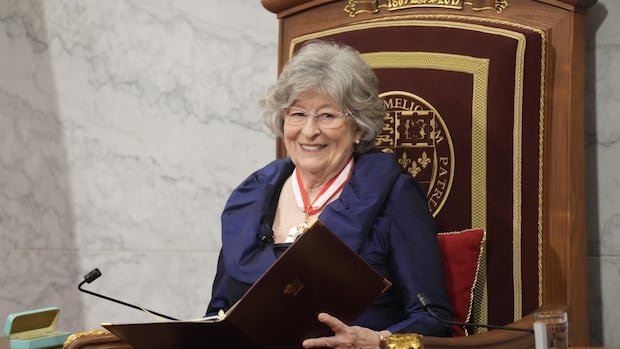

In a traditional ceremony, distinguished jurist and advocate for human rights, Louise Arbour, was officially sworn in as Canada’s 31st Governor General on Monday. Following the King’s approval of her representation of Canada’s head of state and commander-in-chief of the Canadian Armed Forces during a recent meeting in London, Arbour assumed her role in a poignant ceremony in the Senate chamber.
While the position of Governor General is predominantly ceremonial and symbolic, it carries significant legal responsibilities that could be crucial in times of political turmoil. Arbour’s primary duties include serving as a non-partisan national unifier and guardian of the constitutional order, and like her predecessors, she will use her tenure to address key issues close to her heart.
During her speech at the installation ceremony, attended by various dignitaries including Prime Minister Mark Carney, NDP Leader Avi Lewis, and Indigenous leaders, Arbour emphasized her priorities as she takes on her new responsibilities. She stressed the importance of embracing technological advancements like artificial intelligence cautiously, especially with the potential risks and rewards it brings to society.
Highlighting the challenges faced by young Canadians, Arbour called for more opportunities to be created for their success amidst concerns such as youth unemployment and housing issues. She also emphasized the need to strengthen national pride and uphold Canada’s values in a time marked by protectionism and isolationism.
Addressing the audience, Arbour expressed her admiration for Canada as a mature democracy where the rule of law, critical thinking, and innovation thrive. She praised Canadians for their humility, inclusive values, and their ongoing efforts to shape a better future for the country and its global standing.
Arbour’s commitment to promoting diversity and inclusivity, fostering trust in institutions, and advocating for progress while embracing new perspectives were key themes of her speech. She acknowledged the evolution of the Canadian Armed Forces and the importance of recruiting individuals from diverse backgrounds to enhance its effectiveness and morale.
In conclusion, Arbour expressed her deep honor in leading the Armed Forces and serving all Canadians, calling for unity and collective effort to harness Canada’s resources, talents, and imagination for a future characterized by security, prosperity, and dignity for all.