

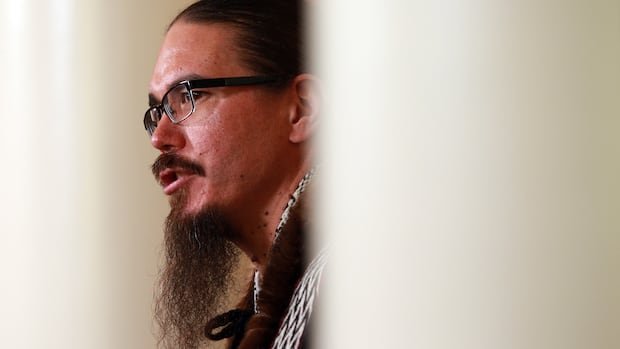

A group of Indigenous leaders from British Columbia is in Calgary to deliver a direct message to pipeline executives: avoid investing in a new bitumen pipeline to the northwest coast or face a protracted legal battle.
Haida Nation President Jason Alsop, also known as Gaagwiis, emphasized their responsibility to protect the ocean and food security it sustains, stating that introducing crude tankers to northern B.C. waters would jeopardize these vital resources. He asserted their readiness to utilize all available means to fulfill this duty, highlighting the substantial legal and financial risks associated with investing in a north coast pipeline.
Gitga’at First Nation Chief Councillor Arnold Clifton referenced the successful opposition by northern B.C. communities against Enbridge Inc.’s Northern Gateway proposal a decade ago, describing it as a “David and Goliath” victory. He expressed confidence in a stronger collective resistance should a similar project arise, with full community support.
The delegation engaged in discussions with senior leadership from Pembina Pipeline Corp. and Trans Mountain Corp. in a downtown Calgary hotel. While Pembina Pipeline focuses primarily on natural gas transportation in western Canada and is involved in a LNG project with Haisla Nation, Trans Mountain operates an existing pipeline connecting Alberta crude to Vancouver and is advising the Alberta government on a potential new oil pipeline.
Trans Mountain confirmed that its CEO met with the Indigenous leaders, emphasizing the importance of understanding their perspectives through respectful dialogue. Pembina Pipeline did not provide a comment on the meeting.
The Indigenous delegation extended invitations to other oil and gas pipeline companies and issued a letter warning about the risks associated with supporting a B.C. oil pipeline. The Alberta government intends to present a proposal for a B.C. pipeline to the federal major projects office this summer, seeking to mitigate project risks for private-sector involvement.
The proposed pipeline’s endpoint preference is Prince Rupert, B.C., due to its deepwater port and proximity to Asia. However, there are considerations for a southern route to Vancouver, potentially facing fewer environmental challenges and opposition. Chief Darin Swanson of the Haida Nation emphasized the pristine nature of their beaches and marine resources, underscoring that no financial incentives could outweigh the risks to their environment and livelihoods.