

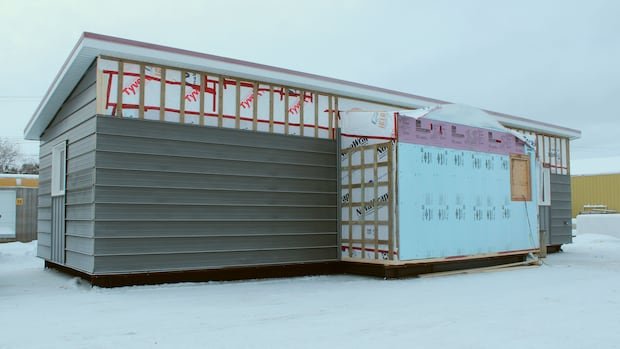

Energy-efficient housing plays a crucial role in addressing health issues and the housing crisis in Indigenous communities, as outlined in a recent report on Indigenous housing. The report, titled “Building Strength Through Shelter: Policy prescriptions for Indigenous Healthy Energy Homes,” released by the Canadian Climate Institute and Indigenous Climate Energy, reveals that nearly one in six Indigenous individuals reside in homes requiring significant repairs.
According to Carlyn Allary, a research associate at the Canadian Climate Institute and a member of the Manitoba Métis Federation, the report emphasizes the often overlooked connection between housing quality and health outcomes. Allary highlighted the importance of constructing energy-efficient homes to reduce the need for frequent repairs and mitigate health challenges associated with poor housing conditions.
The report advocates for the construction of new energy-efficient homes and retrofitting older homes using similar principles to enhance health outcomes and generate long-term economic benefits. Improved ventilation, mold prevention, and enhanced air quality are cited as additional advantages of energy-efficient housing in the report.
Kayla Fayant, an energy-efficient coordinator at Indigenous Clean Energy and a member of the Fishing Lake Métis Settlement in Alberta, emphasized the proposal of well-insulated, ventilated homes constructed with high-energy efficiency materials. While acknowledging that such homes may entail higher costs and longer construction timelines, Fayant stressed the importance of governments facilitating expedited processes and offering diverse funding options to accelerate the transition to energy-efficient housing.
Fayant also highlighted the challenges faced by Indigenous communities, such as limited access to mortgages for home ownership, leading to the proliferation of quickly constructed, substandard housing units. Poor housing conditions exacerbate overcrowding, moisture retention, and mold growth, contributing to the pressing housing needs in Indigenous communities.
Allary underscored the significance of stable and streamlined funding mechanisms to enable the construction of superior quality homes rather than opting for cheaper, less sustainable alternatives due to financial constraints. Despite the initial higher costs associated with energy-efficient housing, the report indicates a substantial social return on investment, with every dollar invested yielding approximately $6.79 in societal benefits.
Both Allary and Fayant stress the urgency of addressing the housing challenges faced by Indigenous communities, emphasizing the need for collaborative efforts between provincial, territorial, and federal governments to prioritize energy-efficient housing solutions tailored to meet the diverse needs of Indigenous populations.