

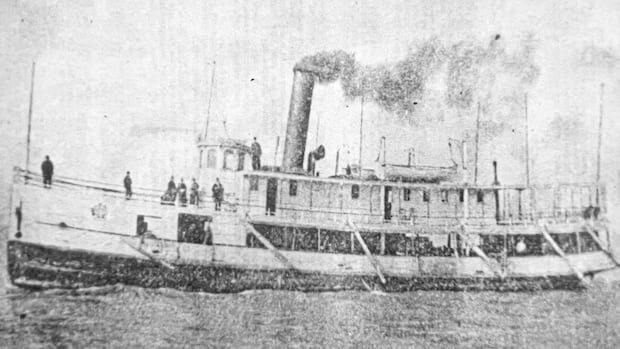

A team of enthusiasts interested in marine archaeology will explore a beach in southwestern Ontario this summer to delve deeper into a tragic shipwreck that occurred over a century ago. The SS Erie Belle, a steam tug, experienced a violent explosion in 1883 on Lake Huron near Kincardine, resulting in the immediate deaths of four individuals on board and later two more who were injured. The cause of the wreck was determined to be a malfunctioning boiler, but conservation and wildlife biologist David Galbraith is spearheading an underwater survey to uncover further insights.
Growing up with a family cottage along Lake Huron’s shore, Galbraith has had a longstanding connection to the wreck site, which prompted his interest in documenting it this year. The team, led by Galbraith and licensed by the province for marine archaeology, plans to conduct a survey without disturbing any artifacts, focusing on measurements, documentation, and photography of the site in accordance with the Ontario Heritage Act regulations.
Galbraith, a member of the Ontario Marine Heritage Committee, will dedicate the summer to studying Boiler Beach, the location of the SS Erie Belle explosion. Collaborating with retired marine archaeologist Scarlett Janusus, the team aims to gain valuable insights into the historical significance of the region and the circumstances surrounding the shipwreck. Janusus emphasizes the importance of marine heritage preservation and the need for increased marine archaeology efforts in Ontario.
The project, supported by Janusus and other committee members, signifies a crucial step in unraveling the mysteries of marine history and understanding events like the SS Erie Belle disaster. Galbraith’s scientific approach to the research is anticipated to span into August, with the acknowledgment that each discovery leads to more questions, fueling an ongoing quest for knowledge in the field of marine archaeology.