

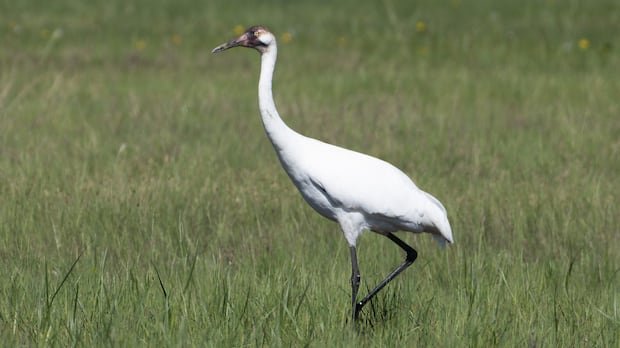

On Tuesday morning, Calgary birder Jonah O’Brien rushed to a rural road an hour northeast of the city after hearing reports of a rare five-foot-tall whooping crane sighting. O’Brien, who has documented over 270 bird species, was thrilled as it was his first encounter with this highly sought-after Canadian bird species.
Typically, birdwatchers seeking whooping cranes in Canada would travel to Saskatchewan during the fall migration. Therefore, the unexpected summer appearance of the whooping crane in Kneehill County was a delightful surprise for bird enthusiasts in the Calgary area. Standing at five feet tall, the whooping crane is easily distinguishable from the more common sandhill crane by its white plumage, facial markings, and black wingtips visible in flight.
The only remaining natural migratory flock of whooping cranes undertakes a 4,000-kilometer journey from their winter habitat in Texas to their nesting grounds in Wood Buffalo National Park annually. Currently, the flock of approximately 550 birds is located nearly 1,000 kilometers north of Calgary in the park bordering the Northwest Territories.
This unusual sighting of the whooping crane outside its usual range has excited birdwatchers, and Gavin McKinnon, co-author of “A Field Guide to the Birds of Alberta,” sees it as a symbol of successful conservation efforts. The wild whooping crane population, which had dwindled to about 20 individuals in the 1940s due to hunting and habitat loss, has rebounded thanks to legal protections, habitat preservation, and captive breeding programs.
Despite the population recovery, whooping cranes are still classified as endangered by the Canadian and U.S. federal governments and the Alberta government. McKinnon urges birdwatchers to respect the bird’s space and not approach it too closely. He believes that this particular whooping crane, likely a non-breeding young bird, may continue its migration in the following years, possibly even reaching Wood Buffalo for breeding.
The sighting of the whooping crane in southern Alberta is reminiscent of other uncommon bird sightings in the region in recent years, indicating potential shifts in bird migration patterns. The presence of this majestic bird in the area serves as a reminder of the importance of continued conservation efforts to protect endangered species like the whooping crane.