

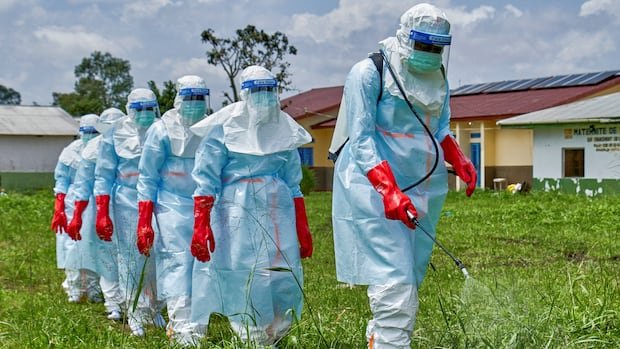

The ongoing Ebola crisis in the Democratic Republic of Congo shows no signs of abating soon, according to experts familiar with the situation. Although the United Nations has documented 148 suspected deaths and close to 600 suspected cases, including one fatality in neighboring Uganda, the World Health Organization (WHO) believes the actual scale of the outbreak is likely much larger than reported.
While WHO assesses the global spread risk as low, the regional threat remains high, particularly in the Ituri Province, which shares borders with Uganda and South Sudan. This marks the 17th Ebola outbreak in the Democratic Republic of Congo since 1976, as per the U.S. Centers for Disease Control and Prevention. The previous outbreak concluded in December 2025.
Kerry Bowman, a bioethicist from the University of Toronto with experience in the region, highlights several concerning aspects of the current situation. The delay in identifying the uncommon Bundibugyo strain, instead of the more common Zaire strain, led to crucial time being lost in containment efforts.
The absence of a vaccine or specific treatments for the Bundibugyo strain poses significant challenges in curbing the spread of the virus. Additionally, ongoing military conflicts in the area further complicate containment measures. The presence of over 920,000 internally displaced individuals in Ituri Province adds to the complexity, as many reside in overcrowded camps that are ripe for contagion.
Experts warn that the weakened health infrastructure and surveillance capacity in the region, exacerbated by cuts in international aid, are hindering response efforts. Chiran Livera, operational lead at the Canadian Red Cross, emphasizes that several factors have converged to create an ideal environment for the outbreak.
Despite the severity of the situation, experts stress that Ebola’s mode of transmission through bodily fluids limits its potential for global spread compared to airborne diseases like COVID-19. Kent Brantly, a doctor who contracted Ebola during the 2014 West Africa outbreak, urges global cooperation to assist the affected countries and organizations providing relief efforts.
While the U.S. has imposed restrictions on travelers from the affected regions, Canada has not implemented a travel ban but advises enhanced health precautions for those traveling to the Democratic Republic of Congo. The importance of a calm and compassionate response, as well as support for affected communities, is underscored in addressing the current crisis.