

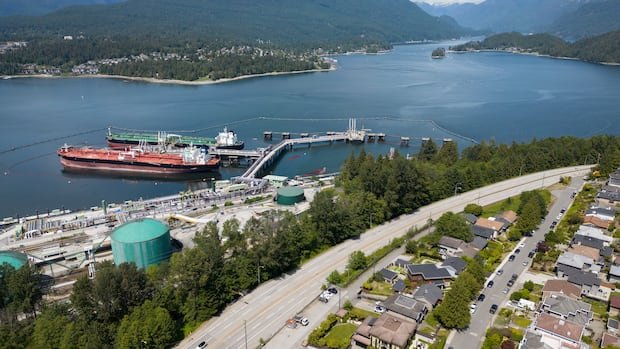

The executives of the Trans Mountain pipeline suggest that it may be beneficial to maintain government ownership of the pipeline, potentially in collaboration with Indigenous partners. Mark Maki, the president and CEO of Trans Mountain Corp., emphasized the pipeline’s strategic importance as a sovereign asset that originates and terminates within Canada. Elizabeth Wademan, who heads the Canada Development Investment Corp. (CDEV), highlighted the pipeline’s value in light of recent geopolitical uncertainties, expressing a preference for Canadian ownership in the long run.
While advocating for the retention of the pipeline, Wademan also stressed the importance of exploring market opportunities and keeping all options open. CDEV, which oversees investments on behalf of the federal government, acts as a supportive yet demanding shareholder of Trans Mountain Corp.
Originally established in the 1950s to serve British Columbia’s Lower Mainland, the Trans Mountain pipeline underwent an expansion project known as TMX to facilitate oil exports to Asia. After facing opposition and legal battles, the pipeline was acquired by the Canadian government in 2018 for $4.5 billion to ensure completion of the expansion. Despite the construction costs exceeding initial estimates, Maki attributed the escalation to regulatory challenges and unforeseen events like natural disasters and the COVID-19 pandemic.
Although the government’s intention is to eventually divest the pipeline to private entities or Indigenous groups, negotiations for Indigenous participation remain intricate and time-consuming. Maki highlighted the pipeline’s current near-capacity operation, underscoring the need for a second West Coast pipeline to enhance Canada’s oil export capabilities. Collaboration with Alberta on a potential new bitumen pipeline is underway, with Maki advising a careful evaluation of the optimal route to the British Columbia coast before making a decision.
In summary, the executives advocate for the continued government ownership of the Trans Mountain pipeline, emphasizing its strategic value and the need for expanded export infrastructure to meet market demands effectively.