

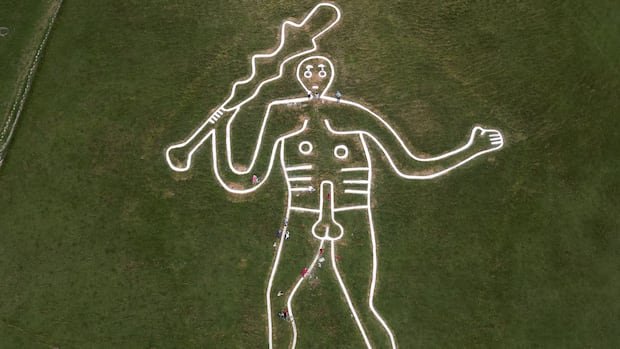

The residents of Cerne Abbas cherish their long-standing iconic figure, a giant chalk carving that has adorned the Dorset hillside for centuries. However, recent weather conditions have caused the 55-meter figure to become overgrown with grass and algae, obscuring its distinct white lines. To address this, over 100 volunteers from the National Trust in the UK have been diligently working to restore the Cerne Abbas Giant to its former splendor amidst challenging weather conditions.
Liz Flight, the National Trust’s senior visitor experience officer, described the painstaking effort required to rejuvenate the beloved giant, emphasizing its significance to the community. The origins of the giant, also known as “The Old Man” or “The Rude Man,” were previously thought to date back to ancient Roman times. However, a 2001 analysis by the National Trust revealed that it actually originated in the late Saxon period, between 700 and 1100 AD.
Flight highlighted the mystery surrounding the giant’s depiction and historical context, with some speculating that it may have been inspired by the image of Hercules due to its masculine characteristics. The National Trust undertakes regular maintenance of the hill figure, typically re-chalking it every decade to preserve its integrity while respecting the underlying archaeology and landscape.
The ongoing restoration marks the fourth re-chalking of the giant, ahead of the usual schedule due to recent warm winters promoting grass and algae growth. Volunteers are diligently removing grass, clearing old chalk residue, and replenishing the figure with fresh white rocks to revitalize its appearance. Despite challenges such as shortened work hours due to heat, the dedicated volunteers are committed to the task, ensuring the giant remains a proud symbol on the hillside.
Flight, who has been involved in the restoration process for the second time, acknowledged the physical demands of the work but emphasized its rewarding nature. The collective effort to preserve the Cerne Abbas Giant reflects the community’s deep-rooted connection to this historic landmark.