

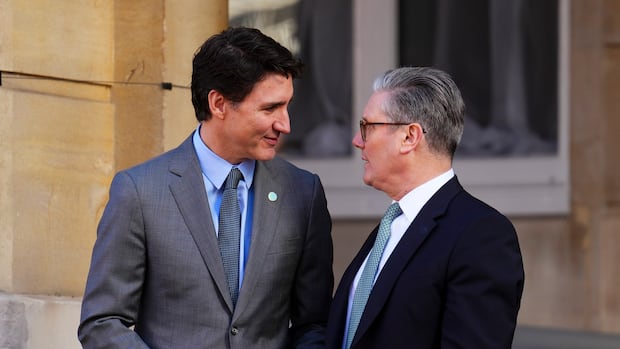

Although Canada and the U.K. share similar parliamentary frameworks, Canada has managed to steer clear of the prime ministerial turnover that has characterized the U.K. over the last decade.
Observers of politics highlight the Brexit referendum as a pivotal event that resulted in multiple leaders taking residence at 10 Downing Street in the last ten years; however, there are deeper reasons that facilitate the removal of leaders in the U.K. compared to Canada.
Lori Turnbull, a political science lecturer at Dalhousie University, commented on the challenges of governance in the U.K. following its decision to exit the European Union, stating, “I believe it’s more challenging to lead the nation now, and there is considerable discontent surrounding this choice.”
“Consequently, it has become increasingly difficult for any sitting prime minister to endure their term.”
At least two of the six recent departures were directly linked to the Brexit decision. David Cameron, a Conservative, was the first to resign after the 2016 referendum, citing his personal opposition to leaving the EU as his primary reason for stepping down.
Cameron’s successor, Theresa May, subsequently lost her position after failing to achieve consensus within her party regarding the specifics of the Brexit agreement.
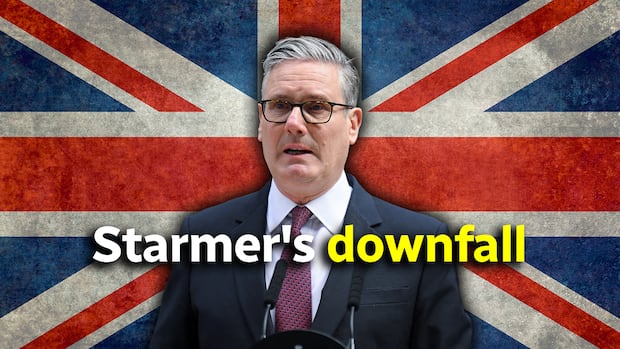
Less than two years after his landslide electoral victory, the U.K.’s Keir Starmer announced he is stepping down as prime minister. Andrew Chang explains why Starmer’s days in office were numbered and what his legacy will be as the country’s sixth prime minister in 10 years.
(Photo credits: The Canadian Press, Reuters, Adobe Stock and Getty Images)
Following May, Boris Johnson ascended to leadership, successfully executing Brexit but ultimately being brought down by a series of scandals during the COVID-19 pandemic, paving the way for Liz Truss’s notably short tenure. Rishi Sunak took over from Truss but failed to revive the Conservative Party’s dwindling support.
Andrew MacDougall, who previously served as director of communications for Canadian prime minister Stephen Harper and is now a partner at Trafalgar Strategy in London, noted that Keir Starmer, who resigned last week, did not have a credible strategy when his Labour Party ousted Sunak in 2024.
“[Starmer] prevailed simply because he was not a Tory,” MacDougall stated.
“He did not offer any grand vision or an actionable plan to achieve it. He was caught off-guard by the early election announcement, failed to prepare, rushed into Number 10 without a strategy, and faced significant backlash.”
While Brexit was a triggering event, MacDougall asserts that various global occurrences prior to and following the 2016 referendum—such as the Iraq war, the financial crisis of 2008, the COVID-19 pandemic, and the war in Ukraine—have contributed to a diminishing public confidence in political institutions.
These factors, combined with “a fragmented public sphere,” are rendering governance and politics increasingly “unfeasible and impossible,” MacDougall remarked.
Canada is not exempt from declining trust in institutions, having also faced the global upheavals of this century alongside Brexit.
Distinct culture, distinct mechanisms
However, both Turnbull and MacDougall highlight that the U.K. possesses a different political culture and more effective structures that facilitate the removal of leaders.
Both the Labour and Conservative parties in the U.K. have internal mechanisms that allow party members to challenge their leaders at any time, provided they garner sufficient backing. In some instances, as was the case with Starmer, leaders resign before a challenge can be made, typically indicating an inevitable outcome.
Conversely, while both the Liberals and Conservatives in Canada have provisions for leadership reviews enshrined in their charters, these are only triggered when the party experiences a general election loss.
The House of Commons enacted the Reform Act in 2015, enabling MPs to compel a leadership vote if they have sufficient support from their colleagues. However, this legislation has only been invoked once, concerning former Conservative leader Erin O’Toole.
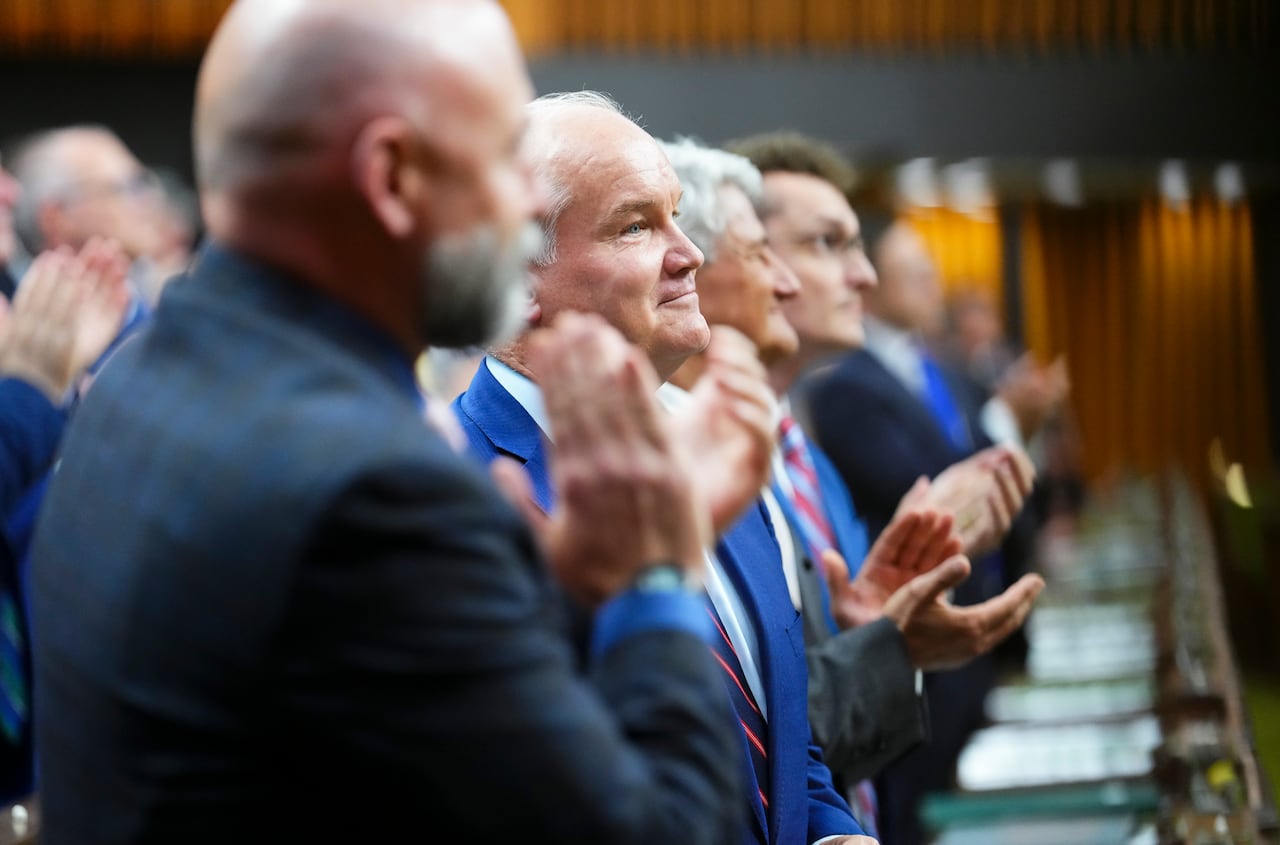
Erin O’Toole is the only leader to be ousted via the Reform Act since it was adopted in 2015. (Sean Kilpatrick/The Canadian Press)
The Liberal Party has never utilized the provisions of the Reform Act, which explains why they were unable to remove Justin Trudeau as his approval ratings declined. Trudeau eventually resigned, but that occurred a year after one of his MPs openly called for a leadership vote and others mounted internal pressure for his departure.
In the U.K., it is also more common and even anticipated for backbench members to confront their party leaders.
“There is a much more vigorous political culture in Britain that embraces internal challenges within the party. Backbench rebellions are not uncommon and can occur on a variety of policies,” MacDougall explained.
He contrasted this with the Canadian context, where a single backbench MP opposing their party can make headlines.
Turnbull mentioned that managing caucus is also more challenging for leaders in the U.K. due to the size of the British Parliament.
The U.K. House of Commons comprises 650 seats, with the Labour Party’s caucus of 403 members exceeding the entire Canadian House of Commons.
In Canada, a leader can leverage the potential for promotion or demotion within the party to manage a smaller caucus. However, Turnbull explained that such options are not readily available to U.K. leaders.
“There are simply too many individuals. You can’t place everyone in a cabinet, nor can you assign diplomatic roles. You don’t even know all of them,” she stated.
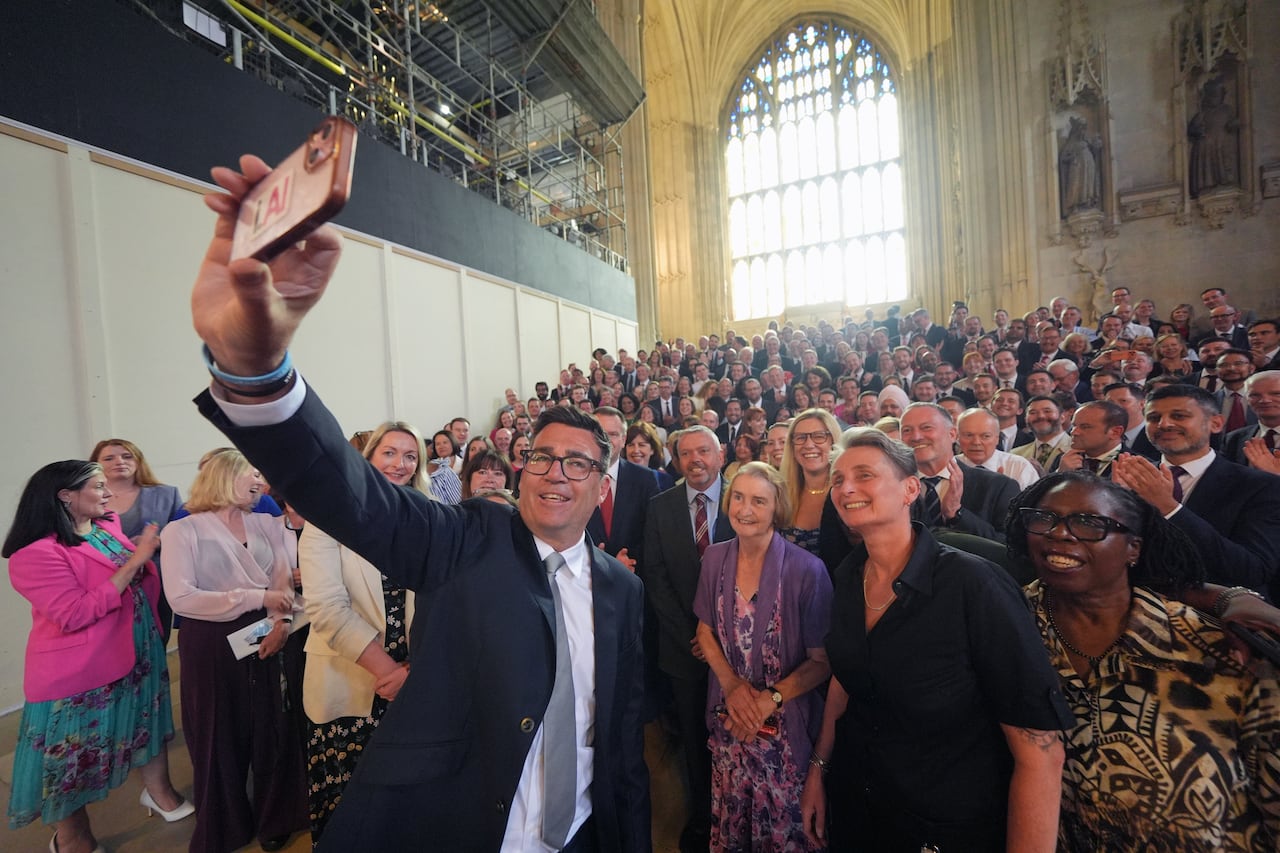
Andy Burnham, widely seen as the successor to Starmer, poses for a photo with colleagues from the Labour Party in Westminster Hall in London. (Yui Mok/The Associated Press)
Moreover, party identities in the U.K. often overshadow the individual leader’s identity, while in Canada, a leader can significantly influence their party’s character, according to Turnbull. She cited the contrasts between the Trudeau-led Liberals and Prime Minister Mark Carney’s centrist approach.
“Being a Tory in the U.K. or a Labour member there represents deep-rooted traditions that I have never observed any leader, no matter how strong, establish a brand that surpasses that of the party,” she remarked.
MacDougall argued that U.K. parties are becoming increasingly splintered into smaller factions, making it more challenging for leaders to maintain control, especially as the information landscape becomes more divided.
He warned that as Canada’s information system also becomes fragmented, similar trends of fleeting popularity for its leaders could emerge.
“Canada is just slightly behind the curve. I don’t believe Canada is immune,” MacDougall stated.