

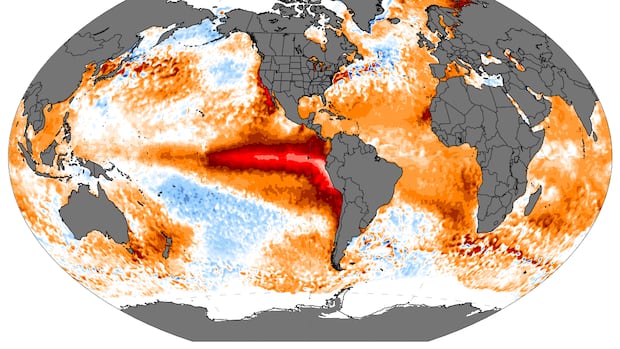

Researchers from Ocean Networks Canada have detected unprecedented water temperatures off the coast of British Columbia this month, indicating the onset of an El Niño phenomenon compounded by ongoing climate change.
The initiative, based at the University of Victoria, manages two underwater observatories linked by cables to various research locations. One such site, situated off the western shore of Vancouver Island, registered a temperature of 8.21°C at a depth of 400 metres on November 8.
This measurement at the Barkley Canyon Upper Slope was 2.49°C above the long-term average for the location, which has been monitored since 2009, and surpassed the previous record set in 2019 by 0.89°C, according to a statement released by the organization on Tuesday.
El Niño occurs when there is a change or weakening of the winds that typically drive warm water towards the western Pacific near Australia and Asia, as explained by Jay Cullen, an oceanographer and interim president of Ocean Networks Canada.
During an El Niño event, he noted, warm water tends to “sloshes back” towards the east and spreads once it reaches the western shores of North and South America.
“For us here in British Columbia, that warm water travels as a trapped wave along the coast,” Cullen remarked, adding that this phenomenon also impacts atmospheric circulation, which could lead to increased rainfall and reduced snowfall in coastal regions this winter.
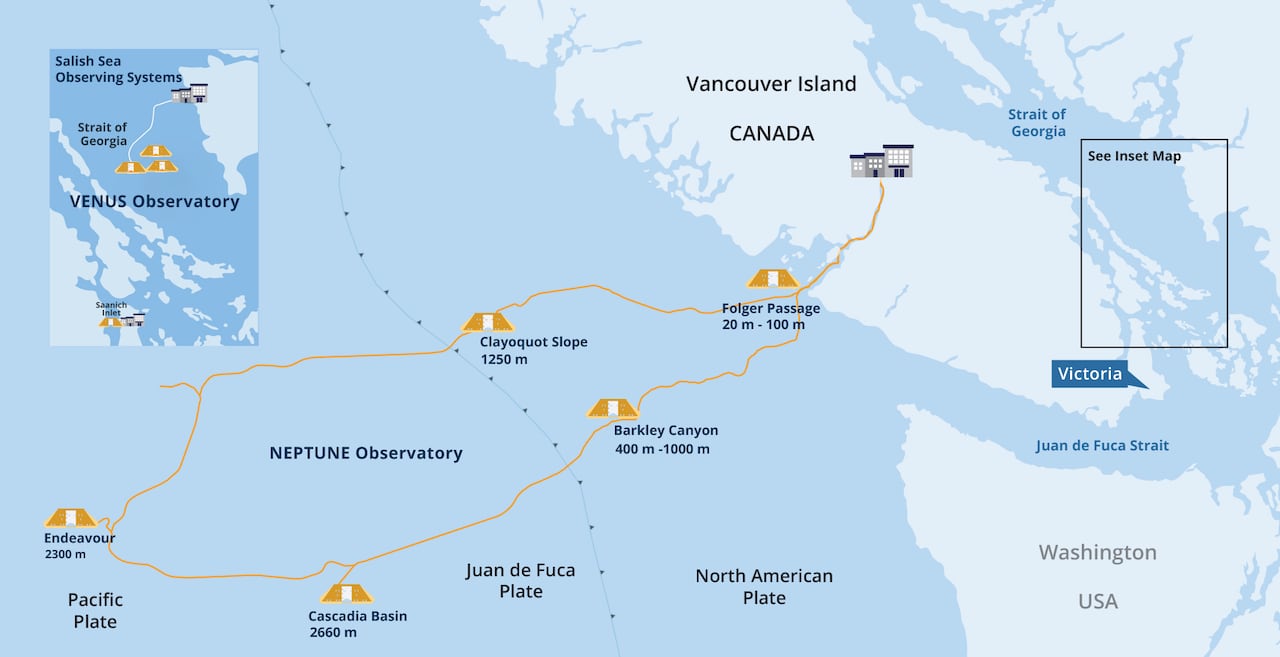
This image shows graphic, provided by the Ocean Networks Canada, shows the location of ocean research sites. (Handout by Ocean Networks Canada/The Canadian Press)
El Niño is a natural cycle, but it is occurring within the context of long-term global warming that is already stressing ecosystems and various organisms, Cullen stated.
The increase in water temperatures results in lower levels of dissolved oxygen in regions that support salmon and herring fisheries, as well as providing habitat for significant species, including the endangered southern resident killer whales in the Salish Sea, he added.
Economic activities in the area, such as the Port of Vancouver’s Roberts Bank facility, are also relevant, where the federal government has endorsed a proposal for a substantial expansion.
“As shipping increases and economic development along our coast progresses, it is crucial that these developments are accompanied by careful monitoring and environmental stewardship,” Cullen emphasized.

Jay Cullen, interim president and CEO of Ocean Networks Canada, said the high ocean temperatures could impact sensitive species. (Handout by Ocean Networks Canada/The Canadian Press)
Cullen expressed concern over the elevated temperatures in deeper ocean layers, as many organisms inhabit or seek refuge in these cooler depths.
“If the warming linked to El Niño is observed not only at the surface but also at greater depths, it could further stress the ecosystem,” he warned.
El Niño also leads to increased water levels, heightening the risk of coastal flooding.
“We have seen an approximate 15 centimetre rise in sea levels,” Cullen indicated.
“With winter storms and king tides, the likelihood of coastal flooding is elevated, particularly given the already warmer sea levels we have experienced historically.”
-
Meteorologists are forecasting a ‘super’ El Niño. What does that mean for B.C.?
-
What does a super El Niño mean for the Vancouver Island snowpack?
A graph shared by Cullen’s team illustrated a significant increase in daily average temperatures at the Barkley site starting in late October.
Cullen noted that this indicates the warm water pulse moving north from the equatorial Pacific has reached British Columbia’s coastline, though calmer winds have also contributed, leading to reduced “upwelling” of cooler water from greater depths.
“Recently, those upwelling winds have calmed, making the arrival of that warm water appear more pronounced,” he explained.
The Clayoquot Slope, a deeper site located over 1,200 metres below the surface, has also been recording “significantly” above-average temperatures, according to Cullen’s team.
In contrast, the Cascadia basin, the deepest site in the cluster at 2,650 metres, has maintained temperatures within normal ranges.
Cullen stated that the El Niño pattern is expected to reach its peak early next year and then “relax” as spring approaches.
Ocean Networks Canada is collaborating with the Fisheries Department to monitor the effects of El Niño along the coastline of British Columbia, he added.
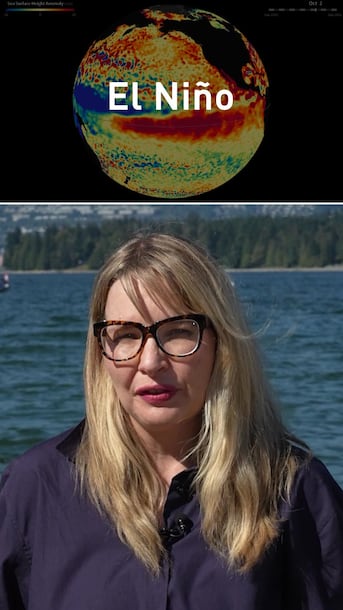
Regarding the broader impacts of El Niño across Canada, Bill Merryfield, a research scientist with Environment and Climate Change Canada, previously told CBC News that significant effects typically do not manifest until late December.
“They tend to intensify as winter progresses,” he mentioned.
Merryfield added that a warmer winter linked to El Niño might result in lower snowpacks along the West Coast.