

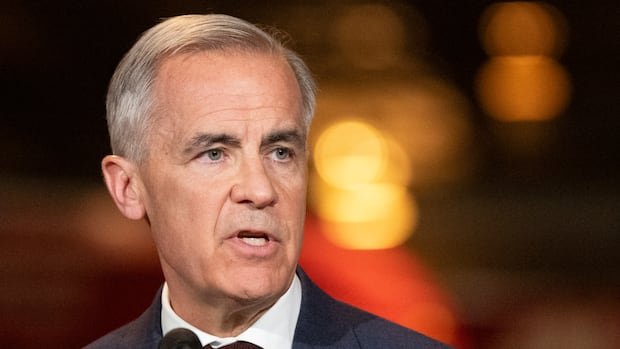

In Washington this week, Prime Minister Mark Carney’s negotiating team made progress during trade talks, but more work is needed for a comprehensive agreement. Canada-U.S. Trade Minister Dominic LeBlanc and chief trade negotiator Janice Charette briefed a special council for over two hours after meeting with U.S. Trade Representative Jamieson Greer.
Flavio Volpe, a member of the advisory committee on Canada-U.S. economic relations, described the briefing as open and indicated positive movement in the talks. Volpe mentioned that the U.S. directive appears to be finding a resolution to the trade issues while maintaining the relationship.
Canada and Mexico expressed interest in extending the CUSMA agreement for another 16 years. The U.S. shared its letter with Canada on Tuesday, but the contents have not been disclosed yet. Volpe highlighted that while the U.S. signals willingness to stay in CUSMA, there is no definitive confirmation of the Trump administration’s renewal of the trade pact.
The upcoming review of North America’s free trade deal on July 1 is seen as a signaling moment rather than a strict deadline. Volpe noted that even if the date passes without agreement, CUSMA would continue, albeit subject to annual reviews if not unanimously renewed.
The U.S. provided Canada with its latest list of concerns on Tuesday, which Volpe mentioned contained no surprises and was shorter than the list given to Mexico. However, the U.S. did not outline specific solutions they seek.
Regarding trade irritants, the U.S. cited issues such as Canadian provinces restricting American alcohol sales, concerns regarding Canada’s Online Streaming Act, and alleged unfair treatment of Montana power producers by Canada. Recently, the Canadian government instructed the CRTC to review a decision on increased contributions by streaming services like Netflix towards Canadian content creation.
One year since the U.S. increased tariffs on Canadian steel and aluminum, the Canadian Steel Producers Association continues to urge the U.S. to remove these tariffs due to a significant drop in shipments. Candace Laing, from the Canadian Chamber of Commerce, emphasized that resolving the sectoral tariffs is crucial for Canada.
While expressing optimism about progress in trade talks, Laing acknowledged the unpredictable nature of the current environment and stressed the need to address trade issues to advance negotiations. The Conservative Party has criticized Carney for perceived delays in trade negotiations with the U.S.
Global Affairs Canada highlighted discussions on the impacts of Trump’s sectoral tariffs and proposed levies linked to forced labor during the recent committee meetings. Carney previously disclosed specific proposals to the U.S. administration, focusing on aluminum, automobiles, and critical minerals.